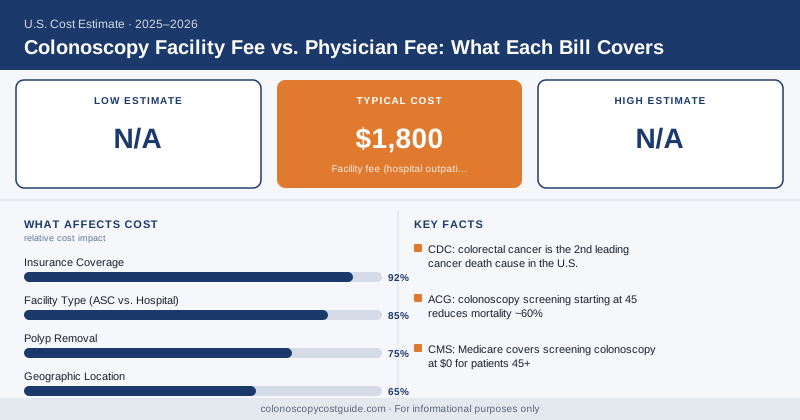
Colonoscopy Facility Fee vs. Physician Fee: What Each Bill Covers
{ if eq .Lang "zh" }{ else }{ end }What does it actually mean when your colonoscopy bill has two separate line items instead of one flat price? It’s not a billing mistake — it’s how nearly every outpatient procedure in the U.S. healthcare system is structured. Understanding the split between facility and physician fees explains most of the price variation you’ll see when comparing colonoscopy quotes.
Facility Fee vs. Physician Fee Breakdown
| Fee Type | Typical Range | What It Covers |
|---|---|---|
| Facility fee (hospital outpatient) | $1,800 – $4,000 | Procedure room, equipment, nursing, recovery area |
| Facility fee (ambulatory surgery center) | $800 – $2,200 | Same components, lower overhead structure |
| Physician fee (gastroenterologist) | $200 – $900 | Professional service of performing the colonoscopy |
| Pathology fee (if biopsy taken) | $150 – $600 | Separate lab analysis of any tissue samples |
Why Two Separate Bills Exist
Under the U.S. healthcare billing system, the “technical component” (facility fee) and “professional component” (physician fee) of most procedures are billed separately, even when performed at the same visit. This split exists because Medicare and most commercial insurers reimburse the facility and the physician through different payment structures — the facility is compensated for overhead and resources, while the physician is compensated specifically for their clinical skill and time.
This is also why the same gastroenterologist can charge a similar physician fee whether they perform your colonoscopy at a hospital or an independent ASC, while the facility fee for the identical procedure can differ by thousands of dollars between the two settings.
Why Facility Fees Vary So Much
Hospital outpatient departments carry substantially higher overhead than freestanding ambulatory surgery centers — more administrative staff, higher regulatory compliance costs, 24/7 emergency readiness, and often higher labor costs. Medicare’s own reimbursement rates reflect this reality, generally paying hospital outpatient departments significantly more than ASCs for the identical procedure code, and commercial insurers’ negotiated rates tend to follow a similar pattern.
This is the single biggest reason why choosing an ASC over a hospital for a routine colonoscopy is one of the most effective cost-saving decisions a patient can make. For a full breakdown, see our ambulatory surgery center vs. hospital colonoscopy cost guide.
You Can Sometimes Keep Your Doctor and Change the Facility
How Insurance Processes These Two Fees
Your insurance typically processes the facility fee and physician fee as separate claims, even though you may receive a single combined Explanation of Benefits (EOB) covering both. Your deductible and coinsurance apply to each component:
- Facility fee: Subject to your deductible and coinsurance under your plan’s outpatient surgery/facility benefit
- Physician fee: Subject to your deductible and coinsurance under your plan’s specialist/surgery benefit, sometimes at a different coinsurance rate than the facility
This is why your total out-of-pocket cost for a colonoscopy isn’t a single simple number — it’s the sum of your cost-sharing responsibility across at least two, sometimes three or four, separate billed components (facility, physician, anesthesia, and pathology if applicable).
What to Ask Before Scheduling
To get an accurate total cost estimate before your procedure, ask your GI office’s billing staff for:
- The expected facility fee (or ask them to direct you to the facility’s billing department)
- The expected physician fee
- Whether anesthesia is billed separately and by whom
- Whether pathology, if biopsies are taken, is billed by an in-network lab
The Bottom Line
A colonoscopy bill splits into a facility fee ($800–$4,000) and a physician fee ($200–$900), reflecting the distinct technical and professional components of the service. Since the facility fee is typically the larger and more variable piece, it’s the most important number to shop around on — and often the easiest one to reduce simply by choosing an independent ASC over a hospital outpatient department for the same physician and procedure.
{ if eq .Lang "zh" }