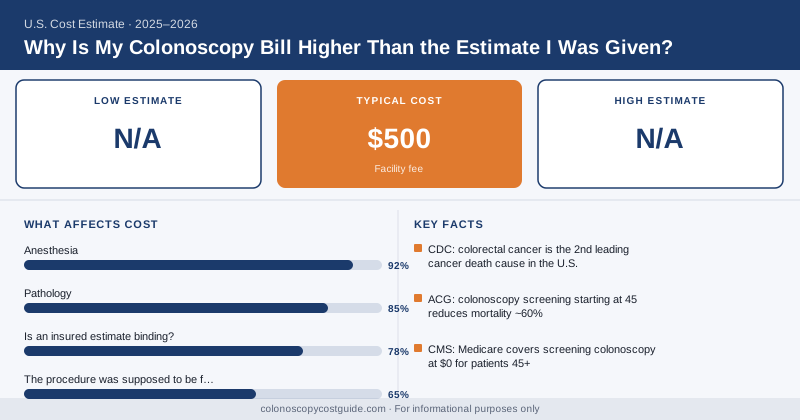
Why Is My Colonoscopy Bill Higher Than the Estimate I Was Given?
The facility quoted you $1,400. The bills that arrived added up to $3,100. You didn’t get bait-and-switched — you got the standard, maddening reality of how colonoscopies are estimated versus how they’re billed.
Almost every “estimate gap” comes from the same handful of charges that quietly weren’t in the original quote. Once you know what they are, the final bill stops being a mystery — and a chunk of it often becomes disputable.
The Estimate Usually Covers One Thing: The Facility
When a facility gives you a colonoscopy estimate, it’s almost always quoting the facility fee — the cost of the room, equipment, nurses, and recovery. That’s the single biggest line item, so it feels like the whole price. It isn’t.
A colonoscopy generates separate bills from up to four parties, and most estimates only mention one.
| Charge | Typical Amount | In the Estimate? |
|---|---|---|
| Facility fee | $500 – $2,800 | Usually yes |
| Gastroenterologist (professional) | $250 – $800 | Often no |
| Anesthesia | $400 – $1,200 | Frequently no |
| Pathology (if polyp removed) | $200 – $800 | Almost never |
Add those up and a $1,400 facility estimate easily becomes a $3,000+ total. Nothing went wrong — the estimate was just incomplete.
The Two Big Surprises: Anesthesia and Pathology
Anesthesia is the most common gap. Propofol sedation needs a separate credentialed provider who bills independently — and that group may even be out of network. If an out-of-network anesthesia charge blew up your bill, you may have protection; see our out-of-network anesthesia bill guide.
Pathology is the surprise nobody plans for. If a polyp gets removed, the tissue goes to a lab and the pathologist bills you $200–$800 per specimen. The code also changes from 45378 to 45380/45385, nudging the facility and physician fees up too. Our polyp found cost change guide breaks down exactly how that cascades.
The Question That Makes Estimates Honest
Before your colonoscopy, ask the scheduler this exact question: “Does this estimate include the facility fee, the physician fee, anesthesia, AND any pathology if a polyp is removed?”
If the answer is “just the facility,” you know to add roughly $600–$2,000 for the rest. Ask for separate estimates from the anesthesia group and the pathology lab if possible.
Your Legal Backstop: The Good Faith Estimate
If you’re uninsured or paying cash, you have real leverage. Under the No Surprises Act (effective January 2022), providers must give self-pay patients a written Good Faith Estimate before the procedure. And here’s the powerful part: if your final bill exceeds the Good Faith Estimate by $400 or more, you can formally dispute the difference through the federal patient-provider dispute process.
That’s a hard dollar threshold with teeth. Keep your Good Faith Estimate — it’s your receipt for fighting an inflated bill.
Estimate vs. EOB: Compare the Right Documents
People compare the final bill to the estimate and panic. The right comparison is the final bill versus your Explanation of Benefits (EOB). The estimate was a prediction; the EOB is what your insurer actually processed across all four providers. If the bill matches the EOB’s “patient responsibility,” it’s likely accurate. If it exceeds the EOB, the provider is overbilling you.
Frequently Asked Questions
Is an insured estimate binding? Generally no — for insured patients, estimates aren’t legally enforceable. But they’re still useful evidence when you call to dispute a charge, and your insurer’s cost-estimator tool is more reliable than a facility’s verbal quote.
The procedure was supposed to be free — why any bill at all? If a polyp was removed or a fee was out of network, charges can appear even on a $0 screening. Our bill after a free screening colonoscopy guide covers each cause and how to reverse it.
How do I keep the gap small next time? Choose a freestanding surgery center over a hospital, confirm everyone is in network, and get estimates from all four billing parties up front. See how to reduce colonoscopy cost for the full playbook.
The bottom line: your bill is higher than the estimate because the estimate only counted the facility. Add anesthesia, pathology, and the physician fee, compare the final bill to your EOB instead of the estimate, and use the Good Faith Estimate dispute process if you’re self-pay and the bill jumped $400 or more.