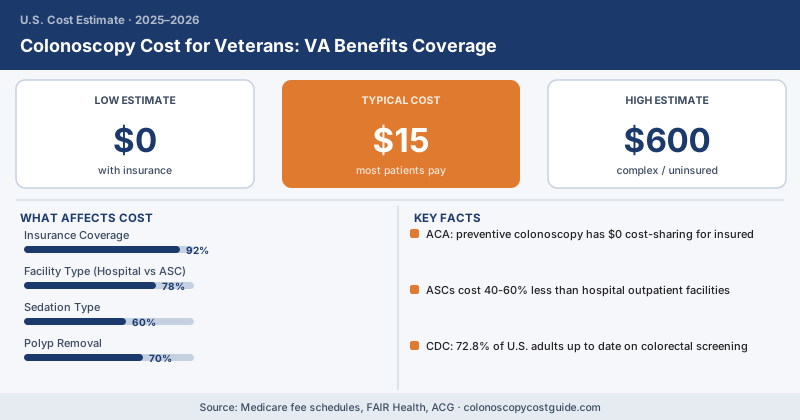
Colonoscopy Cost for Veterans: VA Benefits, Community Care, and What You'll Actually Pay
Here’s what most veterans don’t realize: a colonoscopy through the VA can cost you absolutely nothing. Not $0 after a big deductible. Actually $0. But the path to getting there depends on your VA Priority Group, where you live, and whether the VA can see you in a reasonable timeframe. Miss one of those details and you might end up with a surprise bill.
According to VA data published by the Congressional Budget Office, more than 9 million veterans were enrolled in VA health care as of 2024. Colorectal cancer is the third most common cancer among veterans, and the VA has made screening a priority — but navigating the system still takes some homework.
How VA Health Care Works for GI Procedures
The VA divides enrolled veterans into Priority Groups 1 through 8, based on service-connected disability ratings, income, and other factors. Your copay (if any) for a colonoscopy depends on which group you’re in.
| VA Priority Group | Typical Colonoscopy Copay |
|---|---|
| Group 1 (50%+ service-connected disability) | $0 |
| Group 2–3 (service-connected, lower rating) | $0–$15 (outpatient copay) |
| Group 4–6 (catastrophic disability or low income) | $15 outpatient copay |
| Group 7–8 (higher income, no service connection) | $50 outpatient copay (preventive may differ) |
| Preventive screening (all groups) | Usually $0 under VA preventive care policy |
The key phrase is “preventive screening.” If you’re getting a routine colorectal cancer screening colonoscopy, VA policy generally treats it as preventive care with no copay regardless of your Priority Group. Diagnostic colonoscopies — ordered because of symptoms, a positive stool test, or prior polyp history — may trigger the standard outpatient copay for your group.
VA Direct vs. Community Care: The Cost Difference
The VA has its own gastroenterology clinics at most VA Medical Centers (VAMCs). If you can be seen there, your cost is whatever your Priority Group copay is — often $0 or $15.
But wait times vary. If the VA can’t schedule your colonoscopy within 28 days (or if you live more than 30 minutes from a VA facility that performs the procedure), you may qualify for the Community Care program, which lets the VA pay for the procedure at a private facility.
Community Care: How to Use It Without Getting a Surprise Bill
Community Care works like this: the VA authorizes the procedure, the private facility performs it, and the VA pays the provider directly. Your copay to the private facility should be $0 beyond your standard VA copay.
The catch: you must have prior authorization from the VA before the procedure. Veterans who schedule Community Care appointments without VA authorization first can end up receiving a bill from the private provider — and the VA may decline to cover it retroactively. Always get the authorization in writing before your appointment date.
What the VA Covers in a Colonoscopy
A VA-covered colonoscopy typically includes:
- The facility fee (VAMC or authorized Community Care site)
- Gastroenterologist professional fee
- Anesthesia or sedation
- Biopsies and polyp removal if clinically necessary
- Pathology fees for any tissue specimens
At a private facility under Community Care, the VA pays using its standard Fee Basis rates, which are based on Medicare rates. You don’t pay the balance.
Veterans With Medicare or Tricare
Many veterans over 65 have both VA benefits and Medicare. In that case, you have two options:
Option 1 — Use VA: $0 to $15 copay, procedure done at VAMC or through Community Care. Medicare is not billed.
Option 2 — Use Medicare: Preventive screening colonoscopy at a civilian provider is covered at 100% under Medicare Part B (no coinsurance for truly preventive procedures). If polyps are removed, coinsurance may apply — typically 20% after the Part B deductible, or less if you have supplemental coverage.
Veterans in rural areas sometimes find it faster to use Medicare at a local gastroenterology practice rather than traveling to a VAMC. That’s a legitimate choice — just make sure you understand the Medicare cost-sharing rules before you go.
| Coverage Scenario | Your Out-of-Pocket Cost |
|---|---|
| VA only, preventive, Priority Groups 1–6 | $0 |
| VA only, diagnostic, Priority Group 7–8 | ~$50 |
| Medicare only, preventive (no polyps) | $0 |
| Medicare only, preventive (polyps removed) | 20% coinsurance after deductible |
| VA + Medicare: use VA | $0–$15 VA copay; Medicare not billed |
| Community Care without prior authorization | Potentially full facility rate (avoid this) |
The Veterans Choice Program Is Gone — Don’t Get Confused
Some veterans still search for “Veterans Choice colonoscopy” based on an older program. The Veterans Choice Program was replaced by the VA MISSION Act Community Care program in June 2019. If you’re reading any guidance that references “Choice,” it’s outdated. The current program is simply called “VA Community Care.”
How to Schedule a VA Colonoscopy
- Call your VA primary care team or use the MyHealtheVet secure messaging system to request a colonoscopy referral. Your primary care provider (PCP) will order it.
- Ask about wait times. If the VAMC can’t see you within 28 days, ask specifically about a Community Care referral.
- If referred to Community Care, wait for the authorization document before calling the outside facility. The VA Scheduling Coordinator should help you find a Community Care provider in your area.
- Confirm the provider is authorized before your appointment — call the Community Care number at 866-606-8198 if you have questions.
Stool-Based Alternatives the VA Also Covers
If you’re hesitant about scheduling a colonoscopy, the VA fully covers stool-based colorectal cancer screening tests including the fecal immunochemical test (FIT) and the multi-target stool DNA test (Cologuard equivalent under VA formulary). A positive stool test will then lead to a diagnostic colonoscopy — which is covered under the same VA benefit structure described above.
For a broader look at how colonoscopy costs compare across insurance types, see the colonoscopy cost with insurance overview.