UnitedHealthcare Colonoscopy Coverage: Rules, Costs, and the Screening-to-Diagnostic Upgrade
{ if eq .Lang "zh" }{ else }{ end }UnitedHealthcare is the largest health insurer in the US by revenue, covering more than 50 million commercial and Medicare Advantage members. Its colonoscopy coverage policies have evolved significantly over the past three years — and the changes mostly favor patients, particularly around the controversial polyp billing issue.
Here’s what UHC members actually face when scheduling a colonoscopy.
UHC’s Preventive Colonoscopy Coverage
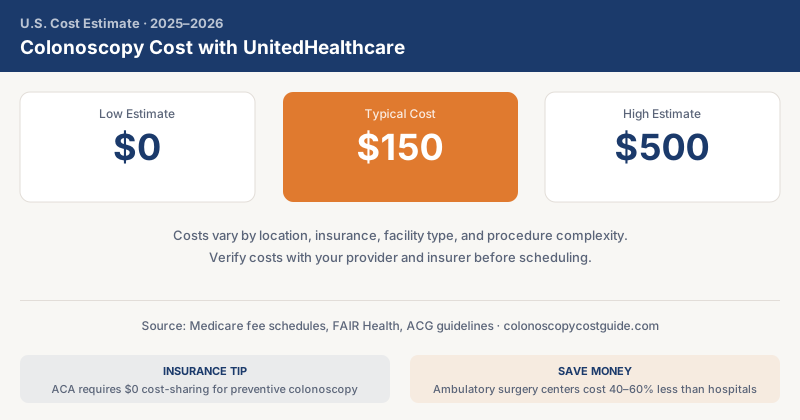
UnitedHealthcare covers preventive colonoscopy at $0 cost-sharing for ACA-compliant plans in alignment with USPSTF guidelines:
- Average-risk adults 45–75: $0 cost-sharing under most UHC commercial plans
- High-risk patients: $0 for screening on recommended schedule
- Frequency: Every 10 years (average-risk); more frequent for high-risk per clinical guidelines
FAIR Health notes UHC’s national allowed amounts for CPT 45378 run approximately $1,400–$2,400 at in-network facilities — these are the amounts UHC negotiates with providers, not your out-of-pocket cost for preventive screening.
UHC’s Position on the Screening-to-Diagnostic Upgrade
This is the policy change that matters most for the average UHC member. Prior to 2022, UHC, like most major insurers, would often reclassify a screening colonoscopy as diagnostic when polyps were removed, triggering cost-sharing.
UHC updated its commercial plan policy. As of plan years 2023 and beyond, UnitedHealthcare covers colonoscopy with polypectomy during a preventive screening at $0 cost-sharing for most ACA-compliant commercial plans. The therapeutic portion (polypectomy) is treated as part of the preventive encounter, not a separate diagnostic service.
This is the most consumer-friendly position among major insurers — and it’s worth confirming for your specific plan, because not all UHC plan designs are identical.
| Procedure | Most UHC Commercial Plans | Typical Member Cost |
|---|---|---|
| Screening colonoscopy, no findings | Covered, preventive | $0 |
| Screening colonoscopy with polypectomy | Covered, preventive (2023+ policies) | $0 |
| Diagnostic colonoscopy | Subject to deductible + coinsurance | $200 – $1,200 |
| Follow-up after positive Cologuard | Diagnostic coding | $200 – $800 |
| Anesthesia (in-network) | Covered subject to plan design | $0 – $400 |
| Out-of-network facility | Higher cost-sharing | Substantially more |
Prior Authorization Requirements at UHC
UHC does not routinely require prior authorization for standard preventive colonoscopy for members in UHC PPO and Choice plans. However, prior auth may be required for:
- Diagnostic colonoscopy in some HMO plans
- Colonoscopy more frequent than covered intervals (e.g., surveillance colonoscopy sooner than recommended)
- UHC Medicare Advantage plans: UHC requires prior authorization for many scheduled procedures including colonoscopy in its MA HMO products. This is a significant source of member frustration and regulatory attention.
UHC has faced scrutiny from state regulators and Congress over its Medicare Advantage prior authorization denial rates, which have been higher than competitors. If you’re on UHC Medicare Advantage and are denied prior auth for colonoscopy, the appeal process is outlined in your Evidence of Coverage.
UHC Prior Auth for Medicare Advantage — What to Do If Denied
If UHC Medicare Advantage denies prior authorization for your colonoscopy:
- Ask your GI physician to submit a peer-to-peer review request — a physician-to-physician call between your doctor and UHC’s medical director that often reverses denials
- File a formal appeal with UHC within 60 days of the denial (or faster if medically urgent)
- Contact your state’s Senior Health Insurance Assistance Program (SHIP) for free help navigating the appeal
- File a complaint with CMS at cms.gov if you believe the denial was improper
CMS has increased oversight of Medicare Advantage prior authorization practices since 2023. UHC’s denial rates for certain procedures have been flagged in federal audits.
UHC’s Network Considerations for Colonoscopy
UHC operates several network products:
- UHC Choice Plus (broad PPO): Wide network, access to most facilities and GI physicians
- UHC Select (narrow network): Lower premium, fewer in-network providers
- UHC Options PPO: Some out-of-network benefits at higher cost-sharing
- UHC HMO: Most restrictive; requires coordination through primary care
For colonoscopy specifically, verify:
- The ASC or facility’s network status under your specific UHC product
- The gastroenterologist’s network status under that product
- The anesthesiology group’s network status — this is the most common gap
UHC’s provider directory at myuhc.com allows network search by plan product. Don’t rely on a general “UHC network” search — specify your exact plan product name.
UHC Medicare Advantage Colonoscopy Coverage
For UHC Medicare Advantage members, colonoscopy coverage varies more than commercial plans:
| UHC Medicare Advantage Scenario | Coverage |
|---|---|
| Screening colonoscopy (average-risk) | $0 most plans |
| Screening with polypectomy | $0 most plans (check plan docs) |
| Diagnostic colonoscopy | $0 to $100+ copay depending on plan |
| Prior authorization required? | Yes for many UHC MA HMO plans |
| Out-of-network | Not covered in HMO; higher cost in PPO |
For a comparison of how other major insurers handle colonoscopy coverage, see articles on BCBS colonoscopy coverage and Aetna colonoscopy coverage.
{ if eq .Lang "zh" }