Colonoscopy Cost in Texas: What Houston, Dallas, Austin, and San Antonio Patients Pay
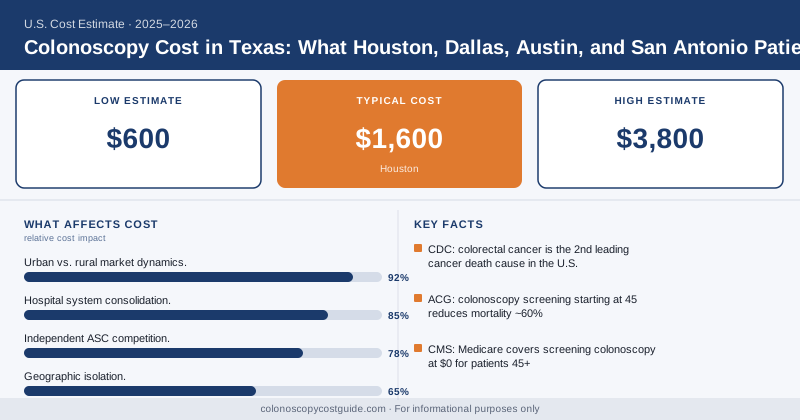
{ if eq .Lang "zh" }{ else }{ end }A diagnostic colonoscopy at a Houston hospital outpatient department runs $1,800–$3,800. Drive three hours north to a Dallas freestanding surgery center, and the same procedure costs $900–$1,600. Same CPT code. Same 30-minute procedure. Nearly $2,000 difference — and that gap is entirely about facility type and city, not clinical quality.
Texas is one of the most price-variable states in the country for colonoscopy, largely because of the wide mix of urban academic medical centers, large hospital systems like CHRISTUS and Baylor Scott & White, and a robust independent ambulatory surgery center (ASC) market that often competes aggressively on cash prices. If you know where to look, you can cut your colonoscopy cost by half or more.
Texas Colonoscopy Costs by Major Metro
| City | Hospital Outpatient (Billed) | ASC (Billed) | Uninsured Cash Rate (ASC) |
|---|---|---|---|
| Houston | $1,800–$3,800 | $900–$1,600 | $600–$1,100 |
| Dallas–Fort Worth | $1,900–$3,900 | $900–$1,600 | $650–$1,100 |
| Austin | $2,000–$4,000 | $950–$1,700 | $700–$1,200 |
| San Antonio | $1,800–$3,600 | $850–$1,500 | $600–$1,000 |
| Rural Texas | $1,500–$3,200 | $750–$1,300 | $500–$900 |
These are facility fees only. Add a physician fee of $300–$600 and, if propofol sedation is used, a separate anesthesia charge of $300–$700. For insured patients, what you actually pay out of pocket depends on your deductible status and whether the procedure is classified as preventive or diagnostic.
Why Texas Prices Vary So Much
A few factors drive the spread:
Urban vs. rural market dynamics. Austin and Dallas have dense concentrations of employed specialists who command higher negotiated rates from commercial insurers. Rural areas have less negotiating leverage but also fewer facility options — which can cut either way.
Hospital system consolidation. Baylor Scott & White, HCA Healthcare, and CommonSpirit Health (CHRISTUS) dominate large portions of the Texas hospital market. Consolidated systems negotiate higher reimbursement rates with commercial insurers, and those higher contracted rates flow through to your cost-sharing.
Independent ASC competition. Texas has more than 600 licensed ambulatory surgery centers — one of the highest per-capita totals in the US. Many of these independently owned ASCs openly compete for cash-pay patients by publishing upfront prices. That competition doesn’t exist in the hospital market.
Geographic isolation. A patient in Midland-Odessa or the Rio Grande Valley may have only one or two GI providers within driving distance, leaving little room to price-shop.
Texas Medicaid (STAR) Coverage
Texas did not expand Medicaid under the ACA, so Medicaid eligibility remains tightly restricted. Adults without children generally don’t qualify regardless of income. For those who do qualify — pregnant women, children, parents with qualifying incomes — Texas Medicaid through the STAR managed care program covers colonoscopy when medically indicated or when meeting USPSTF screening guidelines.
If you think you might be eligible, apply through YourTexasBenefits.com. Income limits for adults with children are roughly 15% of the federal poverty level, so the eligibility pool is very narrow.
Resources for Uninsured Texans
Federally Qualified Health Centers (FQHCs). Texas has more than 70 FQHC organizations operating hundreds of clinic sites. FQHCs charge on a sliding-scale fee based on income — some patients pay as little as $0 for GI consultations. FQHCs typically refer colonoscopies to contracted ASCs at discounted rates. Find a location at findahealthcenter.hrsa.gov.
Baylor Scott & White Financial Assistance. BSW offers charity care and financial assistance to uninsured and underinsured patients. For colonoscopy, self-pay discounts of 40–60% off billed charges are common. Call their financial counseling line before scheduling.
CHRISTUS Health Financial Aid. CHRISTUS operates across Texas and Louisiana and has an active charity care program. Patients at or below 200% of the federal poverty level may qualify for significant discounts.
MDsave and Healthcare Bluebook. Platforms like MDsave allow uninsured patients to purchase colonoscopy packages at pre-negotiated ASC rates — often $599–$1,199 all-in for a screening colonoscopy. These are legitimate, accredited facilities.
Colon Cancer Alliance Free Colonoscopy Program. The Colon Cancer Alliance’s Never Too Busy program provides free colonoscopies to uninsured and underinsured patients who meet income guidelines. Apply at ccalliance.org.
Cash-Pay Tip for Uninsured Texans
The ACS Data on Texas Screening Rates
According to the American Cancer Society’s 2023 colorectal cancer screening report, Texas has a colonoscopy screening rate below the national average for adults 45–75. Approximately 58% of eligible Texans are up to date on colorectal cancer screening — compared to a national figure of around 68%. That gap costs lives: colorectal cancer is the second-leading cause of cancer death in the US when men and women are combined, per the ACS, and most cases are preventable through screening.
The low screening rate in Texas is partly driven by the high uninsured rate — Texas consistently ranks among the states with the highest proportion of uninsured adults, hovering near 17–18% in recent years.
Insured Patients: What to Watch For in Texas
If you have commercial insurance through an employer or the ACA marketplace, a preventive screening colonoscopy should cost you $0 out of pocket under the ACA. But the preventive classification can flip to “diagnostic” if:
- Your doctor orders the colonoscopy due to symptoms (bleeding, change in bowel habits)
- You have a personal history of polyps or colon cancer
- A polyp is removed during what started as a screening exam (rules vary by state and plan — check your specific plan language)
Texas does not have a state law overriding the polyp-removal reclassification issue. That means a screening that turns diagnostic because of an incidental polyp removal can result in cost-sharing — sometimes $300–$900 depending on your deductible. Ask your insurer in advance how they handle this.
For a broader look at how facility type affects what you pay, see ambulatory surgery center vs. hospital colonoscopy cost. For national cash-pay benchmarks, see colonoscopy cost without insurance.
{ if eq .Lang "zh" }