Colonoscopy Cost in Ohio: Cleveland, Columbus, Cincinnati Pricing
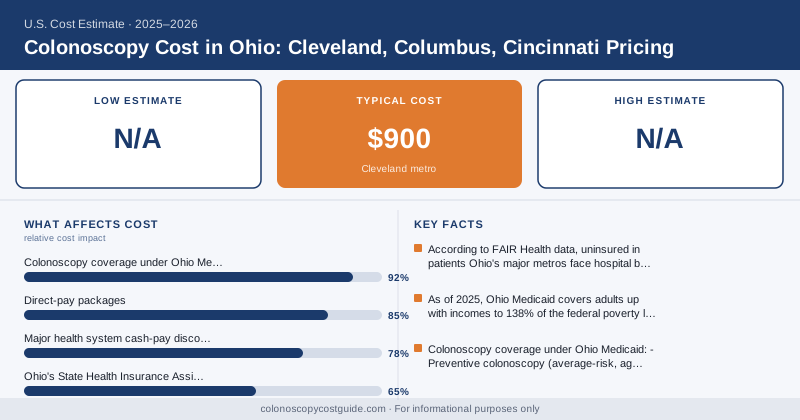
{ if eq .Lang "zh" }{ else }{ end }Ohio sits in the middle of the national range for colonoscopy costs — but the gap between hospital and ASC pricing here is especially wide. According to FAIR Health data, uninsured patients in Ohio’s major metros face hospital billed charges of $3,800–$6,200 for a diagnostic colonoscopy, while freestanding ambulatory surgery centers in the same cities charge $1,400–$2,800 for the equivalent procedure. That’s a gap of $2,000–$3,500 for an identical scope.
For insured patients, that gap flows through to your out-of-pocket. For self-pay patients, it determines everything.
Ohio City-by-City Price Ranges
| City | Hospital Outpatient | ASC / Freestanding | Self-Pay ASC (All-In Est.) |
|---|---|---|---|
| Cleveland metro | $2,200–$4,500 | $1,000–$1,800 | $900–$1,500 |
| Columbus | $2,100–$4,300 | $950–$1,700 | $850–$1,400 |
| Cincinnati | $2,000–$4,100 | $900–$1,600 | $800–$1,350 |
| Toledo | $1,900–$3,900 | $850–$1,500 | $750–$1,300 |
| Dayton | $1,800–$3,800 | $800–$1,400 | $750–$1,250 |
| Akron | $2,000–$4,000 | $900–$1,600 | $850–$1,400 |
These ranges cover the facility fee plus the GI physician fee. Anesthesia is typically a separate bill: $300–$700 at most Ohio ASCs, and $400–$900 at hospital outpatient departments. Pathology, if polyps are removed, adds $200–$600 on top.
Cleveland Metro Breakdown
Cleveland has one of the most concentrated health systems in the country — Cleveland Clinic and University Hospitals dominate the market, and both command premium pricing at their hospital outpatient departments. Cleveland Clinic’s main campus and University Hospitals Cleveland Medical Center are quality institutions, but their facility fees reflect their infrastructure.
Your better move in the Cleveland area: Cleveland Clinic’s own satellite endoscopy centers and independent GI practices in suburbs like Beachwood, Westlake, and Independence typically offer ASC-level pricing with the same quality physicians. Cleveland Clinic also has a robust financial assistance program — patients with household incomes under 300% of the federal poverty level may qualify for significant discounts or free care.
Columbus Breakdown
Columbus is Ohio’s largest city and has strong competition among GI providers. Ohio Gastroenterology Group and Digestive Disease Consultants of Central Ohio are large independent practices operating their own ASC suites — generally priced at the lower end of the ASC range above. OhioHealth’s Physicians Group also offers competitive bundled pricing for self-pay patients.
The Columbus area has several Federally Qualified Health Centers (FQHCs) — OhioHealth’s free and charitable care program and Columbus Public Health facilities offer sliding-scale services, though colonoscopy availability at FQHCs varies.
Cincinnati Breakdown
Cincinnati’s major health systems — UC Health, TriHealth, and Mercy Health — operate at hospital outpatient pricing for their main campuses. Independent GI practices on the Kentucky border (across the river in Northern Kentucky) sometimes offer lower pricing, as Kentucky’s market has historically been less consolidated.
TriHealth has a financial counseling program that can substantially reduce charges for self-pay or underinsured patients. It’s worth calling before you schedule.
Ohio Medicaid: Expansion Coverage
Ohio expanded Medicaid under the ACA in January 2014, making it one of the earlier expansion states. As of 2025, Ohio Medicaid covers adults with incomes up to 138% of the federal poverty level — roughly $20,100/year for a single adult.
Colonoscopy coverage under Ohio Medicaid:
- Preventive colonoscopy (average-risk, age 45+): covered with $0 cost-sharing
- Diagnostic colonoscopy: covered with possible copays ($1–$3 per visit for most managed care plans)
- Ohio Medicaid is administered through managed care plans (CareSource, Molina, Buckeye, Paramount, UnitedHealthcare) — each may have slightly different provider networks
To find Ohio Medicaid-participating GI providers, use the Ohio Department of Medicaid provider search or call your managed care plan directly.
Ohio's Community Health Center Network
Self-Pay Strategies in Ohio
If you’re uninsured or facing a high deductible, Ohio is actually a reasonable market for self-pay colonoscopy:
Direct-pay packages: Several ASCs in Ohio’s major cities offer direct-pay colonoscopy packages in the $800–$1,200 range for a routine diagnostic scope. These typically bundle facility + physician but not anesthesia or pathology. ColonoscopyAssist and MDsave list Ohio-area providers.
Major health system cash-pay discounts: OhioHealth, Mercy Health, and even Cleveland Clinic offer self-pay discounts of 20–40% off billed charges when you ask the billing department directly. Always call before your procedure, not after.
Ohio’s State Health Insurance Assistance Program (OSHIAP): If you’re a Medicare beneficiary and facing costs for a diagnostic colonoscopy, OSHIAP counselors (free service) can help you understand your Part B benefits and find lower-cost providers.
The ACS Screening Rate Context
The American Cancer Society’s 2023 Colorectal Cancer Facts & Figures report noted that Ohio’s colorectal cancer incidence rate is slightly above the national average — one of the reasons early screening matters more here. Ohio has also invested in awareness campaigns through the Ohio Colorectal Cancer Prevention Initiative, which sometimes offers vouchers for low-cost screening in underserved counties.
If you’re deciding between a hospital and an ASC in Ohio, the ASC is almost always the right call for routine screening — same outcome, meaningfully lower cost.
For general cost-cutting strategies before you book anywhere, see how to schedule the cheapest colonoscopy. For a comparison of what each facility type includes in its bill, ambulatory surgery center vs. hospital colonoscopy cost breaks down every line item.
{ if eq .Lang "zh" }