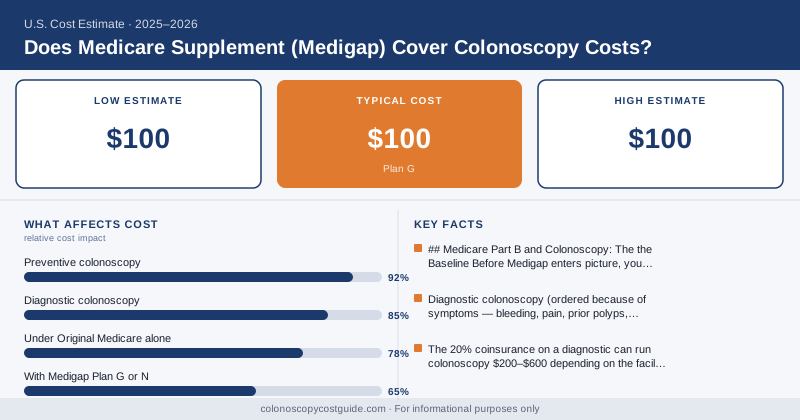
Does Medicare Supplement (Medigap) Cover Colonoscopy Costs?
{ if eq .Lang "zh" }{ else }{ end }Two neighbors, both on Medicare, both get a colonoscopy at the same ambulatory surgery center on the same day. One walks out with a $0 bill. The other gets a $400 coinsurance statement in the mail three weeks later. Same procedure. Same physician. Same facility. The difference? Supplemental coverage.
Medicare Supplement insurance — also called Medigap — is the biggest variable in what a Medicare beneficiary actually pays for a colonoscopy. But not all Medigap plans cover the same coinsurance amounts, and the rules shift depending on whether your procedure is classified as preventive or diagnostic. Here’s how it actually works.
Medicare Part B and Colonoscopy: The Baseline
Before Medigap enters the picture, you need to understand what Original Medicare (Parts A and B) covers on its own:
Preventive colonoscopy (average-risk, age 50+ every 10 years, or high-risk every 2 years under Medicare’s schedule): Medicare Part B covers 100% of the Medicare-approved amount when done by an in-network provider. Your Part B deductible does NOT apply, and your coinsurance is waived. Net cost: $0.
Diagnostic colonoscopy (ordered because of symptoms — bleeding, pain, prior polyps, etc.): Medicare covers 80% of the approved amount after your annual Part B deductible ($257 in 2025). You owe the remaining 20% coinsurance plus the deductible if not yet met.
The 20% coinsurance on a diagnostic colonoscopy can run $200–$600 depending on the facility type and Medicare’s approved rate. That’s where Medigap comes in.
How Medigap Handles Colonoscopy Costs
| Medigap Plan | Part B Coinsurance Coverage | Preventive Colonoscopy Cost | Diagnostic Colonoscopy Cost |
|---|---|---|---|
| Plan G | 100% of coinsurance covered | $0 | $0 (after Part B deductible) |
| Plan F* | 100% + Part B deductible covered | $0 | $0 (deductible covered too) |
| Plan N | 100% covered (with up to $20 office copay) | $0 | $0 (no copay for procedures) |
| Plan K | 50% of Part B coinsurance | $0 | ~$100–$300 remaining |
| Plan L | 75% of Part B coinsurance | $0 | ~$50–$150 remaining |
| Plan A | Does NOT cover Part B coinsurance | $0 | Full 20% owed |
| Plan B | Does NOT cover Part B coinsurance | $0 | Full 20% owed |
*Plan F is only available to Medicare beneficiaries who became eligible before January 1, 2020.
The big takeaway: Plan G (the most popular comprehensive plan for newer Medicare enrollees) and Plan N (slightly cheaper, with small copays for some office visits) both cover the full 20% Part B coinsurance. For a diagnostic colonoscopy at an ASC, that’s $0 out of pocket after your Plan G deductible is met — or after your Part B deductible for Plan G, which you pay once per year regardless.
The Preventive-to-Diagnostic Reclassification Problem
Here’s where it gets complicated. Even if your colonoscopy starts as a preventive screening — meaning $0 planned — it can get reclassified as a diagnostic procedure mid-procedure or afterward, depending on what the doctor finds. This has happened to thousands of Medicare beneficiaries.
The scenario: you go in for a routine preventive colonoscopy. Your doctor finds and removes a polyp. The procedure, which started as preventive, may now be billed as diagnostic because a therapeutic intervention occurred.
Under Original Medicare alone: That reclassification means you suddenly owe the 20% coinsurance you weren’t expecting.
With Medigap Plan G or N: It still doesn’t matter. Your Medigap plan covers the Part B coinsurance regardless of how the procedure is classified — preventive or diagnostic. That’s the real value of comprehensive Medigap coverage for GI procedures.
The 2022 ACA Rule That Partially Fixed This
Plan G vs. Plan N: Which Is Better for Colonoscopy?
For colonoscopy costs specifically, both Plan G and Plan N produce the same outcome: $0 coinsurance after your Part B deductible. The Plan N distinction comes in the form of copays for some physician office visits (up to $20) — but colonoscopies performed in an ASC or hospital outpatient setting are not office visits, so the Plan N copay doesn’t apply.
The decision between G and N typically comes down to monthly premiums (Plan N is usually $20–$50/month cheaper) and your overall healthcare utilization — not colonoscopy costs specifically.
What If You Have a Medicare Advantage Plan Instead?
Medicare Advantage (Part C) is not Medigap. If you have a Medicare Advantage plan, your colonoscopy costs are governed entirely by your plan’s Summary of Benefits — not by Part B coinsurance rules. Medicare Advantage plans can structure cost-sharing however they choose within regulatory limits.
Typical Medicare Advantage colonoscopy costs:
- Preventive (in-network): $0 cost-sharing (required by law for preventive services)
- Diagnostic (in-network): $0–$250 copay depending on plan design
- Diagnostic (out-of-network): Can be significant — up to full cost in HMO plans
Medicare Advantage plans don’t use Medigap at all. You can’t have both.
Medigap + Colonoscopy: Practical Checklist
Before your procedure:
- Confirm your colonoscopy classification with the ordering physician: is it being billed as preventive (Z12.11) or diagnostic?
- Verify the facility is Medicare-participating — non-participating providers can balance bill beyond Medicare rates
- Check your Medigap plan’s Summary of Benefits for Part B coinsurance coverage percentage
- Call your Medigap insurer if you have Plan K or L — ask specifically what your colonoscopy coinsurance responsibility will be under the plan
For a broader look at how Medicare covers colonoscopy, see colonoscopy cost with Medicare and the ACA rule on polyp removal and free colonoscopies for the non-Medicare equivalent.
{ if eq .Lang "zh" }