Colonoscopy Cost on Medicare Advantage: What's Different From Original Medicare
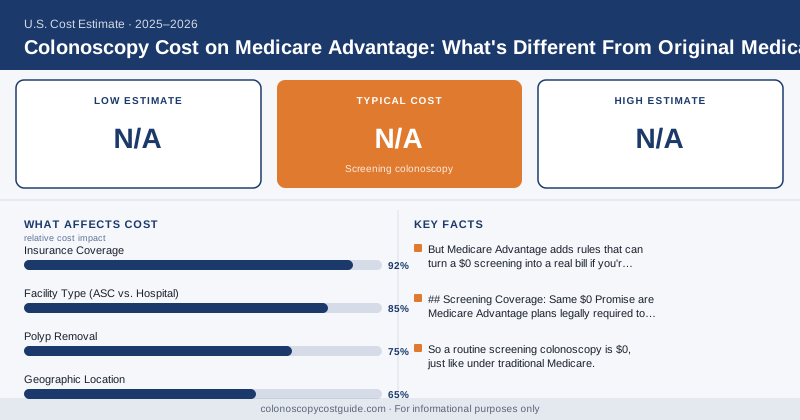
{ if eq .Lang "zh" }{ else }{ end }More than half of all Medicare beneficiaries are now enrolled in Medicare Advantage — KFF puts it at over 32 million people. If you’re one of them with a colonoscopy on the calendar, you might assume coverage mirrors Original Medicare exactly. Mostly it does. But Medicare Advantage adds rules that can turn a $0 screening into a real bill if you’re not careful.
The plans must cover everything Original Medicare covers. What they’re allowed to add — networks, prior auth, copay structures — is where costs sneak in.
Screening Coverage: Same $0 Promise
Medicare Advantage plans are legally required to cover all Original Medicare benefits, including preventive colorectal cancer screening at no cost. So a routine screening colonoscopy is $0, just like under traditional Medicare. The screening frequency rules are the same too — every 10 years for average-risk patients, more often if you’re high-risk. Our Medicare colonoscopy cost guide covers those frequency windows in detail.
Key Takeaway
Where Medicare Advantage Costs Diverge
The added rules create three cost risks Original Medicare doesn’t have.
| Factor | Original Medicare | Medicare Advantage |
|---|---|---|
| Screening colonoscopy | $0 | $0 |
| Network restriction | Any Medicare provider | In-network only |
| Prior authorization | Rare | Frequent for diagnostic |
| Polyp removed during screening | $0 (Part B, fully covered) | Possible plan copay $200–$600 |
| Out-of-network procedure | N/A | High cost or denial |
That polyp-removal line is the big one for many. Under recent federal rules, removing a polyp during a screening colonoscopy is supposed to stay $0 — but Medicare Advantage plans sometimes apply their own copay structure. Always ask in advance how a polypectomy gets billed on your specific plan.
The Prior Authorization Problem
Medicare Advantage plans love prior authorization, and that’s caused real friction. A 2023 report from the HHS Office of Inspector General found Medicare Advantage plans denied a notable share of prior-authorization requests for services that Original Medicare would have covered. Many of those denials were overturned on appeal — meaning the care was appropriate all along.
For a colonoscopy, that translates to a clear action item: confirm whether your procedure needs authorization before you schedule. Our prior authorization cost discussion explains how denials work and how to fight them.
Network Rules Matter More Than You Think
With Original Medicare, almost any gastroenterologist who takes Medicare will do. Medicare Advantage uses networks — HMO plans are strict, PPO plans more flexible but pricier out-of-network. Before booking, confirm your gastroenterologist, the facility, the anesthesia provider, and the pathology lab are all in-network. A single out-of-network link can generate a charge, though the No Surprises Act may still protect you against out-of-network anesthesia bills at an in-network facility.
Comparing the Two Before You Choose
If you’re still deciding between Original Medicare and Medicare Advantage, colonoscopy coverage is a useful test case. Advantage plans can offer extra benefits and lower premiums, but they trade away the freedom and predictability of Original Medicare. For a procedure with multiple providers like a colonoscopy, that trade-off is worth weighing. Our Medicare cost guide compares both side by side.
Bottom Line
Medicare Advantage covers your screening colonoscopy at $0, exactly like Original Medicare. The cost risk comes from the extras: staying in-network, clearing prior authorization, and watching how polyp removal gets billed. Confirm all four providers are in-network, get authorization in writing, and ask how a polypectomy will be coded. Do that and your Medicare Advantage colonoscopy should cost what it’s supposed to — nothing.
{ if eq .Lang "zh" }