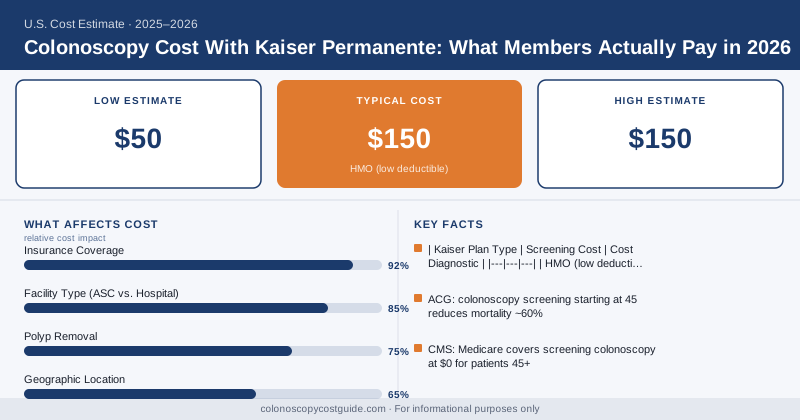
Colonoscopy Cost With Kaiser Permanente: What Members Actually Pay in 2026
{ if eq .Lang "zh" }{ else }{ end }Most Kaiser Permanente members walk out of a screening colonoscopy owing $0. That’s not a sales pitch — it’s how Kaiser’s integrated model works for preventive care. But the moment your procedure shifts from screening to diagnostic, the numbers change fast.
Kaiser is different from a PPO. You’re not juggling separate bills from a hospital, a gastroenterologist, an anesthesiologist, and a pathology lab. It’s all one system. That structure is exactly why Kaiser members rarely get the surprise bills that plague other patients.
Screening Colonoscopy: $0 for Most Kaiser Members
If you’re 45 or older and getting a routine screening, the Affordable Care Act requires your plan to cover it at 100%. Kaiser follows this rule. The U.S. Preventive Services Task Force lowered the recommended screening age to 45 in 2021, and Kaiser updated its coverage to match.
Key Takeaway
Diagnostic Colonoscopy: What You’ll Actually Owe
A diagnostic colonoscopy — one ordered because of symptoms like bleeding, pain, or a positive stool test — is billed differently. It’s not preventive, so cost-sharing applies. Understanding the difference between screening and diagnostic is the single biggest factor in your bill.
| Kaiser Plan Type | Screening Cost | Diagnostic Cost |
|---|---|---|
| HMO (low deductible) | $0 | $50–$150 specialty copay |
| HMO (standard) | $0 | $100–$300 |
| Deductible HMO / HDHP | $0 | Full negotiated rate until deductible met ($400–$900) |
| Medicare Advantage (Kaiser Senior Advantage) | $0 | $0–$60 |
Your exact cost depends on which Kaiser plan your employer or marketplace chose. A low-deductible HMO might charge a simple $100 specialty visit copay. A high-deductible plan means you pay Kaiser’s negotiated rate until your deductible is satisfied. For broader context on how plans stack up, see our colonoscopy cost with insurance guide.
The Polyp Reclassification Trap
Here’s where Kaiser members get tripped up. You go in for a free screening. The doctor finds and removes a polyp. Federal rules say that polyp removal during a screening should still be covered as preventive — that’s been the law since a 2022 federal guidance clarification closed the loophole. But coding errors happen.
If you do get an incorrect bill, our insurance denial and appeal walkthrough shows you exactly what to write.
Why Kaiser Bills Are Usually Cleaner
In a typical PPO, the anesthesiologist might be out-of-network even when the facility is in-network — that’s the classic surprise-bill setup. Kaiser’s staff-model design means everyone involved in your colonoscopy is a Kaiser employee or contracted provider. The anesthesia is in-network. The pathology lab is internal. You get one explanation of benefits, not four.
KFF research has consistently found that surprise out-of-network billing is far less common in integrated and HMO systems than in open PPO networks. For Kaiser members, that translates to fewer billing headaches.
How to Confirm Your Cost Before the Procedure
Don’t guess. Log into your Kaiser member portal or call the number on your card and ask three specific questions:
- Is my colonoscopy coded as screening or diagnostic?
- What’s my remaining deductible this year?
- If a polyp is found and removed, how will that be billed?
Getting these answers in writing protects you. If your procedure is diagnostic and the cost feels high, our guide on how to lower your colonoscopy bill covers payment plans and financial-assistance options that Kaiser offers.
Bottom Line
For the average Kaiser member, a screening colonoscopy is genuinely free. Diagnostic procedures run $100 to $600 in most cases, and high-deductible plan holders may pay more until they hit their deductible. The integrated model spares you the multi-bill chaos — but it doesn’t spare you from coding mistakes, so verify your classification every time. If you want to understand the underlying price drivers, our breakdown of why colonoscopies are so expensive explains where the money actually goes.
{ if eq .Lang "zh" }