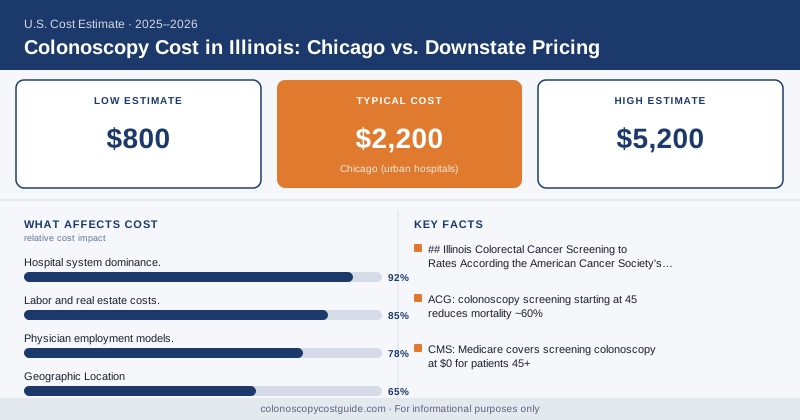
Colonoscopy Cost in Illinois: Chicago vs. Downstate Pricing
{ if eq .Lang "zh" }{ else }{ end }A colonoscopy at Northwestern Memorial Hospital in Chicago’s Streeterville neighborhood bills at $4,000–$5,200 for the facility fee alone. Drive two hours south to a Springfield ASC and the same procedure — same CPT codes, same clinical standard — bills at $900–$1,500. For an uninsured patient paying out of pocket, that geography-driven difference isn’t academic. It’s $2,500 or more.
Illinois has a stark geographic price divide. Chicago’s hospital market is dominated by a handful of large academic systems — Northwestern Medicine, Rush University Medical Center, UChicago Medicine, Advocate Aurora Health — that command high contracted rates from commercial insurers. Downstate Illinois, by contrast, has far less market consolidation, more independent providers, and competitive ASC pricing that makes cash-pay colonoscopy genuinely affordable.
Illinois Colonoscopy Costs by Metro
| City | Hospital Outpatient (Billed) | ASC (Billed) | Self-Pay/Cash Rate (ASC) |
|---|---|---|---|
| Chicago (urban hospitals) | $2,500–$5,200 | $1,200–$2,200 | $800–$1,500 |
| Chicago suburbs | $2,000–$4,200 | $1,000–$1,900 | $700–$1,250 |
| Springfield | $1,900–$3,800 | $900–$1,500 | $600–$1,000 |
| Peoria | $1,800–$3,600 | $850–$1,400 | $575–$950 |
| Rockford | $1,850–$3,700 | $875–$1,450 | $590–$975 |
| Champaign-Urbana | $1,750–$3,500 | $825–$1,400 | $550–$920 |
These are facility fees. Physician billing ($300–$600) and, if propofol sedation is used, a separate anesthesia charge ($300–$700) are billed in addition. Total all-in charges for a diagnostic colonoscopy range from about $1,400 to $6,500 depending on location and setting.
Why Chicago’s Prices Run So High
Three factors drive the Chicago premium:
Hospital system dominance. Northwestern Medicine and Rush University have among the highest commercial insurance reimbursement rates in Illinois. When large employer groups and major insurers negotiate statewide contracts, Chicago-area facilities command significantly higher facility fees per procedure than downstate competitors.
Labor and real estate costs. Operating an endoscopy suite in River North or the Medical District costs materially more than in Springfield. Those costs are embedded in facility fees.
Physician employment models. Major Chicago hospital systems employ most of their GI physicians, bundling physician and facility billing in ways that can obscure the true cost-per-procedure from patients.
Illinois Medicaid (Expanded) Coverage
Illinois expanded Medicaid under the ACA through its Medicaid program (administered by the Illinois Department of Healthcare and Family Services, or IDHFS). Adults up to 138% of the federal poverty level qualify regardless of family status.
Illinois Medicaid covers colonoscopy for preventive screening per USPSTF guidelines and for medically necessary diagnostic indications. Illinois also operates the All Kids program and the Family Health Connect program, broadening coverage for parents and children above the Medicaid threshold.
To check eligibility or apply, visit abe.illinois.gov or call 1-800-843-6154. For recent immigrants not yet eligible for federal Medicaid, Illinois operates a state-funded program that covers some healthcare services.
Chicago-Specific Low-Cost Resources
Cook County Health System. Cook County Health (CCH) operates Stroger Hospital and Provident Hospital in Chicago, plus a network of Familiar Faces and CountyCare clinics throughout Cook County. CCH offers GI services and colonoscopies through its CountyCare Medicaid managed care plan. For uninsured patients, CCH operates a sliding-fee schedule. GI referrals and colonoscopy services are available for income-qualifying residents.
Northwestern Medicine Financial Assistance. Northwestern offers a charity care program for uninsured and underinsured patients. Income-qualifying patients may receive significant discounts — sometimes 50–70% off billed charges. Call their financial counseling office before your procedure to apply.
Rush University Community Care. Rush has a financial assistance program and a community health network (RUSH Health) with sliding-scale clinics. For GI referrals, ask your primary care provider to route through RUSH Health if you’re income-qualifying.
UChicago Medicine Sliding Scale. UChicago Medicine offers financial assistance for patients below certain income thresholds. Their South Side location serves a large medically underserved population, and their financial counselors are experienced with sliding-scale applications.
The Downstate Savings Strategy for Uninsured Chicagoans
Illinois Colorectal Cancer Screening Rates
According to the American Cancer Society’s state-by-state screening analysis, Illinois has a colorectal cancer screening rate of approximately 70% for adults 45–75 — slightly above the national average of 68% (ACS Cancer Facts & Figures, 2024). The Chicago metropolitan area drives this figure upward, while some rural downstate counties have screening rates below 60%.
Cook County has active public health campaigns — including the Cook County Department of Public Health’s colorectal cancer screening initiative — aimed at closing the access gap. These programs sometimes include free FIT (fecal immunochemical test) kits and vouchers for follow-up colonoscopy when indicated.
For a side-by-side look at how facility type affects the cost, see ambulatory surgery center vs. hospital colonoscopy cost. For insured patients managing high deductibles, see colonoscopy cost with a high-deductible health plan.
{ if eq .Lang "zh" }