Colonoscopy Cost for College Students: Coverage and Cheap Options
{ if eq .Lang "zh" }{ else }{ end }Why would a 20-year-old need a colonoscopy? It’s a fair question, and the answer matters more than most college students realize: colorectal cancer rates in adults under 50 have been rising, and unexplained GI symptoms in young adults shouldn’t automatically be dismissed as “just stress” or diet. If your doctor has recommended one, here’s how the cost picture actually works for a college student.
College Student Colonoscopy Cost Scenarios
| Coverage Situation | Typical Out-of-Pocket Cost | Notes |
|---|---|---|
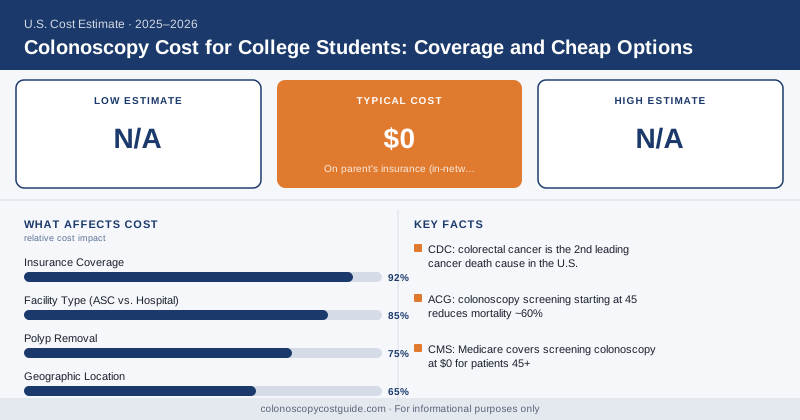
| On parent’s insurance (in-network) | $0 – $500 | ACA allows coverage until age 26 |
| University student health insurance plan (SHIP) | $50 – $600 | Coverage varies significantly by school |
| Uninsured, self-pay at ASC | $900 – $1,800 | Ask about student or cash-pay discounts |
| Campus health center referral to community GI | Referral cost only + procedure cost | Often expedites specialist access |
Why the ACA “Age 26” Rule Matters Here
Under the Affordable Care Act, young adults can remain on a parent’s health insurance plan until they turn 26, regardless of student status, marital status, or financial independence. This means most college students — undergrad or grad school — can access a colonoscopy with the same cost-sharing terms that apply to any other family member on that plan: deductible, coinsurance, and any applicable copay.
If a colonoscopy is recommended while you’re away at school, check whether your parent’s plan has adequate network coverage in your college town — many national insurers do, but regional or narrow-network plans may require you to travel home for in-network care, or seek a single-case network exception.
Why a College Student Might Need One
Colorectal cancer in adults under 50 has increased significantly over the past two decades, according to American Cancer Society data, prompting the organization to lower its recommended average-risk screening age from 50 to 45 in 2018. While routine screening still doesn’t typically start until 45, a diagnostic colonoscopy may be recommended for a college-age student with:
- Unexplained or persistent rectal bleeding
- Chronic abdominal pain or significant changes in bowel habits
- A family history of colorectal cancer or polyps, especially early-onset cases
- Symptoms suggestive of inflammatory bowel disease (Crohn’s disease or ulcerative colitis), which frequently first presents in the late teens and twenties
Don't Dismiss GI Symptoms as 'Just College Stress'
Using Your University’s Student Health Center
Most campus health centers can’t perform colonoscopies on-site but serve as a low-cost first stop for evaluation and referral. A campus health center visit is typically free or low-cost (often covered by mandatory student health fees), and can help you get a faster, more targeted referral to a local gastroenterologist than navigating the referral process alone in an unfamiliar city.
If You’re on a University Student Health Insurance Plan (SHIP)
Many colleges offer their own student health insurance plan for students without other coverage, particularly international students and graduate students. SHIP coverage for diagnostic colonoscopy varies significantly by school — some plans mirror robust commercial coverage, while others have more limited networks or higher cost-sharing. Review your school’s official Summary of Benefits and Coverage document, available through the student health insurance office, before assuming your costs will match a typical commercial plan.
The Bottom Line
Most college students can access a colonoscopy at low or no out-of-pocket cost through a parent’s insurance under the ACA’s age-26 provision, or through university-sponsored student health coverage. If you’re experiencing persistent GI symptoms, don’t let assumptions about age or student budget concerns delay getting evaluated — early diagnosis matters just as much in your twenties as it does later in life, and campus health centers are a good, low-cost first step toward the right referral.
{ if eq .Lang "zh" }