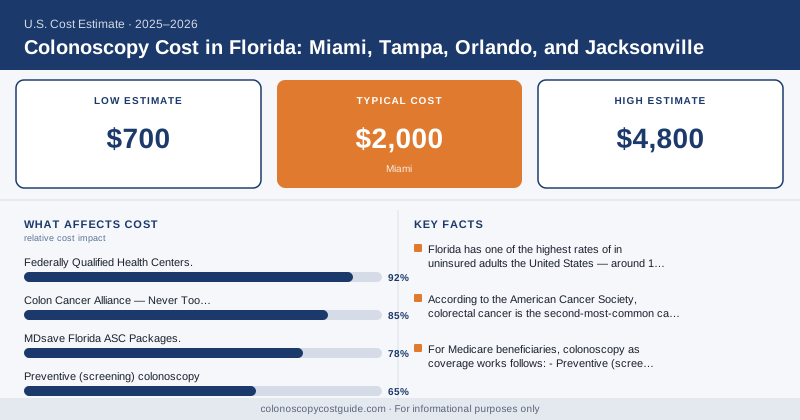
Colonoscopy Cost in Florida: Miami, Tampa, Orlando, and Jacksonville
{ if eq .Lang "zh" }{ else }{ end }Florida has one of the highest rates of uninsured adults in the United States — around 11–12% of the adult population, well above the national average — and it’s also one of the few states that declined to expand Medicaid under the ACA. That combination makes colonoscopy cost a genuinely high-stakes question for hundreds of thousands of Floridians who need this screening but don’t have coverage to fall back on.
The consequences aren’t abstract. According to the American Cancer Society, colorectal cancer is the second-most-common cause of cancer death among Americans, and the 5-year survival rate drops from over 90% when caught at Stage I to around 15% when caught at Stage IV. Knowing what colonoscopy actually costs in your Florida city — and where to find affordable options — could be the difference between catching a cancer early and missing it entirely.
Florida Colonoscopy Costs by Metro
| City | Hospital Outpatient (Billed) | ASC (Billed) | Self-Pay/Cash Rate (ASC) |
|---|---|---|---|
| Miami | $2,200–$4,800 | $1,100–$2,000 | $700–$1,300 |
| Tampa | $2,000–$4,200 | $950–$1,700 | $650–$1,100 |
| Orlando | $1,900–$4,000 | $900–$1,600 | $600–$1,050 |
| Jacksonville | $1,800–$3,800 | $850–$1,500 | $575–$1,000 |
| Fort Lauderdale | $2,100–$4,500 | $1,000–$1,900 | $650–$1,200 |
These are facility fees. You’ll also pay a GI physician fee ($300–$600 separately billed) and potentially a separate anesthesia charge ($300–$700) if propofol sedation is used. For insured patients on employer plans, your out-of-pocket depends entirely on where you are in your deductible year and whether the colonoscopy is classified preventive or diagnostic.
Florida Medicaid: What You Need to Know
Florida’s Medicaid program did not expand under the ACA, so non-disabled adults without dependent children generally don’t qualify regardless of income. Florida’s income threshold for parent coverage is among the lowest in the nation — roughly 26% of the federal poverty level (about $6,800/year for a single parent with one child). That’s not a typo.
For those who do qualify — children, pregnant women, people with disabilities, very low-income parents — Florida Medicaid (managed through regional plans like Sunshine Health, Molina, and Humana Medical Plan of Florida) does cover colonoscopy when medically indicated.
If you don’t qualify for Medicaid but have low income, your primary pathways to affordable colonoscopy are FQHCs, free colonoscopy programs, and self-pay ASC packages.
Specific Options for Uninsured Floridians
Federally Qualified Health Centers. Florida has a broad network of FQHCs — organizations like Community Health of South Florida (CHI), Tampa Family Health Centers, and Community Health Centers of Pinellas operate dozens of sites serving uninsured and low-income patients on a sliding-scale fee. GI consultations at FQHCs may be $20–$100; they typically coordinate the colonoscopy referral itself at negotiated ASC rates. Find locations at findahealthcenter.hrsa.gov.
Colon Cancer Alliance — Never Too Busy Program. This national nonprofit provides free colonoscopies to uninsured and underinsured adults who meet income guidelines and are at average or high risk. Florida is a well-served state in their program. Apply at ccalliance.org.
MDsave Florida ASC Packages. MDsave operates in Florida and partners with accredited ASCs to offer bundled colonoscopy pricing — typically $599–$1,099 all-inclusive (facility, anesthesia, pathology). These are legitimate facilities, not discount clinics.
Health Council of East Central Florida and Regional Programs. Some Florida counties have local uninsured patient assistance programs coordinated by regional health councils. Coverage and availability vary by county — check with your county health department.
Free Colonoscopy Programs: Start With the CCA
Medicare in Florida: What Retirees Need to Know
Florida has one of the largest Medicare populations in the country — nearly one in five Floridians is enrolled in Medicare. For Medicare beneficiaries, colonoscopy coverage works as follows:
- Preventive (screening) colonoscopy: No deductible, no coinsurance — $0 out of pocket if you’re at average risk (once every 10 years) or high risk (once every 24 months)
- Diagnostic colonoscopy: Subject to the Part B deductible and 20% coinsurance — typically $200–$400 out of pocket after deductible
- Polyp removal during screening: Part B deductible applies, 20% coinsurance — the screening reclassifies to diagnostic under traditional Medicare rules
For Medicare Advantage beneficiaries, the rules depend on your specific plan. Many MA plans waive cost-sharing for preventive colonoscopy, but you need to verify in-network providers. The difference between a $0 preventive and a $300+ diagnostic can hinge on a single polyp removal.
For more detail on Medicare colonoscopy coverage, see colonoscopy cost with Medicare.
Insured Floridians: Watch the Out-of-Network Trap
Florida has a large number of private hospital systems — HCA Healthcare, AdventHealth, BayCare, Baptist Health — many of which have exclusive or preferred insurance relationships. If your GI doctor works at a hospital that is not in your plan’s narrowest network tier, you could face substantial out-of-network cost-sharing.
Florida adopted the federal No Surprises Act protections, so surprise bills from out-of-network providers for emergency care are now limited. But for scheduled colonoscopies, choosing an out-of-network facility is still your financial responsibility. Always verify both the facility and the physician (and the anesthesiologist) are in-network before you schedule.
For uninsured patients weighing options, also see colonoscopy cost without insurance and how to reduce colonoscopy cost for actionable negotiation strategies.
{ if eq .Lang "zh" }