Colonoscopy Cost on COBRA: Is It Worth Keeping Coverage for the Procedure?
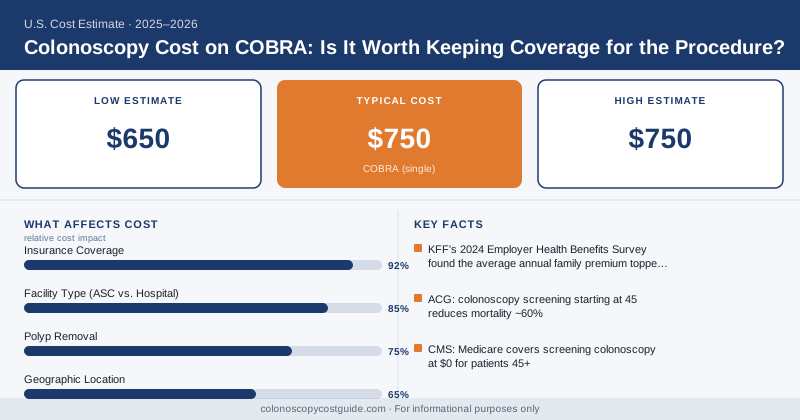
{ if eq .Lang "zh" }{ else }{ end }You just left your job — or lost it — and you’ve got a colonoscopy scheduled. COBRA lets you keep your old plan, but that full premium is a gut punch: often $650 to $750 a month for one person. So the real question isn’t “does COBRA cover a colonoscopy?” It does. The question is whether paying that premium is the smartest way to cover it.
Let’s run the actual numbers, because the answer flips depending on your situation.
COBRA Covers Colonoscopies Exactly Like Before
COBRA isn’t a new plan. It’s a continuation of the identical employer coverage you already had. Same network, same deductible, same cost-sharing. So your colonoscopy is covered precisely as it would’ve been on your last day of work — including $0 screening coverage under the ACA. Nothing about the coverage changes; only who pays the premium does.
Key Takeaway
The Real Cost of COBRA
When you were employed, your employer paid most of your premium. KFF’s 2024 Employer Health Benefits Survey found the average annual family premium topped $25,000, with employers covering the bulk of it. On COBRA, that subsidy vanishes — you pay the whole thing plus up to a 2% administrative charge.
| Coverage Path | Monthly Cost | Colonoscopy Out-of-Pocket |
|---|---|---|
| COBRA (single) | $650–$750 | Same as old plan ($0 screening / deductible diagnostic) |
| Marketplace Silver plan | $300–$500 (before subsidy) | Deductible + coinsurance |
| Marketplace w/ subsidy | $0–$200 | Deductible + coinsurance |
| Self-pay cash rate | $0 premium | $1,250–$3,000 full procedure |
For a wider comparison of these paths, our colonoscopy cost with insurance guide breaks down each option.
When COBRA Is Worth It for a Colonoscopy
There’s one situation where COBRA is clearly the winner: you’ve already met most or all of your deductible this year on the old plan. COBRA carries that progress forward. If you’ve paid $5,000 toward a $5,000 deductible and then start fresh on a Marketplace plan, you reset to zero and pay that deductible all over again. Keeping COBRA preserves the money you’ve already spent.
COBRA also makes sense if you need to keep a specific in-network gastroenterologist or facility that a cheaper plan wouldn’t cover, or if you’re mid-treatment and switching networks would disrupt care.
When COBRA Is a Waste
If you’re early in the plan year with an untouched deductible and your only near-term need is the colonoscopy, COBRA is often the expensive choice. A subsidized Marketplace plan can cost far less in premium, and for a screening it’s free either way. And if you’re truly only getting one procedure, paying the self-pay cash rate can beat months of COBRA premiums.
That retroactive election window is the single most underused feature of COBRA. Use it strategically.
Self-Pay as a Backup
If COBRA and Marketplace both look too pricey, paying cash isn’t crazy. Many facilities offer discounted self-pay rates, and you can negotiate. Our colonoscopy cost without insurance guide shows typical cash prices, and how to lower your colonoscopy bill covers negotiation. Just remember a screening that should be free isn’t free when you’re paying cash, so weigh that.
Bottom Line
COBRA covers your colonoscopy exactly like your old plan did, but you’re shouldering a $650-plus monthly premium to do it. It’s worth it if you’ve already burned through your deductible or need specific providers. If your deductible is untouched and the colonoscopy is your main concern, a subsidized Marketplace plan or even self-pay often costs less. And don’t forget the 60-day retroactive election window — it lets you keep your options open until the bill actually lands.
{ if eq .Lang "zh" }