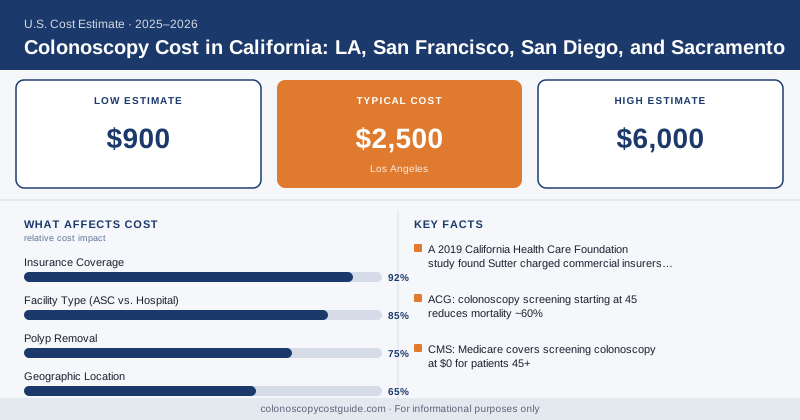
Colonoscopy Cost in California: LA, San Francisco, San Diego, and Sacramento
{ if eq .Lang "zh" }{ else }{ end }Same ASC network. Same procedure. Same anesthesiologist protocol. But in Sacramento, the all-in facility fee comes in at $1,200–$2,000. In San Francisco, the identical network bills $1,800–$3,000 for the same colonoscopy. That 40–60% gap isn’t a negotiating error — it’s a geographic reality baked into California’s insurance contracting market.
California is one of the most expensive states in the country for outpatient procedures, according to FAIR Health’s 2023 regional benchmarking data. Hospital outpatient colonoscopy charges in major California metros rank in the top quartile nationally. But there’s a wide price spectrum even within the state — and understanding where you fall on that spectrum can save you $1,500 or more.
California Colonoscopy Costs by Metro
| Metro Area | Hospital Outpatient (Billed) | ASC (Billed) | Self-Pay/Cash Rate (ASC) |
|---|---|---|---|
| Los Angeles | $3,000–$6,000 | $1,500–$2,500 | $900–$1,600 |
| SF Bay Area | $3,500–$6,500 | $1,800–$3,000 | $1,100–$1,900 |
| San Diego | $2,800–$5,500 | $1,400–$2,200 | $900–$1,500 |
| Sacramento | $2,500–$5,000 | $1,200–$2,000 | $750–$1,300 |
| Fresno / Central Valley | $2,000–$4,200 | $1,000–$1,800 | $650–$1,100 |
Physician fees ($300–$600) and anesthesia charges ($400–$900) are on top of facility fees. For insured patients with active deductibles, figure total out-of-pocket exposure of $500–$2,000 for a diagnostic colonoscopy, depending on your cost-sharing structure.
Why California Costs Run So High
California hospitals are among the most profitable in the US, and they negotiate aggressively with commercial insurers. The California Hospital Association reports that California has experienced significant hospital consolidation over the past decade — Sutter Health, Cedars-Sinai, and UCSF Health command high contracted rates in their markets, and those rates pass through to your deductible and coinsurance.
The Bay Area cost premium also reflects the general cost of living and labor market: anesthesia providers, GI nurses, and endoscopy techs all earn significantly more in San Francisco than in Sacramento, and those labor costs are embedded in facility fees.
That said, the ASC market in California is competitive, especially in Southern California. Independent and private-equity-owned ASC networks frequently advertise transparent self-pay rates and compete hard for uninsured and self-insured patients.
Medi-Cal Coverage for Colonoscopy
California expanded Medicaid (called Medi-Cal) under the ACA and has one of the most generous Medicaid programs in the country. Adults up to 138% of the federal poverty level qualify, and California has further expanded to cover income-eligible adults regardless of immigration status.
Medi-Cal covers colonoscopy when it’s medically necessary or meets USPSTF screening guidelines. Reimbursement rates are low, so not every GI provider accepts Medi-Cal — but many FQHCs and community health centers do. For Medi-Cal-enrolled patients, out-of-pocket costs are minimal to zero.
To check eligibility, visit BenefitsCal.com or call 1-800-824-0088.
Covered California Marketplace Plans
If you buy insurance through Covered California, your plan must comply with ACA preventive care rules: a screening colonoscopy for average-risk adults 45–75 must be covered at $0 cost-sharing. That’s the USPSTF A-grade recommendation, and California has not passed any state override that would weaken this protection.
However — and this is important — if a polyp is removed during your colonoscopy, some Covered California plans reclassify the procedure from preventive to diagnostic, applying your deductible. California’s Department of Managed Health Care (DMHC) has pushed back on aggressive reclassifications, but the rule varies by plan. Call your insurer before your procedure and specifically ask: “If a polyp is removed, will this colonoscopy remain classified as preventive?”
The Sutter Health Premium
Cost-Saving Options for Uninsured Californians
Federally Qualified Health Centers. California has one of the largest FQHC networks in the country, with organizations like Clinica de Salud del Valle, AltaMed, and Peach Tree Healthcare operating dozens of sites each. FQHCs offer sliding-scale GI consultations; they refer colonoscopies to contracted facilities at reduced rates. Find locations at findahealthcenter.hrsa.gov.
County Health Programs. Los Angeles County’s DHS (Department of Health Services) operates a network of hospitals and clinics serving uninsured residents. SF Health Network and San Diego County’s Health and Human Services Agency offer similar programs. These programs are means-tested but can provide very low-cost care for qualifying residents.
California Cancer Detection Programs. The Every Woman Counts program covers some cancer screening for income-eligible women, though colonoscopy coverage is limited. The Cancer Detection Programs: Every Woman Counts primarily focuses on breast and cervical cancer, but GI referrals are sometimes coordinated.
MDsave and Transparent ASC Pricing. Southern California has a strong transparent-pricing ASC market. Sites like MDsave and Sesame allow you to purchase pre-packaged colonoscopy procedures at ASCs — typically $899–$1,499 all-in — that include the facility fee, anesthesia, and pathology review.
The FAIR Health Data: California Among Highest-Cost States
FAIR Health — which maintains the country’s largest database of privately billed medical claims — consistently ranks California among the top five most expensive states for colonoscopy in its annual benchmarking reports. The 80th percentile charge for a colonoscopy in the Los Angeles area exceeds $6,000 for hospital outpatient settings, compared to a national median closer to $3,800.
For uninsured patients, this makes California particularly high-stakes. But insured patients are protected by ACA cost-sharing rules for preventive screenings, and the Medi-Cal expansion means a significant share of Californians qualify for near-zero-cost coverage.
For comparison with national pricing benchmarks, see colonoscopy cost by state. For guidance on cash-pay options regardless of location, see colonoscopy cost without insurance.
{ if eq .Lang "zh" }