Colonoscopy Cost at Age 75 and Older: Medicare Rules & What You'll Pay
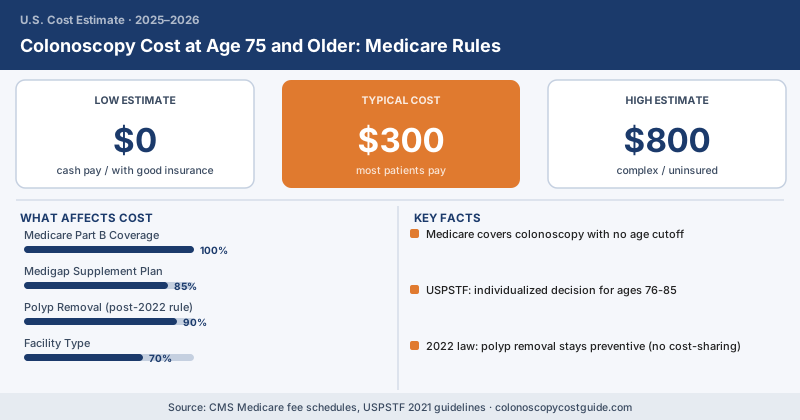
Here’s the number that surprises most patients over 75: your colonoscopy could cost you exactly $0 — or it could cost you $800. The difference comes down to three letters: the billing code.
Medicare covers colonoscopy. It has no age cutoff for the benefit itself. But the way a colonoscopy gets coded — preventive screening versus diagnostic — determines whether you pay nothing or whether you’re on the hook for 20% of a four-figure bill. And for patients over 75, there’s another layer: should you even be getting this procedure, and what happens when your doctor removes a polyp?
What Medicare Actually Pays for Colonoscopy
Medicare Part B covers two types of colonoscopy:
- Screening colonoscopy (every 10 years for average-risk, every 2 years for high-risk): covered at 100% with $0 patient cost-sharing when coded correctly under the preventive benefit.
- Diagnostic colonoscopy: subject to your Part B deductible ($257 in 2025) plus 20% coinsurance of the Medicare-approved amount.
The catch that trips up patients over 75: the moment your doctor finds and removes a polyp during a screening exam, many Medicare plans recode the procedure as therapeutic — triggering that 20% coinsurance. The CMS “preventive intent” rule covers polyp removal without cost-sharing for most plans since 2022, but implementation varies. Verify with your specific plan before your procedure.
| Colonoscopy Type | Medicare Pays | Your Cost |
|---|---|---|
| Preventive screening (no findings) | 100% | $0 |
| Screening with polyp removal (post-2022) | 100% | $0 (most plans) |
| Diagnostic colonoscopy | 80% after deductible | $200 – $600 typically |
| Pathology (biopsy specimens) | 80% after deductible | $30 – $120 per specimen |
| Anesthesia (if propofol used) | 80% after deductible | $80 – $300 |
The Screening Recommendation for Age 75+
The U.S. Preventive Services Task Force (USPSTF) guidelines draw a meaningful distinction around age:
- Ages 45–75: Routine colorectal cancer screening is recommended for all average-risk adults. Grade A or B recommendation.
- Ages 76–85: The decision is individualized. The USPSTF says screening may still benefit some patients, but the benefit decreases as life expectancy shortens and procedure risks increase.
- Age 85 and older: The USPSTF recommends against routine screening. Grade D.
The American Cancer Society (ACS) similarly recommends that clinicians and patients make individualized decisions after age 75, weighing health status, prior screening history, and patient preference.
What this means for cost: Medicare will still pay if your doctor orders it. But your out-of-pocket exposure may not be justified if you’ve had normal colonoscopies in recent years or have significant comorbidities that increase procedural risk.
If You Have Medigap, Your Out-of-Pocket Is Usually $0
Risks and Costs That Increase With Age
Colonoscopy is generally safe, but complication rates do rise with age. A large study published in the journal Gastroenterology found that adults over 75 face approximately twice the rate of serious adverse events compared to younger patients. That matters for cost because complications — however rare — can generate significant bills.
The primary risks that come with complications:
- Perforation: Occurs in roughly 1 in 1,000 colonoscopies overall, but higher in older patients with longer or more tortuous colons. Perforation repair can cost $15,000–$80,000 depending on whether it’s managed endoscopically or surgically.
- Post-polypectomy bleeding: Delayed bleeding after polyp removal is more common in patients on blood thinners — which many patients over 75 are. Hospitalization and treatment can cost $5,000–$20,000.
- Sedation complications: Propofol sedation carries slightly higher cardiovascular and respiratory risk in older patients with multiple medications.
What If You’re Still a Good Candidate at 75+?
The best candidates for continued colonoscopy screening after 75 are patients who:
- Have never had a colonoscopy (or had their first one late)
- Have a history of large or high-risk polyps warranting surveillance at shorter intervals
- Are in excellent health with a life expectancy of 10 or more years
- Have a strong family history of colorectal cancer
If that’s you, here’s how to reduce your out-of-pocket cost under Medicare:
- Confirm it’s coded as preventive before your procedure if you have no symptoms. Ask for CPT G0121 or 45378 with a Z12.11 diagnosis code.
- Use an ambulatory surgery center — Medicare facility payments are significantly lower than hospital outpatient, which reduces your 20% coinsurance exposure.
- Enroll in Medigap if you’re not already on Medicare Advantage — it typically eliminates the coinsurance entirely.
- Ask about the polyp removal rule if you’re due for a surveillance scope and expect polypectomy. Since the 2022 law change, polyp removal during a preventive colonoscopy should remain covered at $0 for most Medicare beneficiaries.
Frequently Asked Questions
Does Medicare have a maximum age for colonoscopy coverage? No. Medicare Part B has no age cutoff for colonoscopy coverage. The benefit exists for life.
My last colonoscopy was 10 years ago and I’m now 78. Is Medicare required to cover it? Yes, Medicare covers a screening colonoscopy every 10 years for average-risk beneficiaries regardless of age. If you meet the time criteria and have no GI symptoms driving the referral, it should be covered preventively.
Can my doctor refuse to perform a colonoscopy because of my age? A doctor can recommend against a procedure based on clinical judgment — and for patients over 85 or with serious health conditions, this may be appropriate. But it’s a medical recommendation, not a mandate. You can seek a second opinion or request the procedure with informed consent about the risks.