Colonoscopy at 50: What Your First Screening Actually Costs
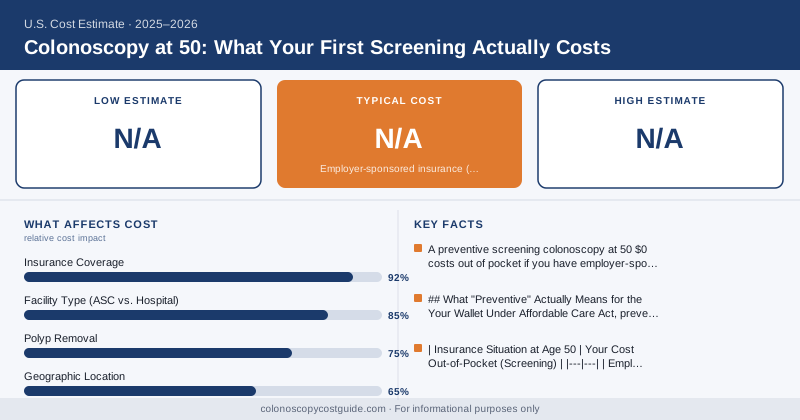
{ if eq .Lang "zh" }{ else }{ end }Most 50-year-olds assume a colonoscopy is going to cost them hundreds of dollars out of pocket. It’s surgery, it’s a procedure, there’s anesthesia — of course there’s a bill. Except for the majority of insured Americans, that assumption is wrong. A preventive screening colonoscopy at 50 costs $0 out of pocket if you have employer-sponsored insurance, a marketplace plan, or Medicare — and understanding exactly why that’s true (and when it stops being true) will save you from an unpleasant surprise.
Why 50 Is Still the Most Common Age for a First Colonoscopy
A quick note on timing: the USPSTF lowered its recommended colonoscopy screening age from 50 to 45 in 2021, citing rising colorectal cancer incidence in younger adults. The ACS updated its own guidelines to 45 back in 2018. So if you’re 45–49 and haven’t been screened yet, you’re already past the recommended start date for average-risk adults.
That said, 50 remains the most common first-screening age in practice. Many physicians still order the first colonoscopy at 50, many patients who didn’t act on the 45 recommendation are just getting around to it now, and some insurance plans only began covering screening at 45 after the 2021 USPSTF update. Wherever you are in that window, the cost structure is the same.
What “Preventive” Actually Means for Your Wallet
Under the Affordable Care Act, preventive services rated A or B by the USPSTF must be covered at $0 patient cost-sharing by most private insurance plans. Colorectal cancer screening for adults 45–75 is a USPSTF Grade A recommendation. That means:
- No copay
- No deductible applies
- No coinsurance
Your insurer pays the full negotiated rate. You pay nothing.
This applies to employer-sponsored plans, ACA marketplace plans, and most group insurance. It does NOT apply to grandfathered plans (insurance plans that existed before March 23, 2010 and haven’t changed substantially since). If you’re on an old-style grandfathered plan — rare, but they still exist — check your Summary of Benefits for colonoscopy cost-sharing.
| Insurance Situation at Age 50 | Your Out-of-Pocket Cost (Screening) |
|---|---|
| Employer-sponsored insurance (ACA-compliant) | $0 |
| ACA marketplace plan | $0 |
| Medicare (age 65+, routine timing) | $0 |
| Medicare Advantage | $0 (most plans) |
| Medicaid (expanded states) | $0–$5 |
| Uninsured | $500–$1,800 (ASC cash rates) |
| Grandfathered private plan | Varies — check your SBC |
The Polyp Removal Cost Question
Here’s where the $0 promise gets complicated. If your GI doctor finds and removes a polyp during your colonoscopy — which happens at roughly 30–40% of first screenings, per American Society for Gastrointestinal Endoscopy data — some plans reclassify the procedure from preventive (screening) to diagnostic. When that happens, your deductible kicks in.
How much does that cost? Depending on your plan’s deductible and where you are in the year:
- If your deductible is already met: typically $0–$200 in coinsurance
- If your deductible is untouched: potentially $500–$2,000 depending on facility type and plan deductible amount
This reclassification practice was common, but it’s being rolled back. A 2022 ACA rule (effective 2023 for most plan years) now requires that non-grandfathered plans NOT increase cost-sharing when a polyp is removed during a preventive screening colonoscopy. Most employer plans are now compliant with this rule. Marketplace plans are also compliant. But state-regulated plans and grandfathered plans may still apply the old rules.
Ask This Question Before You Schedule
If You’re 50 and Uninsured
Cash-pay colonoscopy rates at freestanding ambulatory surgery centers typically run $500–$1,800 all-in depending on location. That’s the facility fee, anesthesia, and basic pathology for a screening. Here’s how to find the best cash rate:
- Call 2–3 independent (non-hospital-owned) ASCs in your area and ask for their “self-pay all-inclusive screening colonoscopy package”
- Check MDsave.com or Sesame Care for pre-negotiated packages — many run $599–$1,099
- Contact the Colon Cancer Alliance’s Never Too Busy program (ccalliance.org) — they provide free colonoscopies to uninsured patients who meet income guidelines
- Ask about FQHCs in your area for a sliding-scale GI consultation and colonoscopy referral
Average Risk vs. High Risk: How That Changes Your Timeline
For average-risk patients at 50 (no personal or family history of colorectal cancer or polyps, no IBD), the standard interval after a clean first colonoscopy is 10 years. Your next one would be at 60, then 70. Three colonoscopies over your lifetime if you’re average-risk and everything looks clean.
But if you have a first-degree relative (parent, sibling, child) who was diagnosed with colon cancer or had significant polyps — especially before age 60 — you’re likely classified as high risk. High-risk guidelines call for screening to begin earlier and repeat more frequently. Insurance covers high-risk surveillance differently too; see colonoscopy costs when you have a family history of colon cancer for the full breakdown.
A Note on Timing Your First Colonoscopy
If you’re approaching age 65 and Medicare eligibility, there’s a strategic timing point worth considering. If you have a high deductible and you’re uninsured or close to your plan’s out-of-pocket maximum, timing your colonoscopy in a year when you’ve already hit your deductible — or waiting until you’re enrolled in Medicare — can shift your out-of-pocket cost from several hundred dollars to zero.
That said, don’t delay a medically indicated colonoscopy to save money. If you have symptoms, a family history that warrants early screening, or are already past age 50 without a prior screening, schedule it now. The ACS reports that only 72% of adults 45–75 are up to date on colorectal cancer screening — meaning more than 1 in 4 eligible adults haven’t been screened (ACS Cancer Facts & Figures, 2024). The screening gap costs lives.
For a full breakdown of what goes into the bill, see colonoscopy cost with insurance. For the complete picture on the 2022 ACA rule change around polyp removal, see 2022 ACA rule: polyp removal and free colonoscopy.
{ if eq .Lang "zh" }