Colonoscopy Cost at Age 45: New Guidelines, Insurance Coverage, and What to Expect
{ if eq .Lang "zh" }{ else }{ end }The American Cancer Society updated its colorectal cancer screening recommendation to age 45 in 2018. The USPSTF — whose Grade A recommendations trigger ACA insurance coverage mandates — followed in May 2021. That shift changed your insurance rights if you’re 45 to 49 and average-risk.
Here’s what the new guidelines actually mean for your colonoscopy cost and what steps to take before scheduling.
The 2021 USPSTF Change and Why It Matters
Before May 2021, the USPSTF recommended colorectal cancer screening starting at age 50 for average-risk adults. The updated recommendation — Grade A for adults 45–75, Grade B for adults 76–85 — expanded mandatory coverage.
Under ACA Section 2713, health plans must cover USPSTF Grade A and B preventive services with zero cost-sharing. With the 2021 update, that coverage mandate now applies starting at age 45 for average-risk adults.
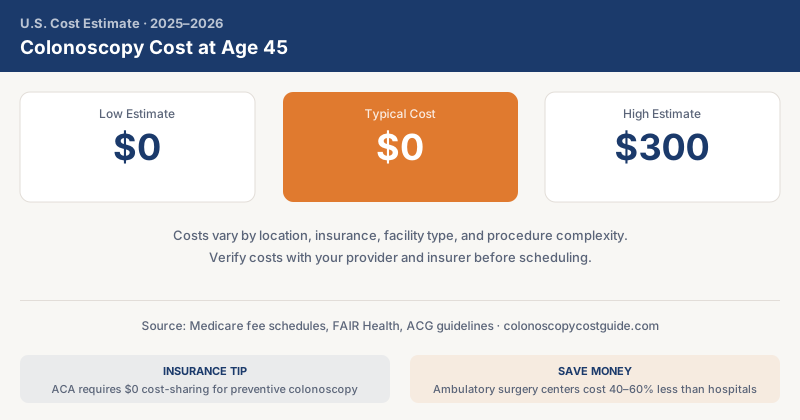
The practical result: if you’re 45, average-risk, and have an ACA-compliant insurance plan, your screening colonoscopy should be covered at $0. No deductible, no copay, no coinsurance — as long as every provider is in-network and the procedure is coded correctly as preventive screening.
| Age | USPSTF Grade | ACA Coverage Mandate | Recommended Interval |
|---|---|---|---|
| 45–75 (average-risk) | Grade A | Yes — $0 cost-sharing | Every 10 years |
| 45–75 (high-risk) | Grade A | Yes — $0 cost-sharing | As recommended by physician |
| 76–85 | Grade B | Yes — $0 cost-sharing | Per physician judgment |
| 86+ | Grade D (don’t screen routinely) | Not mandated | N/A |
Do All Insurers Cover Colonoscopy at Age 45?
Most do — but with caveats. The ACA mandate applies to:
- Individual and family plans purchased on or off the marketplace
- Most employer-sponsored health plans
- Medicaid expansion plans (though state implementation varies)
It does not apply to:
- Grandfathered plans (plans unchanged since before March 23, 2010 — rare but they exist)
- Short-term health plans (exempt from ACA preventive care mandates)
- Some limited benefit plans
- Original Medicare (which still uses age 50 as the baseline for average-risk screening, though this is under review)
If you have an ACA-compliant plan and you’re 45 or older with no risk factors, your insurer must cover a screening colonoscopy at zero cost-sharing. If they refuse, you can file a complaint with your state insurance commissioner.
The Braidwood Case Threat to ACA Preventive Coverage
A federal court case — Braidwood Management v. Becerra — challenged the constitutional basis for the ACA’s preventive care mandate. In 2022, a district court ruled that the USPSTF’s mandate structure was unconstitutional. That ruling has been partially stayed while appeals work through the courts.
As of 2026, the ACA preventive care requirement remains in effect for most people. But the legal situation is worth monitoring. If the Supreme Court ultimately strikes down the USPSTF mandate, insurers could reinstate cost-sharing for colonoscopy and other preventive services. For the most current status, see the colonoscopy ACA coverage and preventive mandate article.
What Your First Colonoscopy at 45 Will Actually Cost
For the typical 45-year-old average-risk adult with an ACA-compliant employer plan or marketplace plan:
| Scenario | Out-of-Pocket Cost |
|---|---|
| Screening, no polyps, all in-network | $0 |
| Screening, polyp removed, insurer honors preventive coding | $0 |
| Screening, polyp removed, insurer recodes as diagnostic | $150 – $600 |
| Wrong CPT code used (diagnostic instead of screening) | $300 – $1,500 |
| Short-term or grandfathered plan | Full cost applies; $800 – $2,500+ |
| No insurance | $800 – $2,500 cash-pay |
Steps to Ensure $0 Coverage at Age 45
Confirm your plan is ACA-compliant: Call your insurer and ask directly — “Is my plan ACA-compliant and subject to the preventive care mandate?”
Confirm colonoscopy is covered for your age: Ask “Is colonoscopy covered as a preventive service at zero cost-sharing for a 45-year-old average-risk patient?” Some plans still use outdated benefit language that lists coverage starting at 50.
Verify all providers are in-network: Facility, gastroenterologist, anesthesiologist — each must be in-network for your zero-cost-sharing to apply.
Confirm the billing code: Your GI physician should code the procedure as screening (CPT G0121 for Medicare; CPT 45378 with Z12.11 for commercial insurance) — not as diagnostic.
Ask about polyp removal: “If you remove a polyp, how will you handle the billing? Will you code it as diagnostic, or does your practice code it as a continuation of the screening visit?”
Your ACA Appeal Rights If Coverage Is Denied
If your insurer denies coverage or applies cost-sharing to a preventive screening colonoscopy, you have the right to:
- File an internal appeal with your insurer (within 180 days of receiving the denial)
- Request an external review by an independent reviewer (usually through your state insurance department)
- File a complaint with your state insurance commissioner
- File a complaint with CMS at cms.gov/CCIIO
ACA preventive care denials have high reversal rates on appeal when the patient can document average-risk status and age-appropriate screening indication. Keep records of all communications.
The age-45 recommendation is one of the most impactful changes in preventive care guidelines in a decade. About 20 million Americans in the 45–49 age group became newly eligible for zero-cost colonoscopy coverage with that update. If you’re in that window, schedule the procedure — it’s likely free, and colorectal cancer caught early has a 5-year survival rate above 90%.
{ if eq .Lang "zh" }