Colonoscopy Prep: Which Bowel Prep Is Cheapest (and Most Tolerable)?
{ if eq .Lang "zh" }{ else }{ end }Ask anyone who’s postponed their colonoscopy for years, and most of them will say the same thing: it’s not the procedure itself they’re dreading. It’s the prep. The day-before fasting. The gallon jug. The hours in the bathroom.
That dread is real — and it keeps millions of people from getting screened on schedule. But here’s what most patients don’t know: there are multiple prep options with dramatically different volumes, tolerability profiles, and costs. Some run $15. Some run $150. Your GI doctor may default to a particular prep without mentioning you have choices. You do.
According to the American Cancer Society, colorectal cancer is the second-leading cause of cancer death in the United States, with about 153,000 new cases diagnosed in 2023. Skipping or delaying a colonoscopy because of prep anxiety is a real public health problem — and picking the right prep for your situation can make the difference between getting screened and putting it off another year.
The Four Main Colonoscopy Prep Categories
| Prep Type | Brand Examples | Volume | Typical Cost (Out of Pocket) | Taste / Tolerability |
|---|---|---|---|---|
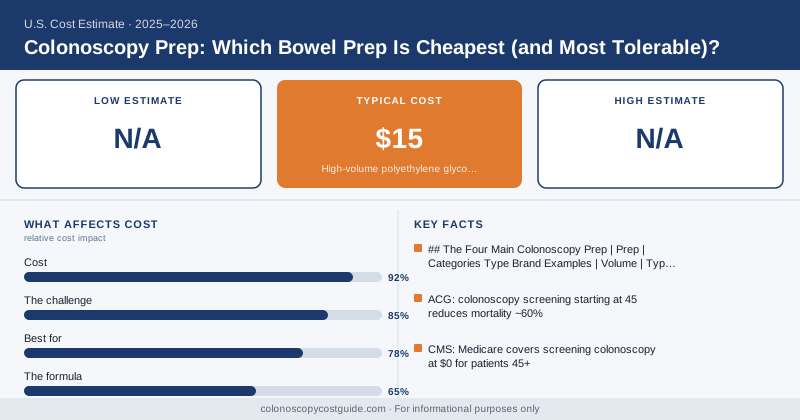
| High-volume polyethylene glycol (PEG) | GoLYTELY, NuLYTELY, MoviPrep | 1 gallon (4L) | $15–$35 generic | Salty; challenging for many |
| Low-volume PEG (split-dose) | MiraLAX + Gatorade | ~2 liters total | $15–$25 OTC total | Easier; patient-reported favorite |
| Tablet-based | Sutab | 24 tablets + water | $100–$150 without insurance | Easy to swallow; good tolerability |
| Low-volume liquid | Clenpiq | 2 small bottles | $80–$120 without insurance | Cranberry flavor; better tolerated |
Option 1: GoLYTELY / NuLYTELY — The Classic (and Cheapest)
GoLYTELY and NuLYTELY are polyethylene glycol electrolyte solutions — the original FDA-approved colonoscopy preps. You mix a powder packet with water to make 4 liters (about 1 gallon) and drink the whole thing over several hours.
Cost: Generic versions run $15–$35 at most pharmacies with a prescription. With insurance coverage, the copay is often $5–$10.
The challenge: Four liters is a lot of liquid. The taste is salty and medicinal. Many patients struggle to finish the full volume, which can compromise prep quality and require repeat procedures. MoviPrep is a lower-volume PEG variant (~2L) with slightly better tolerability at a similar price point.
Best for: Cost-focused patients, those with good fluid tolerance, patients whose insurance covers it well.
Option 2: MiraLAX + Gatorade Split-Dose — The Off-Label Fan Favorite
The MiraLAX + Gatorade prep is technically off-label (MiraLAX is FDA-approved for occasional constipation, not colonoscopy prep), but it’s widely prescribed by GI physicians and has substantial clinical evidence behind it. The American Society for Gastrointestinal Endoscopy acknowledges it as an effective alternative.
The formula: 238g bottle of MiraLAX dissolved in 64 oz of Gatorade (not red or purple, which stain the colon), split into two 32-oz doses — one the evening before and one the morning of the procedure.
Cost: MiraLAX runs about $12–$15 for the right-size bottle at a pharmacy; Gatorade is $2–$4. Total cost: roughly $15–$25, no prescription needed in most states.
Tolerability: The split-dose approach (half the night before, half the morning of) is significantly easier on most patients. You’re never drinking a full gallon at once. The Gatorade flavor — choose lemon-lime, orange, or clear — helps considerably. In patient surveys, this prep consistently rates among the best-tolerated options.
Best for: Budget-conscious patients, those with prior bad experiences with gallon-jug preps, patients who want OTC convenience.
The Split-Dose Timing Advantage
Option 3: Sutab — Easiest to Take, Most Expensive
Sutab (sodium sulfate, magnesium sulfate, potassium chloride) is an FDA-approved tablet-based prep. You take 12 tablets with water the evening before, then 12 more the following morning. No mixing powders. No large-volume liquid. Just pills and water.
Cost: Without insurance, Sutab runs $100–$150. With insurance coverage, copays vary widely — some plans cover it at $10–$30, others don’t cover it at all. Check your formulary before assuming it’s affordable.
Tolerability: Most patients find it much easier to complete than liquid preps. The main side effect is the large amount of water you still need to drink (up to 32 oz per dose to flush the tablets effectively), plus potential nausea. But swallowing pills is genuinely easier for many people than drinking salty liquid by the glass.
Best for: Patients who struggle with large-volume liquid prep, those whose insurance covers it, patients willing to pay more for better tolerability.
Option 4: Clenpiq — Low Volume, Better Flavor
Clenpiq (sodium picosulfate, magnesium oxide, and citric acid) is a low-volume liquid prep — two small 6-oz bottles with a cranberry flavor. Each bottle is taken with additional water, but the volume of the actual medication is much smaller than PEG-based preps.
Cost: Without insurance, $80–$120. With coverage, similar to Sutab — variable by plan.
Tolerability: The cranberry flavor is genuinely palatable compared to PEG. Some patients experience more cramping with Clenpiq’s stimulant mechanism, but overall tolerability is strong. It’s a good option for patients who have nausea or difficulty with large volumes.
Best for: Patients with volume sensitivity, nausea-prone patients, patients with good insurance coverage for branded preps.
Tips to Make Any Prep More Tolerable
Regardless of which prep you use:
- Serve it ice cold. Temperature makes a significant difference. Keep the prep refrigerated and drink it through a straw.
- Ask about flavoring. Some compounding pharmacies add flavorings to PEG preps. Ask your prescriber.
- Use petroleum jelly or diaper cream around the rectal area to prevent irritation from frequent wiping.
- Switch to a bidet for the prep day if you have one available — it’s dramatically more comfortable.
- Stay near a bathroom. The prep typically kicks in 30–60 minutes after you start drinking. Work from home or clear your schedule.
- Clear liquid diet starts the day before, not just during prep. Avoid high-fiber foods 3–4 days before if your GI doctor recommends it.
Which Prep Should You Use?
Ask your GI doctor or the prescribing provider — they may have a preference based on your medical history (kidney disease, heart conditions, or sodium-sensitive conditions affect which preps are safe). Also ask:
- “Which preps does my insurance cover best?”
- “Is the MiraLAX split-dose protocol something you use?”
- “I’m concerned about tolerability — is there a low-volume option?”
If cost is the primary concern, the MiraLAX + Gatorade split-dose protocol is almost always the cheapest viable option and has excellent clinical evidence. If tolerability is the concern and insurance covers it, Sutab or Clenpiq are worth the conversation.