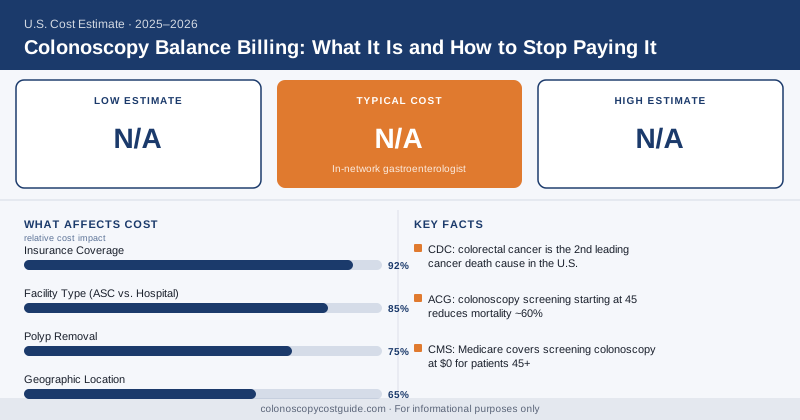
Colonoscopy Balance Billing: What It Is and How to Stop Paying It
{ if eq .Lang "zh" }{ else }{ end }Picture two bills for the same colonoscopy. Your insurer’s explanation of benefits says you owe $250. Then a separate provider sends a bill for $1,100. That $1,100 gap is balance billing — the provider charging you the difference between their full price and what insurance agreed to pay. Sometimes it’s legal. Often, for colonoscopies, it isn’t anymore.
Knowing which is which can save you four figures, so let’s break down exactly what balance billing is and when you can refuse to pay it.
What Balance Billing Actually Is
When a provider is in your network, they’ve agreed to accept your insurer’s negotiated rate as payment in full. You owe only your copay, coinsurance, or deductible. An out-of-network provider made no such agreement — so they bill you for whatever your insurer didn’t cover. That leftover is the “balance,” and chasing you for it is “balance billing.”
| Provider Status | Insurer Pays | You’re Billed | Balance Bill? |
|---|---|---|---|
| In-network gastroenterologist | Negotiated rate | Cost-share only | No |
| Out-of-network anesthesia (in-network facility) | Partial | Difference | Banned by No Surprises Act |
| Out-of-network facility you chose | Partial | Difference | Often legal |
| In-network everything | Negotiated rates | Cost-share only | No |
Key Takeaway
The No Surprises Act Changed the Game
Since January 2022, federal law bans the most common colonoscopy balance bill: an out-of-network provider treating you at an in-network facility without your consent. That covers the classic case where your facility and gastroenterologist are in-network but the anesthesiologist or pathologist isn’t. You can only be charged your in-network cost-share, and the provider has to settle the rest with your insurer. Our No Surprises Act coverage of out-of-network anesthesia explains this exact scenario.
A KFF analysis before the law took effect found that surprise out-of-network bills were common in multi-provider procedures like colonoscopies — precisely the problem the law was written to fix.
When Balance Billing Is Still Legal
The protections aren’t absolute. Balance billing can still be legal when:
- You knowingly chose an out-of-network facility or provider and signed a consent form acknowledging it.
- The service was non-emergency and you waived your protections in writing (some providers ask for this).
- You’re in a self-funded employer plan that opted out of certain state protections — though federal No Surprises Act rules still apply broadly.
How to Fight a Balance Bill
If you’ve got a balance bill, work the problem:
- Pull your explanation of benefits. It shows what your insurer paid and what your real cost-share should be.
- Determine network status. Was the facility in-network? Was the billing provider out-of-network? If yes to both, the No Surprises Act likely applies.
- Dispute in writing. Tell the provider you’ll pay only your in-network cost-share and cite the law.
- Escalate. File a complaint with the federal No Surprises Help Desk at 1-800-985-3059, and use the insurance denial and appeal process if your insurer mishandled the claim.
If the charge turns out to be legal because you genuinely went out-of-network, you still have leverage — providers often accept far less. Our how to lower your colonoscopy bill guide covers negotiation.
Prevention Beats Disputes
The cleanest way to avoid balance billing is to confirm network status before your procedure — all four pieces: facility, gastroenterologist, anesthesia, and pathology. If a procedure is diagnostic rather than screening, the stakes are higher because more of the cost is yours to begin with. Understanding screening versus diagnostic billing helps you see where balance bills are most likely to land.
Bottom Line
Balance billing is the gap between a provider’s charge and what your insurer paid — and for colonoscopies it usually shows up from out-of-network anesthesia or pathology. The No Surprises Act bans it when an out-of-network provider treats you at an in-network facility, limiting you to your in-network share. It’s only legal if you knowingly went out-of-network or signed a waiver. Confirm network status up front, never sign a waiver blindly, and dispute any surprise balance bill before paying a cent.
{ if eq .Lang "zh" }