Colonoscopy Anesthesiologist Billing Guide: Reading Your Separate Bill
{ if eq .Lang "zh" }{ else }{ end }Most patients assume any legitimate mistake in medical bills wouldn’t happen twice. Wrong — anesthesia billing errors and surprise out-of-network charges have been common enough in colonoscopy billing that federal law had to step in. Here’s how to read your anesthesiologist’s bill and know when something’s off.
Typical Anesthesiologist Billing Amounts
| Sedation Type | Typical Anesthesiologist Charge | Typical Patient Cost-Share (Insured) |
|---|---|---|
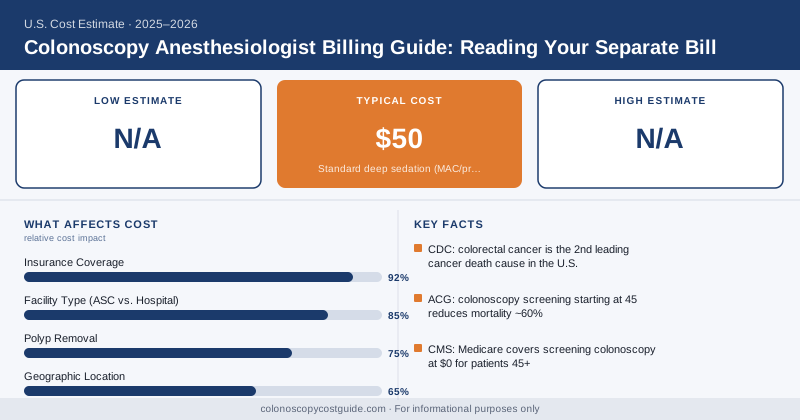
| Standard deep sedation (MAC/propofol) | $300 – $700 | $50 – $200 |
| Extended sedation (combined procedures) | $500 – $1,000 | $75 – $300 |
| General anesthesia | $800 – $1,300 | $100 – $400 |
Why This Bill Comes Separately
Anesthesiologists and certified registered nurse anesthetists (CRNAs) who provide sedation for your colonoscopy are frequently part of a separate physician group or staffing company from the facility itself and from your gastroenterologist. Each provider bills under their own National Provider Identifier (NPI) using their own set of CPT codes — which is why a single visit generates multiple separate bills: one from the facility, one from your GI doctor, and one from anesthesia.
This isn’t inherently a sign of an error. It’s the standard structure of how these services are organized and billed in the U.S. healthcare system. The problem historically arose when the anesthesia group happened to be out-of-network even though the facility and gastroenterologist were in-network — leaving patients with unexpected balance bills.
How the No Surprises Act Changed This
Since January 2022, the federal No Surprises Act generally prohibits “balance billing” for out-of-network ancillary providers — including anesthesiologists — at in-network facilities for most non-emergency scheduled procedures. In practice, this means:
- Your cost-share for anesthesia should be calculated as if the anesthesiologist were in-network, even if they technically aren’t
- You cannot be billed the difference between the anesthesiologist’s charge and what your insurance pays, beyond your normal in-network cost-sharing
- If you receive a bill that appears to violate this, you can dispute it through your insurer or file a complaint with the No Surprises Help Desk (1-800-985-3059)
Know Your Rights Before You Pay a Surprise Anesthesia Bill
How to Read Your Anesthesiologist’s Bill
Look for these key elements and verify each one:
- CPT anesthesia code — should match the type of procedure you had (colonoscopy anesthesia codes are typically in the 00810-00812 range)
- Time units billed — anesthesia billing uses time-based units; the total should roughly correspond to your actual procedure length, not an inflated estimate
- Network status — confirm whether the anesthesia provider is listed as in-network or out-of-network, and whether No Surprises Act protections were applied if out-of-network
- Modifier codes — codes like “QZ” (CRNA without medical direction) or “AA” (anesthesiologist personally performing) affect the billed rate and should match who actually provided your care
What to Do If You Spot an Error
Contact your insurance company’s member services line first, referencing the specific claim number. If the issue isn’t resolved, most states have a Department of Insurance consumer complaint process, and the federal No Surprises Act complaint line is available for balance billing issues specifically.
The Bottom Line
A separate anesthesiologist bill of $300–$1,300 is normal after a colonoscopy, reflecting how these services are structured for billing purposes — not necessarily an error. But surprise out-of-network charges, once common, are now largely prohibited under the No Surprises Act. If your bill looks unusually high or references out-of-network rates despite an in-network facility, that’s worth a phone call before you pay. For more on avoiding these issues altogether, see our out-of-network anesthesia colonoscopy bill guide.
{ if eq .Lang "zh" }