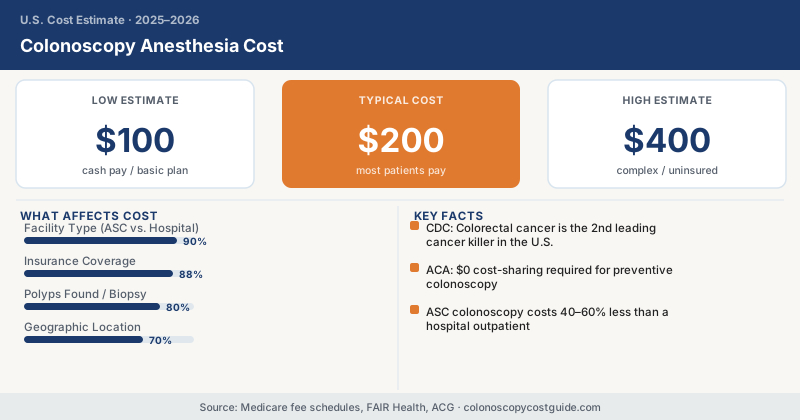
Colonoscopy Anesthesia Cost: What You'll Pay for Sedation
{ if eq .Lang "zh" }{ else }{ end }The colonoscopy was supposed to cost $X. Then a separate bill arrived — from someone you don’t remember meeting — for anesthesia. This surprises a lot of patients, and it shouldn’t. Anesthesia for colonoscopy is billed as a completely separate service, often by a separate provider who may or may not be in your insurance network.
Understanding how colonoscopy anesthesia billing works before your procedure can save you hundreds of dollars and prevent a frustrating surprise explanation of benefits.
Why Anesthesia Is a Separate Bill
During your colonoscopy, sedation is managed by either:
- A nurse anesthetist (CRNA) or anesthesiologist employed by the facility or a separate anesthesia group
- The endoscopist themselves (in cases of nurse-administered propofol or physician-administered moderate sedation)
When a separate anesthesia provider is involved, they bill independently under their own NPI number and their own insurer contract. They may or may not participate in the same insurance network as your GI doctor and the facility. This is why you can receive two or three separate bills for what felt like one procedure.
Anesthesia Cost by Type
| Sedation Type | Who Provides It | Typical Cash Cost | Notes |
|---|---|---|---|
| Minimal sedation (anxiolytic only) | Endoscopist/nurse | $0 – $50 | Rarely used; most patients don’t tolerate it |
| Moderate sedation (conscious sedation) | Nurse or endoscopist | $100 – $400 | Traditional midazolam/fentanyl combo |
| Monitored anesthesia care (MAC) with propofol | CRNA or anesthesiologist | $400 – $1,100 | Deep sedation; standard at most GI centers |
| General anesthesia | Anesthesiologist | $800 – $2,000+ | Rarely needed; complex cases only |
The Shift to Propofol: Why Anesthesia Bills Went Up
In the 2000s, most colonoscopies used nurse-administered conscious sedation (midazolam and fentanyl) — a cheaper combination that rarely required a separate anesthesiologist bill. Over the past 15 years, many GI practices shifted to propofol-based MAC sedation (monitored anesthesia care) because patients wake up faster, have fewer side effects, and recovery is smoother.
But propofol must be administered by a CRNA or anesthesiologist — not by a GI nurse or technician alone. This created a new billing layer. The American Society of Anesthesiologists (ASA) estimates that anesthesia for colonoscopy adds an average of $400–$900 to the total procedure cost when MAC sedation is used — a fee that didn’t exist for most patients 20 years ago.
How Anesthesia Is Billed
Anesthesia billing uses a different system than physician billing. It’s based on:
- Base units (assigned by ASA to each procedure type — colonoscopy gets 7 base units)
- Time units (1 unit per 15 minutes of anesthesia time)
- Conversion factor (dollar amount per unit, negotiated between the insurer and anesthesia group, or at billed rates for self-pay)
A 30-minute colonoscopy might generate 7 (base) + 2 (time) = 9 units. At $80/unit cash rate, that’s $720 before any insurance adjustment.
The Out-of-Network Anesthesiologist Problem
Even when your GI doctor and facility are in-network, the anesthesia group covering your colonoscopy may be out-of-network. This happened to a significant number of patients before the No Surprises Act (NSA) took effect in 2022.
Under the No Surprises Act, you cannot be balance-billed by an out-of-network provider at an in-network facility for emergency or scheduled procedures (including colonoscopy) without your written consent. If you receive a bill from an out-of-network anesthesia provider at an in-network facility, you’re protected: your cost-sharing should be calculated at in-network rates.
What to do if you receive a surprise anesthesia bill:
- Call your insurer immediately and reference the No Surprises Act
- File a dispute with the insurer — they’re required to handle the provider payment directly
- If the provider pursues balance billing, file a complaint with your state insurance commissioner
Does Insurance Cover Colonoscopy Anesthesia?
Generally yes — but the coverage type matters:
For preventive colonoscopy (average-risk, ACA-covered): The anesthesia portion should also be covered at no cost-sharing, since it’s a required component of the preventive procedure. Some insurers have pushed back on this, but CMS guidance clarifies that ancillary services integral to the preventive service are covered.
For diagnostic colonoscopy: Anesthesia is covered as a standard surgical service. You’ll pay whatever your plan requires — deductible, coinsurance, or copay — based on whether the anesthesiologist is in-network.
Medicare: Covers colonoscopy anesthesia under Part B at 80% of the Medicare-approved amount. CRNAs and anesthesiologists both bill independently under Part B.
Total Anesthesia Cost Scenarios
| Scenario | Estimated Anesthesia Cost |
|---|---|
| In-network CRNA, deductible met, commercial plan | $0 – $150 (coinsurance only) |
| In-network CRNA, deductible not met, commercial plan | $200 – $600 |
| Medicare, in-network anesthesiologist | $40 – $120 (20% of approved amount) |
| Out-of-network CRNA, No Surprises Act applies | In-network rate applies; dispute any overcharge |
| Self-pay / no insurance | $400 – $1,100 depending on sedation type |
How to Avoid Anesthesia Surprises
- Before scheduling, ask your GI office: “What type of sedation is used and who provides it?” If they use MAC sedation (propofol), ask for the name of the anesthesia group and confirm they’re in your network.
- Call the anesthesia group directly to confirm your insurance participation before your procedure date.
- Ask your insurer to confirm the anesthesia provider is in-network — don’t rely only on the GI office’s assurances.
- Consider opting for moderate sedation (midazolam/fentanyl) if you want to avoid a separate anesthesia provider fee. Many patients tolerate it fine, though recovery takes slightly longer. Ask your GI doctor if it’s an option.
- Request the total itemized estimate upfront — ask both the GI office and the facility for an estimate that includes the anticipated anesthesia fee so there are no surprises.
The colonoscopy itself is often just one of three separate bills you’ll receive. Knowing the anesthesia piece in advance puts you in control.
{ if eq .Lang "zh" }