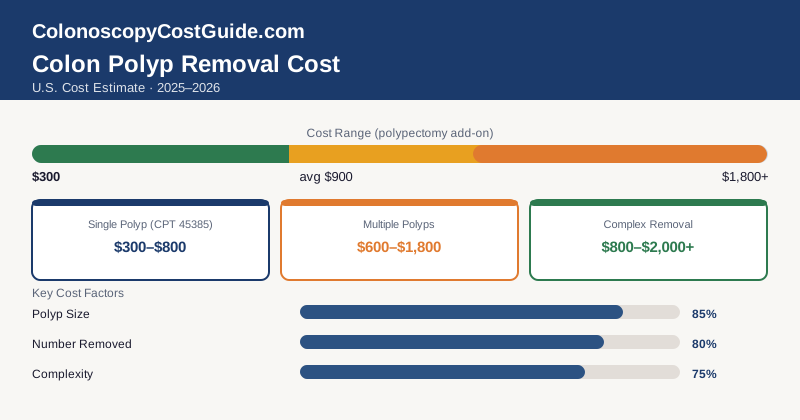
Colon Polyp Removal Cost: Polypectomy Fees, Pathology, and Multiple Polyps
{ if eq .Lang "zh" }{ else }{ end }Your gastroenterologist found a polyp and removed it. That’s exactly what’s supposed to happen — but now you’re staring at a bill that’s $600 more than you expected, and wondering where it came from.
Polyp removal during colonoscopy is extremely common. The ACG estimates that approximately 25 to 30% of average-risk adults undergoing screening colonoscopy have at least one adenoma found and removed. In adults over 60, the rate exceeds 45%. Most of those polyps are benign, precancerous lesions. Removing them prevents colon cancer. That’s the good news.
The bill news: polypectomy changes your procedure from a simple screening to a more complex intervention, which changes the CPT codes billed and increases your cost.
What Polypectomy Actually Adds to Your Colonoscopy Bill
Before polyp removal, your colonoscopy is billed under CPT 45378 (diagnostic/screening colonoscopy). After polyp removal, the code changes:
- CPT 45380 — Colonoscopy with biopsy (tissue sample only, no removal)
- CPT 45385 — Colonoscopy with polypectomy by snare technique
- CPT 45384 — Colonoscopy with polypectomy by hot biopsy forceps
Each of these codes carries a higher facility fee and physician fee than CPT 45378.
| Procedure Variation | Typical Facility Fee (ASC) | Physician Fee | Pathology (Per Specimen) |
|---|---|---|---|
| Screening only (no polyps) | $500 – $1,200 | $250 – $500 | $0 |
| Biopsy only (CPT 45380) | $600 – $1,400 | $280 – $550 | $150 – $300 |
| Polypectomy, snare (CPT 45385) | $700 – $1,600 | $320 – $600 | $150 – $350 per polyp |
| Polypectomy, multiple polyps | $800 – $2,000 | $350 – $700 | $150 – $350 each |
| EMR (large polyp, CPT 45346) | $1,200 – $3,000 | $500 – $1,200 | $200 – $500 per specimen |
Cold Snare vs. Hot Snare vs. EMR: Does the Method Change Your Bill?
Yes — significantly.
Cold snare polypectomy: A wire loop cuts through the polyp without electrical current. Preferred for small polyps under 10mm. Lower risk of complications. Billed under CPT 45385. Least expensive polypectomy method.
Hot snare polypectomy: The same wire loop, but with cauterizing electrical current. Used for larger polyps (10–20mm) or sessile serrated polyps. Slightly higher technique complexity but same CPT code in most cases.
Endoscopic mucosal resection (EMR): For large, flat polyps (20mm+) that can’t be removed by standard snare. Involves lifting the polyp with fluid injection and removing it in pieces. Billed under CPT 45346. The facility and physician fees are substantially higher — sometimes double a standard polypectomy.
The method your gastroenterologist uses is a clinical decision based on the polyp’s size, shape, and location. You don’t choose it. But knowing the method afterward helps you understand your bill.
Why 'Preventive' Billing Gets Complicated With Polyps
Under the ACA, a screening colonoscopy is covered at $0 when it’s preventive and you’re average-risk. But when polyps are removed, many insurers reclassify the procedure as “therapeutic” and apply cost-sharing. This is the infamous “polyp upgrade” billing issue.
As of 2022, the ACA was amended to clarify that a screening colonoscopy remains preventive even when polyps are found and removed. However, implementation has been uneven. Some insurers still apply cost-sharing on the polypectomy component. If you receive a bill for polypectomy after a screening colonoscopy, check your plan documents — many insurers are required to cover this at $0, and you may have grounds to dispute the charge.
The Pathology Bill: One Polyp, One Bill; Five Polyps, Five Bills
Every polyp removed during colonoscopy gets sent to a pathology laboratory for examination. The pathologist determines whether it’s hyperplastic (benign, no further action), adenomatous (precancerous, follow-up colonoscopy schedule depends on number and size), or cancerous (immediate action needed).
The pathology lab charges CPT 88305 for each specimen. That’s typically $150 to $350 per polyp at list price. Medicare’s approved rate is approximately $60 to $90 per specimen.
If your gastroenterologist removed four polyps, you should expect four separate CPT 88305 charges from the pathology lab — often arriving as a separate bill from an unfamiliar lab name, weeks after your procedure.
| Polyps Removed | Estimated Pathology Charges |
|---|---|
| 1 polyp | $150 – $350 |
| 2–3 polyps | $300 – $900 |
| 4–6 polyps | $500 – $1,500 |
| 7+ polyps (rare) | $800 – $2,500+ |
How Multiple Polyps Multiply the Entire Bill
When a gastroenterologist removes multiple polyps, the incremental cost isn’t as high as it would be for entirely separate procedures. CMS reimbursement rules allow additional polyp removal codes to be billed, but the multiple procedure discount applies.
Still, five polyps vs. one polyp realistically adds $400 to $900 in combined facility add-ons and pathology.
What the Polyp Result Means for Future Costs
The pathology result from your polyps determines your future colonoscopy schedule — and therefore your future costs:
- Hyperplastic polyps only: Treated as normal screening. Next colonoscopy in 10 years.
- 1–2 small tubular adenomas (under 10mm): Low risk. Follow-up in 7 to 10 years.
- 3–4 adenomas, or 1 large adenoma (10mm+): Intermediate risk. Follow-up in 3 years.
- 5+ adenomas, or any villous adenoma, or high-grade dysplasia: High risk. Follow-up in 1 year.
- Cancer found: Immediate consultation with oncology.
Your risk category determines how frequently you’ll be getting colonoscopies going forward — each of which has associated costs. See colonoscopy follow-up cost for the cumulative lifetime cost analysis by risk category.
For patients wondering what happens step by step when polyps are found, see what happens if polyps are found for the detailed cost walkthrough.
{ if eq .Lang "zh" }