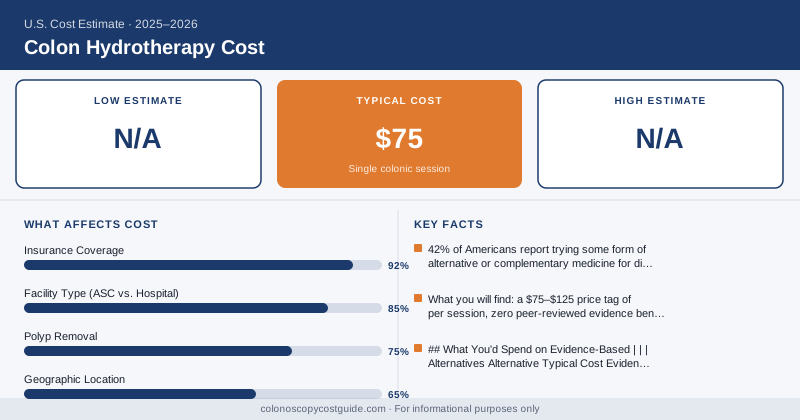
Colon Hydrotherapy Cost
42% of Americans report trying some form of alternative or complementary medicine for digestive health, according to CDC survey data — and colon hydrotherapy (also called colonics or colonic irrigation) is one of the most sought-after. What you won’t find: insurance coverage. What you will find: a $75–$125 price tag per session, zero peer-reviewed evidence of benefit for most conditions, and a clear “not recommended” from the ACG.
That doesn’t mean nobody uses it. Millions of Americans pay out-of-pocket for colonics every year. Here’s what it actually costs, what you’re getting, and what the evidence says.
What Is Colon Hydrotherapy?
Colon hydrotherapy involves infusing warm, filtered water into the large intestine through a tube inserted rectally, then draining it — repeatedly, over a 30–45-minute session. Practitioners claim it removes toxins, improves digestion, boosts energy, and supports weight loss. The procedure is performed in spas, wellness clinics, and some integrative health centers.
The FDA regulates the equipment used for colonics but does not license or certify colon hydrotherapy practitioners as medical providers. Practitioner training and certification requirements vary dramatically by state — several states have no licensing framework at all.
What It Costs
| Service | Typical Cost | Notes |
|---|---|---|
| Single colonic session | $75 – $125 | 45–60 min; cash or card only, no insurance |
| Package of 3 sessions | $200 – $300 | Usually 10–20% discount vs. single sessions |
| Package of 6 sessions | $380 – $550 | Common for clients doing “cleanse” programs |
| Initial consultation/intake | $0 – $50 | Some centers charge separately |
| Home colonic equipment kit | $500 – $2,000 | For self-administered gravity-fed systems |
| Professional-grade equipment | $5,000 – $25,000 | For practitioners setting up a clinic |
Geographic Variation
Prices track closely with local cost of living. In major urban markets — Los Angeles, New York, Miami, Chicago — expect $100–$150 per session. In smaller cities and rural areas, sessions run closer to $65–$90. High-end wellness spas may charge $150–$200 and bundle colonics with infrared sauna, massage, or nutritional counseling add-ons.
Insurance Coverage: There Is None
Colon hydrotherapy is not covered by commercial insurance, Medicare, or Medicaid. It’s categorized as an alternative wellness service, not a medical procedure. It has no assigned CPT billing code recognized by major payers.
Don’t bother calling your insurer. Even with a doctor’s letter, you won’t get reimbursement. This is 100% out-of-pocket.
HSA and FSA accounts generally cannot be used for colonics either, since the IRS requires a clear medical diagnosis and physician recommendation for alternative treatments to qualify — a bar that colonic irrigation rarely meets in practice.
What the Evidence Actually Says
The ACG’s position is based on the available literature: there are no randomized controlled trials demonstrating that colon hydrotherapy improves clinical outcomes for constipation, IBS, bloating, weight loss, or any other common complaint. The “toxin removal” premise isn’t supported by GI physiology — your liver and kidneys handle detoxification continuously, and the colon doesn’t accumulate toxins that need flushing.
A 2011 review published in the Journal of Family Practice found that while some patients report short-term subjective improvement (reduced bloating, temporary relief of constipation), the evidence was insufficient to recommend the procedure, and adverse event reporting was inconsistent.
What You’d Spend on Evidence-Based Alternatives
| Alternative | Typical Cost | Evidence Level |
|---|---|---|
| GI dietitian consultation | $100 – $250/visit | Strong — high-fiber diet improves constipation |
| Prescription laxatives (PEG, lactulose) | $15 – $60/month | Strong clinical evidence |
| Low-FODMAP diet counseling | $150 – $300 total | ACG-recommended for IBS-D/IBS-C |
| Pelvic floor physical therapy (for outlet constipation) | $100 – $200/session | Evidence-based for pelvic floor dysfunction |
| Diagnostic colonoscopy (rules out structural cause) | $1,000 – $3,000 | Gold standard for ruling out colonic pathology |
If You’re Going to Try It Anyway
Millions of people do. If you’ve decided to try colon hydrotherapy despite the lack of evidence, here’s how to minimize financial waste and physical risk:
- Don’t buy a package upfront. Try a single session first. Many people feel worse (cramping, fatigue) after their first session and don’t want a second.
- Ask about equipment sanitation protocols. Single-use specula are the minimum standard. If the center can’t tell you exactly how equipment is sterilized, leave.
- Disclose all medical conditions. Colonics are contraindicated in several GI conditions. Be honest with the practitioner.
- Don’t skip your scheduled colonoscopy in favor of colonics. A screening colonoscopy catches polyps and early colon cancer — colonic irrigation does not. These are completely different things with completely different purposes.
The bottom line: you’re spending $75–$125 per session for a wellness experience that isn’t backed by clinical evidence. That’s your choice to make — just make it with accurate information.