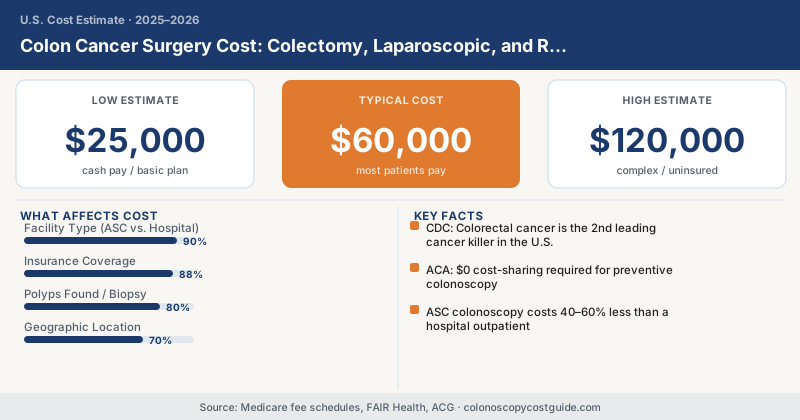
Colon Cancer Surgery Cost 2026: $25,000–$120,000 (Colectomy, Laparoscopic & Robotic)
Surgery is the primary treatment for most colon cancers, and it’s almost never cheap. But “colon cancer surgery cost” isn’t one number — it’s a series of bills that arrive over weeks or months, and the total depends enormously on the surgical technique, the stage at diagnosis, whether complications arise, and how much your insurance covers.
The CDC reports that colorectal cancer is the second most common cause of cancer death in the United States when men and women are combined, with approximately 150,000 new cases diagnosed annually. Most patients eventually face surgery. Here’s what that actually costs.
Colon Cancer Surgery Types and Their Costs
Colectomy — partial or total removal of the colon — is the surgical standard. The approach (open, laparoscopic, or robotic) matters a lot for both recovery and billing:
| Surgery Type | Typical Hospital Charge | Average Patient OOP (Insured) |
|---|---|---|
| Open colectomy (traditional incision) | $35,000 – $90,000 | $4,000 – $15,000 |
| Laparoscopic colectomy (minimally invasive) | $30,000 – $75,000 | $4,000 – $12,000 |
| Robotic colectomy (da Vinci or similar) | $45,000 – $120,000 | $5,000 – $18,000 |
| Low anterior resection (rectal/sigmoid) | $40,000 – $95,000 | $5,000 – $15,000 |
| Abdominoperineal resection (APR, permanent colostomy) | $50,000 – $110,000 | $6,000 – $20,000 |
| Total colectomy with ileorectal anastomosis | $55,000 – $130,000 | $8,000 – $25,000 |
Hospital charges are list prices — what the hospital bills before insurance negotiation. The amounts in the “Patient OOP” column represent typical out-of-pocket costs for patients with comprehensive commercial insurance who hit or exceed their annual out-of-pocket maximum.
What Drives the Final Bill
Several factors push costs up or down dramatically:
Stage at diagnosis: Stage I colon cancer (early, localized) often requires a single laparoscopic resection and a short hospital stay. Stage IV (metastatic) may require multiple surgeries, liver resection, and extensive post-surgical chemotherapy — total treatment costs can reach $300,000–$500,000 over a course of care.
Hospital stay length: A routine laparoscopic colectomy averages 2–4 days. Complications (anastomotic leak, wound infection, ileus) can extend the stay to 1–3 weeks, multiplying inpatient costs. A single additional day in a hospital surgical unit runs $3,000–$8,000.
Colostomy needs: Temporary or permanent colostomy adds ostomy supply costs post-discharge — typically $150–$400/month ongoing. Colostomy reversal surgery, if done, is another separate surgical event.
Surgeon and hospital designation: High-volume cancer centers and academic medical centers charge more but have lower complication rates for complex resections. For Stage III–IV disease, the difference in outcomes may justify higher cost.
Insurance Coverage for Colon Cancer Surgery
All major insurance types cover colon cancer surgery as medically necessary. The question is how much you personally pay.
Your True Out-of-Pocket for Colon Cancer Surgery
With commercial insurance:
- Deductible ($1,500–$6,000 typically) — you’ll hit this fast on a surgical admission
- Coinsurance (usually 10–30%) on charges above the deductible
- Annual out-of-pocket maximum ($7,000–$16,000 in-network for most commercial plans in 2025) — the ceiling on what you pay in a calendar year
Practical reality: Most colon cancer surgery patients hit their annual OOP maximum on the surgery alone. After that, the rest of year’s treatment (chemo, follow-up scans, oncology visits) is 100% covered.
Medicare: Part A covers the hospitalization (you pay the Part A inpatient deductible — $1,676 in 2025 — for up to 60 days). Part B covers surgeon, anesthesiologist, and post-operative oncology visits. Medigap supplement policies can eliminate most cost-sharing.
Total Cost of Colon Cancer Treatment (Surgery + Follow-up)
Surgery is the largest single cost, but it’s not the only one:
| Treatment Phase | Typical Cost Range |
|---|---|
| Pre-surgical staging (CT, PET, colonoscopy, biopsy) | $3,000 – $12,000 |
| Colectomy (all-in hospital costs) | $30,000 – $120,000 |
| Post-surgical pathology, lab work | $500 – $2,000 |
| Adjuvant chemotherapy (Stage III: FOLFOX x 6 months) | $30,000 – $80,000 |
| Radiation (if rectal, not standard for colon) | $15,000 – $50,000 |
| Surveillance colonoscopy + imaging (years 1–5) | $5,000 – $20,000 |
| Total (Stage II–III, full course of care) | $75,000 – $250,000+ |
Without Insurance: A Stark Reality
For uninsured patients, the numbers are grimmer. Hospitals bill list prices without insurance negotiation. An uninsured laparoscopic colectomy at a hospital can generate a bill of $60,000–$120,000 before any negotiation.
Most hospitals have charity care and financial assistance programs — the ACA requires nonprofit hospitals to have them. Depending on your income, you may qualify for free or deeply discounted care. Apply before surgery when possible. Many hospitals accept retroactive applications after discharge.
The National Cancer Institute’s Cancer Information Service (1-800-4-CANCER) can connect you with resources including patient assistance programs from drug companies covering chemotherapy costs.
Robotic Surgery: Is It Worth the Extra Cost?
Robotic colectomy (CPT 44204, 44205, 44206 with robot assist) is increasingly offered at cancer centers and community hospitals. It’s marketed as more precise with better recovery outcomes.
The evidence: a 2023 JAMA Surgery study found robotic colectomy had similar oncological outcomes and slightly shorter hospital stays compared to laparoscopic — but robotic adds $2,000–$8,000 in surgical costs. For straightforward colon resections, most current guidelines consider laparoscopic and robotic approaches clinically equivalent. Choose based on your surgeon’s experience and the clinical situation, not marketing.
Managing Colon Cancer Costs
- Request an itemized bill after surgery — hospital billing errors are common and frequently involve charges for services not rendered.
- Work with a patient advocate or hospital financial counselor — they know which programs you qualify for.
- Use your OOP maximum to your advantage — if surgery is in early January, the rest of year’s treatment (chemo, scans) is covered after you hit the maximum.
- COBRA or marketplace insurance if you’re uninsured — the ACA marketplaces have special enrollment periods for major life events, and a colon cancer diagnosis qualifies.
- Copay assistance programs: drug manufacturers (Pfizer, Genentech, Sanofi) offer copay cards for chemotherapy regimens that can reduce monthly drug costs to $0–$25.
A colon cancer diagnosis is frightening. The financial picture doesn’t have to be. With insurance, most patients’ total out-of-pocket cost is capped at their annual maximum. Without insurance, financial assistance and charity care are real options that most hospitals don’t advertise proactively — you have to ask.