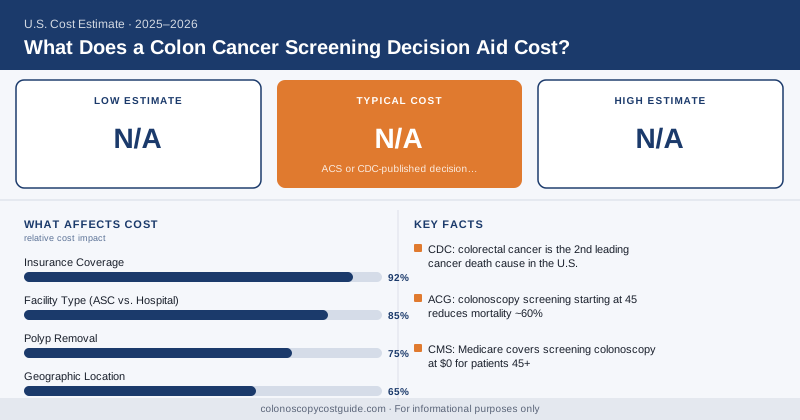
What Does a Colon Cancer Screening Decision Aid Cost?
{ if eq .Lang "zh" }{ else }{ end }Which colon cancer screening test is actually right for you: colonoscopy, Cologuard, or FIT? That’s a genuinely hard question with no universal right answer, and decision aids exist specifically to help you and your doctor work through it together — for free, in almost every case.
What Decision Aids Actually Cost
| Decision Aid Source | Typical Cost | Format |
|---|---|---|
| ACS or CDC-published decision aid | Free | Printed handout or online tool |
| Insurer-provided decision support tool | Free | Online portal or app |
| Primary care office handout | Free | Paper or digital worksheet |
| Shared decision-making office visit | No separate charge | Bundled into regular office visit billing |
There’s essentially no scenario where you should pay a standalone fee for a screening decision aid. They’re funded by public health organizations, insurers, and medical practices specifically because helping patients choose the right test the first time reduces downstream costs from delayed or skipped screening.
Why These Tools Exist
The USPSTF and ACS guidelines list multiple acceptable screening options for average-risk adults starting at 45, and research on shared decision-making consistently shows patients who understand their options are more likely to actually complete screening, rather than delaying out of confusion or anxiety about which test to choose.
Key Takeaway
What a Good Decision Aid Actually Covers
A solid decision aid walks through the tradeoffs covered in our full screening cost comparison: frequency of testing, sedation requirements, accuracy differences, and what happens after a positive result on each test type. It should help you weigh your personal risk factors, family history, and tolerance for prep and sedation against each option’s practical demands.
Where to Find Reliable Ones
The CDC’s Colorectal Cancer Control Program and the American Cancer Society both publish free, plain-language decision aids online, and many are specifically designed to be printed and brought to your appointment. Ask your insurer too — many have adopted shared decision-making tools as part of preventive care outreach programs.
After You’ve Made a Decision
Once you and your doctor land on a screening choice, the next step is simply scheduling it — whether that’s booking a colonoscopy, ordering an at-home Cologuard kit, or picking up a FIT test kit at your next visit.
Bottom Line
Colon cancer screening decision aids are free, widely available through your doctor, insurer, or major health organizations, and genuinely useful for choosing between colonoscopy, Cologuard, and FIT. Use one before your next appointment — there’s no cost barrier to making a more informed choice.
{ if eq .Lang "zh" }