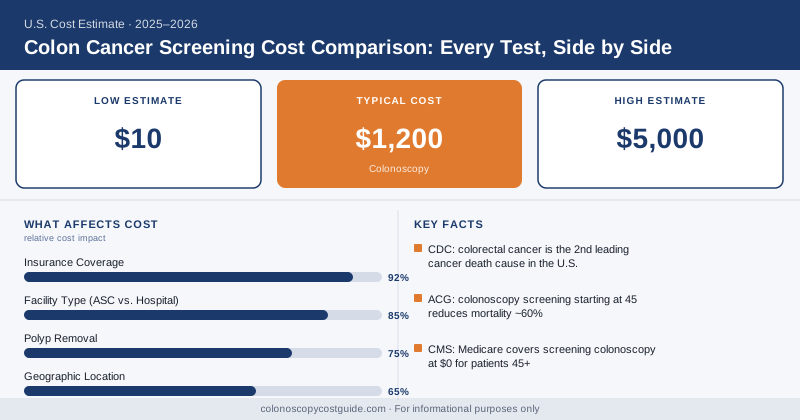
Colon Cancer Screening Cost Comparison: Every Test, Side by Side
{ if eq .Lang "zh" }{ else }{ end }- Colonoscopy. 2. Cologuard. 3. FIT. 4. CT colonography. Four tests, one job — catching colon cancer early — and four wildly different price tags. Let’s rank them.
The Full Cost Comparison
| Screening Test | Cash Price | Frequency Needed | With Insurance (Preventive) |
|---|---|---|---|
| Colonoscopy | $1,200 – $5,000 | Every 10 years | $0 |
| Cologuard (stool DNA) | $600 – $700 | Every 3 years | $0 |
| FIT (fecal immunochemical test) | $20 – $50 | Every year | $0 |
| CT colonography (virtual colonoscopy) | $700 – $2,500 | Every 5 years | Varies — not always covered |
| Flexible sigmoidoscopy | $500 – $1,500 | Every 5 years | $0 |
At first glance, FIT looks like the obvious winner on price. But the real cost comparison has to account for frequency and what happens after a positive result.
Why “Cheapest Per Test” Isn’t the Same as “Cheapest Overall”
A FIT test costs $20-50, but you need one every single year for a decade to match the screening interval of one colonoscopy. Run the math over 10 years and FIT can add up to $200-500 in cumulative testing, plus the added anxiety of an annual result. And if a FIT or Cologuard test ever comes back positive, you still need a follow-up colonoscopy — meaning the “cheap” tests aren’t a true substitute, just a first filter.
Key Takeaway
The ACS and ACG Recommendations
The ACS lowered its recommended starting age for average-risk colon cancer screening to 45 in 2018, a change later adopted by the USPSTF in 2021. The ACG’s guidelines list colonoscopy as the gold-standard test because it’s both diagnostic and therapeutic — it finds polyps and removes them in the same procedure, something no stool-based test can do.
When a Non-Colonoscopy Test Makes Sense
If you’re avoidant about sedation, have a scheduling barrier, or simply want a lower-friction first step, Cologuard or FIT are legitimate, ACS-endorsed screening options for average-risk adults. They’re significantly cheaper per test and require no bowel prep or time off work.
What Happens After a Positive Result
Any positive stool-based test — Cologuard or FIT — triggers a recommended follow-up colonoscopy, and that colonoscopy is typically billed as diagnostic rather than preventive screening, meaning your normal deductible and coinsurance may apply depending on your plan.
Bottom Line
Colonoscopy costs the most upfront but requires action only once a decade and doubles as treatment. FIT and Cologuard cost far less per test but demand more frequent repeat testing and can’t remove polyps. With ACA coverage typically making all options $0 out-of-pocket as preventive care, the real decision comes down to convenience and risk tolerance, not price.
{ if eq .Lang "zh" }