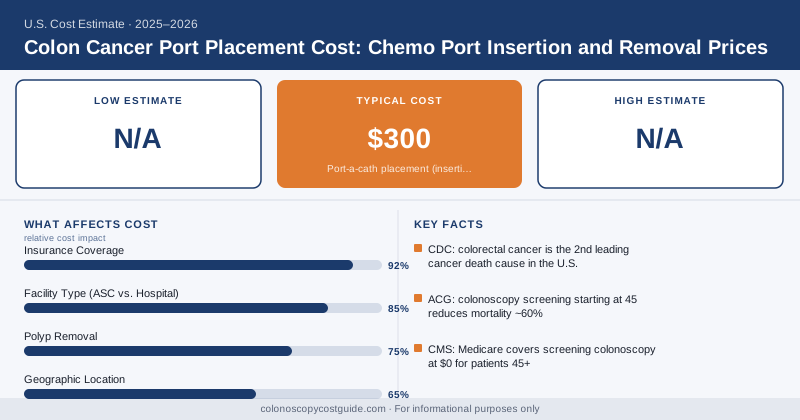
Colon Cancer Port Placement Cost: Chemo Port Insertion and Removal Prices
{ if eq .Lang "zh" }{ else }{ end }Before your first chemo infusion, your oncologist will probably mention a “port.” It’s a small device implanted under the skin of your chest that gives nurses easy, repeated access to a large vein. Nobody loves the idea of another procedure, but a port spares your arm veins from weeks of needle sticks — and it’s a surprisingly modest cost in the scheme of cancer care.
About 150,000 Americans are diagnosed with colorectal cancer each year, the American Cancer Society reported in 2024, and most of those who need chemotherapy will get a port. Here’s what it costs to put in and take out.
Port Placement and Removal Costs
| Procedure | Typical Facility Charge | Average Patient OOP (Insured) |
|---|---|---|
| Port-a-cath placement (insertion) | $2,000 – $8,000 | $300 – $2,000 |
| PICC line placement (alternative) | $1,000 – $4,000 | $200 – $1,200 |
| Port removal | $1,500 – $5,000 | $200 – $1,500 |
| Port-related complication (infection, clot) treatment | $3,000 – $15,000 | Varies |
These are list charges. Because port placement usually happens during a cancer treatment year when you’re racking up other bills, most insured patients have already met or are racing toward their annual out-of-pocket maximum — so the port adds little or nothing on top.
Why the Port Actually Saves You Money
Key Takeaway
The port is part of the broader chemotherapy picture. See how the drugs and infusion visits add up in our colon cancer chemotherapy cost guide, and how it all fits the stage-based totals in colon cancer treatment cost by stage.
What the Procedure Involves
Port placement is a short outpatient procedure, usually under local anesthesia with light sedation. A surgeon or interventional radiologist makes a small incision, places the port under the skin, and threads a thin catheter into a large vein. You go home the same day. Removal, once chemo ends, is even simpler — often just local numbing.
The whole reason it exists is convenience and vein protection during the long haul of treatment, which may include drugs covered in our colorectal cancer targeted therapy cost guide for patients who need them alongside standard chemo.
Insurance Coverage
A chemo port is covered as medically necessary by all major insurance:
- Commercial plans: Deductible plus coinsurance, counting toward your annual OOP max.
- Medicare: Part B covers outpatient port placement and removal.
- Medicaid: Covered with little to no out-of-pocket cost.
The Bottom Line
A chemo port costs $2,000–$8,000 to place and $1,500–$5,000 to remove, but with insurance — and the fact that you’ve likely hit your out-of-pocket maximum during treatment — your real added cost is often minimal. More importantly, it makes months of infusions far easier on your body.
If you’re early in your cancer journey and weighing what’s ahead, it can help to look back at the original colonoscopy cost that started things and forward at the full treatment plan your oncologist lays out.
{ if eq .Lang "zh" }