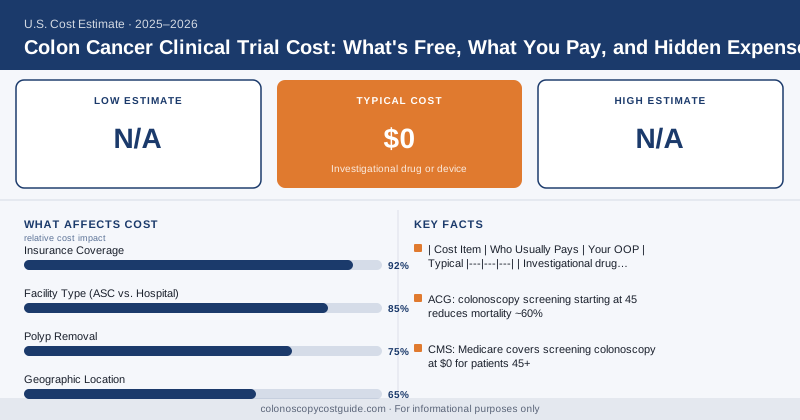
Colon Cancer Clinical Trial Cost: What's Free, What You Pay, and Hidden Expenses
{ if eq .Lang "zh" }{ else }{ end }There’s a common myth that joining a cancer clinical trial means everything is free. It’s not quite that simple, and the gap between what people expect and what they’re billed causes real stress at an already hard time. Let’s clear it up.
A clinical trial can give you access to a cutting-edge treatment years before it’s widely available. The NCI notes that only about 5% of adult cancer patients enroll in clinical trials, even though they’re a cornerstone of how treatment improves. Cost confusion is one big reason people hesitate. Here’s what you’d actually pay.
Who Pays for What
The cleanest way to understand trial costs is to split them into two buckets: research costs (paid by the sponsor) and patient care costs (paid by you or your insurance).
| Cost Item | Who Usually Pays | Your Typical OOP |
|---|---|---|
| Investigational drug or device | Trial sponsor | $0 |
| Extra tests required only by the study | Trial sponsor | $0 |
| Routine cancer care (standard chemo, scans, labs) | Your insurance | Deductible + coinsurance |
| Standard doctor and infusion visits | Your insurance | Coinsurance to OOP max |
| Travel, lodging, parking, meals | You | $2,000 – $10,000+/yr |
| Lost wages / time off work | You | Varies widely |
So the experimental treatment that drew you to the trial? That part really is free. What you still owe is the ordinary care you’d get anyway, plus the logistics of showing up.
The Costs People Don’t See Coming
Key Takeaway
How Trial Care Compares to Standard Treatment
Financially, a trial isn’t dramatically different from standard care, because your insurance still processes the routine pieces the same way. If your trial involves chemotherapy on the standard side, those costs look just like our colon cancer chemotherapy cost breakdown. Trials testing newer agents often build on the kinds of drugs covered in colorectal cancer immunotherapy cost and colorectal cancer targeted therapy cost.
For patients with advanced disease, trials are often the most promising path. You can see how standard advanced care is priced in our colon cancer treatment cost by stage guide.
Questions to Ask Before You Enroll
A few questions can save you thousands and a lot of anxiety:
- Which costs does the sponsor cover, and which go through my insurance?
- Will my insurer pre-authorize the routine care portion of this specific trial?
- Are there travel, lodging, or parking reimbursements available?
- How many extra visits will this require compared to standard treatment?
- If I leave the trial, what happens to my care and costs?
Get the answers in writing from the study coordinator. Reputable trial sites have staff whose entire job is helping you navigate exactly this.
The Bottom Line
A colon cancer clinical trial gives you the investigational treatment for free, but you’ll still owe the routine care costs your insurance covers like any other treatment — typically up to your annual out-of-pocket maximum — plus travel and lodging that can run a few thousand dollars. Grants frequently cover that gap.
The financial trade-off is often worth it for access to tomorrow’s treatments today. And if your cancer journey started with screening, it’s worth remembering how the upfront colonoscopy cost compares to everything that’s followed.
{ if eq .Lang "zh" }