Colon Cancer Chemotherapy Cost: Full Breakdown by Regimen and Coverage
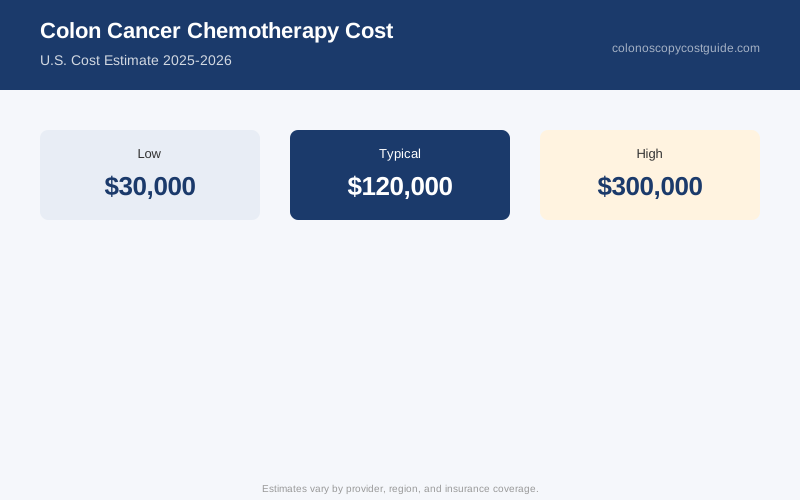
What does a full course of colon cancer chemotherapy actually cost? The honest answer: anywhere from $30,000 to over $300,000 depending on your regimen, your insurance, and whether you need targeted biologics alongside standard chemo. That’s a range wide enough to be nearly useless on its own — so let’s break it down by what you’re actually likely to face.
Colorectal Cancer by the Numbers
The American Cancer Society (ACS) estimates that in 2025, approximately 154,270 Americans will be diagnosed with colorectal cancer, making it the third most commonly diagnosed cancer in both men and women in the United States. About 60% of newly diagnosed patients will receive some form of chemotherapy — either as adjuvant therapy after surgery, or as primary treatment for advanced disease.
The specific drugs, regimen length, and whether targeted agents are added determine the cost range more than almost any other factor.
Standard Chemotherapy Regimens and Their Costs
Colon cancer chemotherapy is almost never a single drug. GI oncologists typically use combination protocols, usually given in 2-week cycles over 6–12 months for adjuvant treatment, or continuously for metastatic disease.
| Regimen | Drugs Included | Per-Cycle Cost (Uninsured) | Full Course Estimate |
|---|---|---|---|
| FOLFOX | 5-FU + leucovorin + oxaliplatin | $8,000 – $15,000 | $96,000 – $180,000 |
| FOLFIRI | 5-FU + leucovorin + irinotecan | $7,000 – $12,000 | $84,000 – $144,000 |
| CAPOX (XELOX) | Capecitabine + oxaliplatin | $4,000 – $9,000 | $48,000 – $108,000 |
| FOLFOXIRI | 5-FU + leucovorin + oxaliplatin + irinotecan | $12,000 – $22,000 | $144,000 – $264,000 |
| Bevacizumab (Avastin) add-on | Targeted biologic | $5,000 – $9,000 per cycle | Adds $60,000 – $108,000 |
| Cetuximab (Erbitux) add-on | Targeted biologic (KRAS wild-type) | $6,000 – $12,000 per cycle | Adds $72,000 – $144,000 |
These figures reflect drug acquisition costs plus infusion center fees — the two largest components of your chemo bill.
What’s Included in a Chemo Bill?
Patients are often shocked that chemotherapy generates multiple separate bills. A single infusion visit typically produces charges from:
The infusion center or oncology clinic. This is the facility fee for the chair, nursing staff, supplies, anti-nausea pre-medications, and monitoring time. Expect $800–$3,000 per visit depending on length and location.
The pharmacy (drug cost). The actual chemotherapy agents are billed separately at drug acquisition cost plus a markup. Oxaliplatin, for example, costs approximately $700–$1,200 per cycle as a generic. Bevacizumab runs $4,000–$8,000 per cycle.
The oncologist. Your oncologist bills separately for evaluation and management services each visit — typically $200–$500 per consultation.
Laboratory monitoring. You’ll get blood counts (CBC) and metabolic panels before nearly every cycle to confirm it’s safe to proceed. These add $80–$200 per visit and are billed separately.
Genetic/molecular testing. Before starting chemo for metastatic disease, most oncologists order tumor molecular profiling (Foundation One, Tempus, or similar). This test alone runs $3,000–$7,000 uninsured and determines which targeted agents you’re eligible for.
KRAS, NRAS, and BRAF Testing Matters for Cost
How Insurance Covers Chemotherapy
Commercial insurance. Most employer-sponsored and ACA marketplace plans cover chemotherapy as an essential health benefit. You’ll typically owe your deductible (often $1,500–$7,000 for an individual) plus coinsurance (usually 20–30%) up to your out-of-pocket maximum. Once you hit your OOP max — typically $4,000–$9,450 for individual plans in 2025 — the plan pays 100% for the rest of the plan year.
Important: Not all plans cover oral chemotherapy (like capecitabine/Xeloda) the same way as IV chemo. IV drugs are typically covered under the medical benefit (subject to medical deductible/OOP max). Oral cancer drugs may fall under your pharmacy benefit with a separate, sometimes uncapped, coinsurance tier.
Medicare. Medicare Part B covers IV chemotherapy administered in an outpatient clinic at 80% after the Part B deductible. Oral chemotherapy falls under Part D (prescription drug coverage), where coverage and cost-sharing vary by plan. The Inflation Reduction Act (2022) capped out-of-pocket costs for Part D enrollees at $2,000/year starting in 2025 — a major protection for cancer patients on expensive oral agents.
Medicaid. Coverage varies by state, but most state Medicaid programs cover standard chemotherapy regimens with minimal or no cost-sharing for enrolled patients.
Biologic and Targeted Therapy Costs
The biologics added to standard chemo protocols are where colon cancer treatment costs escalate fastest.
Bevacizumab (Avastin) is the most commonly added agent for metastatic colorectal cancer. At $4,000–$8,000 per two-week cycle, a full 12-month course can add $100,000 or more to the total treatment bill. Genentech (the manufacturer) offers a patient assistance program — Genentech Access Solutions — that covers bevacizumab for uninsured patients who meet income criteria.
Pembrolizumab (Keytruda), approved for MSI-High colorectal cancer, costs approximately $10,000–$15,000 per infusion. About 15% of colon cancer tumors are MSI-High, making this a relevant cost for a meaningful subset of patients.
Copay Assistance and Financial Support Programs
Here’s what many patients don’t know: most manufacturers of branded cancer drugs offer copay assistance programs that can dramatically reduce your out-of-pocket cost.
Manufacturer copay cards. For commercially insured patients, copay assistance cards from Genentech, Eli Lilly, Pfizer, and others can reduce per-cycle out-of-pocket costs to $0–$25. These programs typically don’t apply to government insurance (Medicare, Medicaid).
Patient Assistance Programs (PAPs). For uninsured or underinsured patients who meet income criteria (typically less than 400–500% of the federal poverty level), manufacturers often provide drugs at no cost. NeedyMeds.org maintains an updated database of PAPs by drug name.
Non-profit foundations. The Cancer Care Co-Pay Assistance Program, PAN Foundation, and HealthWell Foundation all offer grants to help cover out-of-pocket costs for cancer treatment. Eligibility and funding availability change throughout the year.
Hospital financial counselors. Any NCI-designated cancer center or major oncology practice has financial counselors on staff. They’re trained to connect patients with assistance programs, negotiate payment plans, and sometimes arrange hospital charity care.
Total Out-of-Pocket Estimates
For a commercially insured patient with a $7,000 individual deductible and $9,000 out-of-pocket maximum, the realistic out-of-pocket cost for a full course of adjuvant FOLFOX (12 cycles) is roughly:
- Year 1 of treatment: Hit your deductible ($7,000) early in treatment, then hit your out-of-pocket maximum ($9,000) within the first 2–3 months. If treatment spans a calendar year, the cycle resets January 1 — meaning you’ll hit your deductible again in year 2.
- Using copay assistance: A manufacturer copay card may cover some or all of what you owe before reaching the OOP max, effectively reducing year-1 costs to near zero.
- Medicare beneficiaries: With the 2025 Part D $2,000 OOP cap, oral chemotherapy costs are now predictable and capped for the first time.
Bottom Line
A standard adjuvant chemotherapy course for stage III colon cancer runs $96,000–$180,000 at list price before insurance. With commercial insurance and copay assistance, most patients pay $0–$9,450 out of pocket per plan year. The financial complexity is real — working with an oncology social worker or financial counselor from the first appointment isn’t optional, it’s essential. These professionals exist specifically to navigate exactly this maze on your behalf.