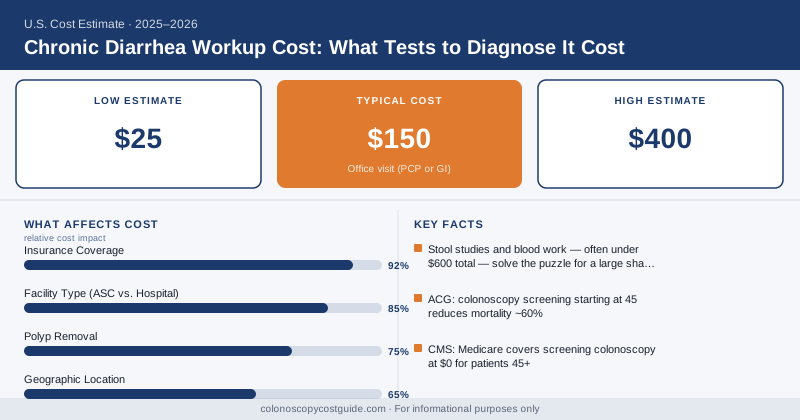
Chronic Diarrhea Workup Cost: What Tests to Diagnose It Cost
{ if eq .Lang "zh" }{ else }{ end }Three weeks of diarrhea isn’t a stomach bug anymore. Once loose stools last longer than four weeks, doctors call it chronic — and the search for a cause begins. The price tag for that search swings widely, from a couple hundred dollars for stool tests to several thousand if you need a scope.
Let’s break down what each step costs and when it’s actually needed.
First Step: Stool and Blood, Not a Scope
Here’s something that surprises people: the workup almost never starts with a colonoscopy. It starts with cheap tests that rule in or out the common culprits — infection, inflammation, celiac disease, and malabsorption.
| Initial Test | Cash Cost | With Insurance |
|---|---|---|
| Office visit (PCP or GI) | $150 – $400 | $25 – $75 copay |
| Stool culture / pathogen panel | $80 – $400 | $0 – $50 |
| Fecal calprotectin (inflammation marker) | $100 – $300 | $10 – $60 |
| Celiac antibody blood test | $50 – $200 | $5 – $40 |
| Comprehensive metabolic panel + CBC | $80 – $250 | $5 – $50 |
The NIDDK estimates that around 60 to 70 million Americans are affected by digestive diseases each year, and chronic diarrhea is one of the most common reasons people end up in a GI clinic. A lot of those cases turn out to be irritable bowel syndrome, which these early tests help confirm by exclusion.
When the Colonoscopy Comes In
If stool and blood tests don’t explain things — or you have alarm features like blood, weight loss, or nighttime symptoms — your GI doctor will recommend a colonoscopy. During the scope, they often take biopsies even when the colon looks normal, to check for microscopic colitis.
| Procedure | Total Billed Cost |
|---|---|
| Diagnostic colonoscopy | $1,200 – $5,000 |
| Colonoscopy with random biopsies | $1,800 – $6,000 |
| Upper endoscopy (if celiac suspected) | $1,000 – $4,000 |
| Abdominal imaging | $300 – $3,000 |
Those random biopsies aren’t optional fluff. Microscopic colitis looks normal to the naked eye, so the biopsy is the diagnosis. Expect $200–$800 in pathology fees on top of the scope.
Key Takeaway
How Celiac Disease Changes the Workup
If the celiac antibody test comes back positive, the path shifts toward an upper endoscopy with biopsy rather than a colonoscopy. The small intestine, not the colon, holds the answer for celiac. That’s a good example of why letting the cheap tests run first matters — they steer you to the right expensive test instead of the wrong one.
What It Adds Up To
A typical IBS-pattern workup — office visit plus stool and blood tests — runs $300–$1,000 and ends there. Add a colonoscopy with biopsies and you’re at $2,000–$6,000. If you’re paying cash, ask about colonoscopy pricing without insurance, because surgery-center cash rates often beat hospital billed charges by half.
The smart play is sequencing. Run the inexpensive tests first, treat what they reveal, and reserve the scope for cases where the simple answers don’t fit. Done in that order, most people never hit the high end of the cost range.
{ if eq .Lang "zh" }