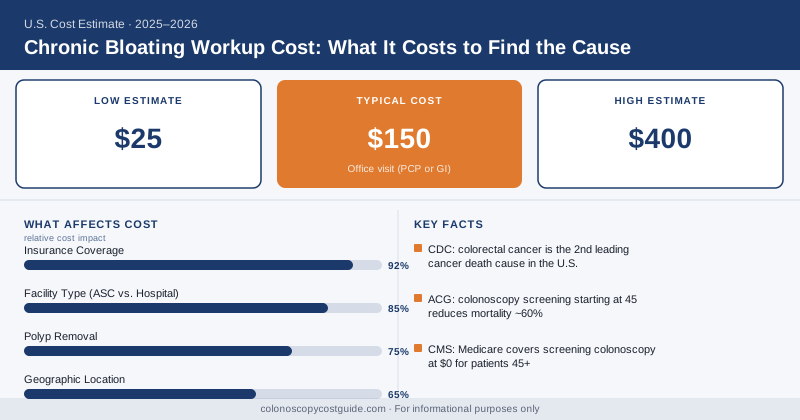
Chronic Bloating Workup Cost: What It Costs to Find the Cause
{ if eq .Lang "zh" }{ else }{ end }Forty-two percent of Americans report bloating at least occasionally, and for plenty of them it never stops. Chronic, day-after-day bloating is frustrating, and the workup to explain it can cost anywhere from about $200 to $4,000. The good news is most cases land on the cheap end, because bloating alone rarely demands an expensive scope.
Here’s what the workup looks like and where the money goes.
Start Cheap, Because Bloating Usually Is Benign
Bloating on its own — no blood, no weight loss, no anemia — is most often functional or diet-related. So the workup leads with inexpensive tests that catch the common, treatable causes.
| First-Line Test | Cash Cost | With Insurance |
|---|---|---|
| Office visit (PCP or GI) | $150 – $400 | $25 – $75 copay |
| Celiac antibody blood test | $50 – $200 | $5 – $40 |
| Hydrogen breath test (SIBO / lactose) | $100 – $400 | $20 – $150 |
| Basic blood panel (CBC, thyroid) | $80 – $300 | $5 – $60 |
| Stool tests | $80 – $400 | $0 – $50 |
The NIDDK notes that irritable bowel syndrome affects an estimated 10 to 15% of U.S. adults, and bloating is one of its hallmark complaints. A lot of chronic bloating turns out to be IBS, lactose intolerance, or small intestinal bacterial overgrowth — all diagnosable with the tests above, none of which require sedation or a scope.
When Imaging or a Scope Enters
Bloating gets escalated to imaging or endoscopy only when it travels with alarm features, or when initial tests hint at something structural.
| Escalated Test | Total Billed Cost |
|---|---|
| Abdominal ultrasound | $200 – $1,000 |
| Abdominal/pelvic CT scan | $300 – $3,000 |
| Upper endoscopy (EGD) | $1,000 – $4,000 |
| Diagnostic colonoscopy | $1,200 – $5,000 |
A CT scan or ultrasound can spot fluid, masses, or organ enlargement that explains persistent bloating. An upper endoscopy is reserved for cases where reflux, gastritis, or celiac disease is suspected and needs tissue confirmation.
Key Takeaway
The Colonoscopy Question
So when does bloating actually warrant a colonoscopy? When it comes bundled with blood in the stool, unintended weight loss, iron-deficiency anemia, or a change in bowel habits — or when you happen to be due for routine screening and it makes sense to combine the visit. Done for a symptom, the scope is diagnostic and billed against your deductible.
Adding It Up
A typical isolated-bloating workup — visit, blood work, breath test — runs $250–$900 and usually finds a manageable cause like IBS, lactose intolerance, or SIBO. Add imaging and you’re at $1,000–$3,000. A colonoscopy, when truly indicated, pushes the total toward $4,000.
If you do need a scope and you’re paying cash, compare a colonoscopy without insurance at an outpatient center against hospital pricing — the gap is often thousands. But for most people with chronic bloating, the answer arrives well before any scope is needed.
{ if eq .Lang "zh" }