Chemo Port Cost 2026: $1,500–$5,000 (Placement, Removal & Maintenance)
{ if eq .Lang "zh" }{ else }{ end }A chemo port is a minor outpatient procedure. The bill, unfortunately, is not minor.
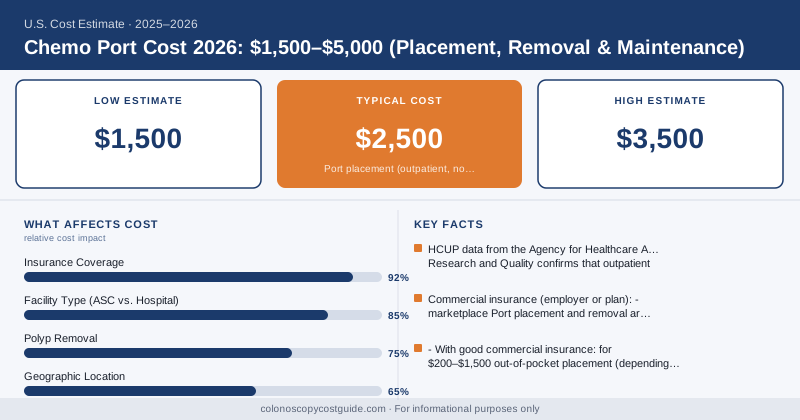
Placement runs $1,500–$3,500 on average — and that’s before facility fees, anesthesia, and imaging stack on top. The all-in cost for an uninsured patient can reach $5,000–$7,000. Insured patients typically pay much less, but the numbers vary widely depending on where the procedure happens and what your plan looks like.
According to the American Cancer Society, over 1.9 million Americans were diagnosed with cancer in 2023. The majority of those receiving IV chemotherapy will be recommended a port — making this one of the most common minor surgical procedures in oncology. Here’s exactly what it costs, and what your insurance should cover.
What Is a Chemo Port and Why Is It Placed?
A port-a-cath (or “port”) is a small, quarter-sized device implanted under the skin, usually on the upper chest. It connects to a central vein via a catheter. Nurses access it with a special needle to deliver chemotherapy, draw blood, or administer IV fluids — without repeatedly sticking your arms.
For patients going through colon cancer surgery or other GI malignancies, ports are almost standard. They protect veins from harsh chemotherapy drugs, reduce bruising and pain at infusion sites, and make treatment sessions significantly easier. Placement is typically scheduled within days of a cancer diagnosis, before the first chemo cycle begins.
Full Chemo Port Cost Breakdown
| Item | Low Estimate | Typical Cost | High Estimate |
|---|---|---|---|
| Port placement (outpatient, no complications) | $1,500 | $2,500 | $3,500 |
| Port removal | $800 | $1,200 | $2,000 |
| Facility fee — ambulatory surgery center (ASC) | $500 | $900 | $1,500 |
| Facility fee — hospital outpatient | $1,200 | $1,800 | $2,500 |
| Anesthesia (local vs. IV sedation) | $400 | $750 | $1,200 |
| Imaging — fluoroscopy guidance | $200 | $400 | $600 |
| Monthly port flush (maintenance, between cycles) | $100 | $180 | $300 |
These are all-in facility charges before insurance negotiation. Surgeon fees, anesthesia, and imaging are usually billed separately — so three or four bills from one procedure is normal.
Port Placement vs. Port Removal: Different Price Tags
Placement and removal aren’t priced the same, and the difference matters if you’re budgeting.
Placement involves accessing a central vein (usually the subclavian or internal jugular), threading a catheter, and tucking the device under the skin with a small incision. It requires fluoroscopy (real-time X-ray) to confirm catheter position, and IV sedation is often used — which is why placement costs more.
Removal is typically faster and simpler. The port is accessed through the same incision site, the catheter is withdrawn, and the wound is closed. Most removals are done under local anesthesia only, with no imaging required. That’s why removal runs $800–$2,000 vs. $1,500–$3,500 for placement.
Timeline: How Long Will You Have the Port?
ASC vs. Hospital: A 40–60% Cost Difference
Where the procedure happens makes a dramatic difference in your bill.
Ambulatory surgery centers (ASCs) run leaner than hospital outpatient departments. Facility fees at an ASC for port placement average $500–$1,500, vs. $1,200–$2,500 at a hospital outpatient setting. That’s a 40–60% premium for doing the exact same procedure in a hospital building.
If your oncologist gives you a choice of location, ask about an ASC. Most port placements are straightforward and don’t need the resources of a full hospital. For patients without insurance — or with high deductibles — this is one of the highest-leverage decisions you can make.
HCUP data from the Agency for Healthcare Research and Quality confirms that outpatient ASC procedures consistently generate 40–55% lower facility fees than equivalent hospital outpatient procedures for minor surgical interventions.
Insurance Coverage for Chemo Ports
Both placement and removal are covered by virtually all major insurance types when ordered for chemotherapy.
What You'll Actually Owe: Insurance by Type
Commercial insurance (employer or marketplace plan):
- Port placement and removal are billed as medically necessary procedures — not elective
- You pay your deductible first ($1,500–$6,000 typically), then coinsurance (10–30%)
- Most patients hit their deductible on the placement procedure alone
- After that, port-related visits (flushes, oncology checks) may be at little or no cost
Medicare Part B:
- Covers port placement and removal at 80% of the Medicare-approved amount
- You owe 20% after the annual Part B deductible ($257 in 2026)
- With a Medigap supplement plan, that 20% is often covered entirely
- Medicare Advantage plans cover it similarly, subject to plan-specific cost-sharing
Medicaid:
- Covered in all states for medically necessary cancer treatment
- Cost-sharing is minimal to none depending on your state and income level
Port Maintenance: The Ongoing Cost Nobody Mentions
If you’re not receiving active chemotherapy, ports need to be flushed with saline and heparin every 4–8 weeks to prevent clotting. This is a quick clinic visit — 15 minutes — but it generates a bill.
Each flush costs $100–$300 depending on facility type and local billing rates. Over a year of post-treatment surveillance, that’s $600–$1,800 in flush costs alone. Most insurance plans cover these visits with a standard specialist copay ($30–$60), but if you’re uninsured or have a high-deductible plan, it adds up.
Some oncologists will remove the port after treatment rather than leaving it in for maintenance — especially if the prognosis is good and the patient prefers not to deal with ongoing flush appointments. Worth discussing with your care team.
PICC Line as an Alternative
A PICC line — peripherally inserted central catheter — goes in through the arm rather than the chest. It’s cheaper upfront ($300–$800 to place, often done at bedside without an OR), and there’s no fluoroscopy needed.
The tradeoff is significant:
- Must be flushed daily at home or by a home health nurse
- Restricts arm movement and activity (no swimming, limited lifting)
- Higher infection and clot risk than a port, especially over months
- Not suitable for patients receiving infusion every 2–3 weeks for 6+ months
For short courses of IV antibiotics or brief chemotherapy, a PICC is reasonable. For colorectal cancer patients on multi-month FOLFOX regimens, most oncologists and patients prefer the port. The upfront cost difference is real, but the quality-of-life difference is larger.
How This Fits Into Total Cancer Treatment Costs
The port is a small piece of a much larger financial picture. For GI procedures and cancer treatment, the costs compound quickly — from initial GI procedures that flag the issue, through diagnosis, abdominal surgery if needed, and then chemotherapy.
For most insured patients, the port itself won’t be the financial stressor — hitting the annual out-of-pocket maximum on surgery usually means port-related costs are covered at 100% for the rest of the year. For uninsured or underinsured patients, the calculus is harder.
The National Cancer Institute’s Cancer Information Service (1-800-4-CANCER) connects patients with financial assistance programs, including drug company copay programs and hospital charity care. Don’t wait for a social worker to find you — call early in the process.
Bottom Line: What to Expect to Pay
- With good commercial insurance: $200–$1,500 out-of-pocket for placement (depending on where you are in your deductible), then standard copays for flushes
- With Medicare + Medigap: Minimal cost-sharing, often $0–$300 total
- Without insurance: $2,600–$7,300 all-in for placement; negotiate with the hospital’s financial assistance office before the procedure
- Port removal: $800–$2,000 total billed; with insurance, typically $0–$500 patient responsibility
The port itself is one of the more manageable costs in a cancer treatment course. Get the price right by choosing an ASC if possible, confirming in-network status, and applying for financial assistance early — before the first bill arrives.
{ if eq .Lang "zh" }