Change in Bowel Habits Workup Cost: What Diagnosis Costs
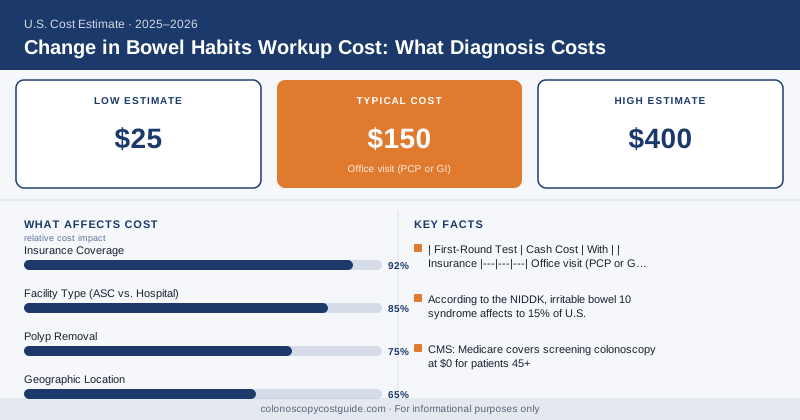
{ if eq .Lang "zh" }{ else }{ end }Most assume a change in their bathroom routine is just diet or stress. Often it is. But a persistent shift — stool that’s suddenly pencil-thin, alternating constipation and diarrhea that won’t settle, or a new pattern that’s lasted weeks — is one of the symptoms doctors are trained to investigate carefully. The workup runs from about $200 to $6,000 depending on how far it goes.
Here’s the breakdown of what gets tested and what it costs.
What Counts as a “Change” Worth Working Up
Not every off day matters. What gets attention is a change that’s new, persistent, and unexplained: a different stool caliber, a lasting shift in frequency, or a consistency change that sticks around past a few weeks. The longer it lasts and the older you are, the more thorough the workup.
| First-Round Test | Cash Cost | With Insurance |
|---|---|---|
| Office visit (PCP or GI) | $150 – $400 | $25 – $75 copay |
| Fecal immunochemical test (FIT) | $20 – $100 | $0 – $30 |
| CBC (check for anemia) | $50 – $150 | $5 – $40 |
| Thyroid + metabolic panel | $80 – $300 | $5 – $60 |
| Stool inflammation marker | $100 – $300 | $10 – $60 |
The CDC reports that colorectal cancer is the second leading cause of cancer death in the U.S. when men and women are combined, and a persistent change in bowel habits is one of its classic symptoms. That’s the reason this complaint doesn’t get brushed off, even though most cases turn out benign.
When the Colonoscopy Becomes the Test
For a persistent change, especially after 45 or with any alarm features, the colonoscopy is the centerpiece. It directly inspects the entire colon and lets the doctor remove polyps or biopsy anything suspicious in the same session.
| Procedure | Total Billed Cost |
|---|---|
| Diagnostic colonoscopy | $1,200 – $5,000 |
| Colonoscopy with polyp removal | $2,000 – $6,500 |
| Endoscopic biopsies | $200 – $800 |
| Abdominal/pelvic CT scan | $300 – $3,000 |
If polyps are found and removed, the biopsy and pathology get added. A CT scan may supplement the scope when the doctor wants to see beyond the colon wall.
Key Takeaway
The Benign Causes That End the Workup Early
Plenty of changes resolve at the cheap-test stage. A new medication, a thyroid problem, a fiber shift, a transient infection, or IBS can all explain it. According to the NIDDK, irritable bowel syndrome affects 10 to 15% of U.S. adults and frequently shows up as alternating bowel patterns — diagnosable without a scope when there are no red flags.
Tallying the Cost
A change explained by labs or a benign cause runs $200–$700. Add a colonoscopy and you’re at $1,500–$6,000, depending on facility and whether polyps come out. The setting is the biggest lever — a hospital-based scope can cost double a freestanding surgery center for the identical procedure.
If you’re paying out of pocket, look into colonoscopy costs without insurance at cash-pay centers, and if you’re on Medicare, know that a diagnostic colonoscopy under Medicare carries different cost-sharing than a screening one. The test you need is the colonoscopy — the savings come from choosing where and how it’s billed.
{ if eq .Lang "zh" }