Celiac Disease Diagnosis Cost: Blood Tests, Biopsy, and Long-Term Expenses
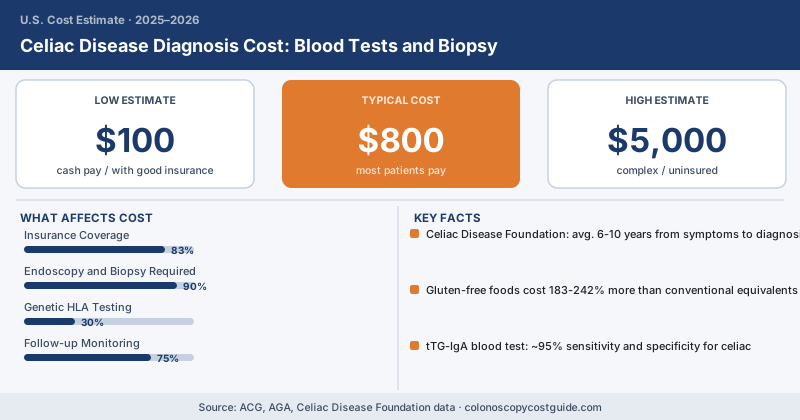
Six to ten years. That’s how long the average American waits between their first celiac disease symptoms and a correct diagnosis — according to the Celiac Disease Foundation. In that time, many patients have seen multiple doctors, undergone unnecessary procedures, and paid for treatments that weren’t addressing the root cause.
The irony is that the actual diagnostic workup for celiac disease is straightforward and relatively inexpensive. The cost comes from the delay.
The Celiac Disease Blood Panel: First-Line Testing
Testing for celiac disease starts with blood tests, not a scope. The standard panel:
| Blood Test | Self-Pay Cost | With Insurance |
|---|---|---|
| Tissue transglutaminase IgA (tTG-IgA) | $30 – $120 | $5 – $30 copay |
| Total serum IgA (to rule out IgA deficiency) | $20 – $60 | $5 – $20 copay |
| Deamidated gliadin peptide IgA/IgG (DGP) | $40 – $150 | $10 – $40 copay |
| Complete celiac panel (all of above) | $100 – $400 | $15 – $80 copay |
| Physician office visit (required for referral) | $150 – $400 | $25 – $100 copay |
The tTG-IgA test is the primary screening test. It has a sensitivity of approximately 95% and specificity of 95% for celiac disease in patients consuming gluten regularly. The total IgA runs alongside it because IgA deficiency (present in about 2–3% of celiac patients) can cause a false-negative tTG-IgA result.
Important: You must be eating gluten when you get tested. Going on a gluten-free diet before testing — which many people do to see if they feel better — invalidates the blood tests and may invalidate the biopsy. If you’re already gluten-free, you’ll need to do a gluten challenge (eating gluten for several weeks) before testing, or proceed directly to discussion with a GI doctor.
The Confirmatory Endoscopy and Biopsy
A positive blood panel isn’t sufficient for diagnosis. For adults, the ACG recommends confirmatory upper endoscopy with multiple biopsies of the duodenum and duodenal bulb.
| Endoscopy and Biopsy Component | Cost Range |
|---|---|
| Facility fee (ambulatory surgery center) | $500 – $1,800 |
| Facility fee (hospital outpatient) | $900 – $2,800 |
| GI physician fee | $250 – $600 |
| Sedation/anesthesia | $300 – $900 |
| Pathology (4–6 duodenal biopsy specimens) | $300 – $900 |
| Total (ASC) | $1,350 – $4,200 |
| Total (hospital outpatient) | $1,750 – $5,200 |
The pathologist looks for villous atrophy — flattening of the finger-like projections (villi) lining the small intestine — and grades it using the Marsh classification. A Marsh 3a-c finding confirms celiac disease. Marsh 1 or 2 findings may indicate early celiac or other conditions, sometimes requiring a second opinion from a GI pathologist who specializes in small bowel disease.
Why the Biopsy Matters for Long-Term Access
Genetic Testing: An Optional (and Expensive) Alternative Path
HLA-DQ2 and HLA-DQ8 genetic testing can rule out celiac disease — nearly all celiac patients carry one of these variants. It’s useful for patients who’ve already gone gluten-free and can’t (or won’t) do a gluten challenge.
- HLA typing for celiac: $200–$500 through commercial labs (Quest, LabCorp)
- Direct-to-consumer through companies like Prometheus Labs: $350–$600
- With insurance: usually covered if ordered by a GI physician with documented clinical indication
The limitation: 30–40% of the general population carries HLA-DQ2 or DQ8, but only 1–3% develops celiac disease. A positive genetic test means you could develop it, not that you have it. Genetic testing confirms absence of celiac (negative result) better than it confirms presence.
After Diagnosis: Lifetime Management Costs
The one treatment for celiac disease is a strict, lifelong gluten-free diet. It’s free in the sense that it doesn’t require medication — but it’s not cheap in practice.
A 2017 study in the journal Epidemiology and Health calculated that gluten-free staple foods cost an average of 183–242% more than their conventional equivalents. Gluten-free bread, pasta, flour, and cereals are specialty items priced as such.
Annual food cost premium: $1,000–$2,500 per year compared to a conventional diet.
Ongoing medical costs:
- Follow-up GI visits (every 6–12 months initially): $200–$500 per visit
- Celiac antibody blood tests (to monitor dietary compliance): $50–$200 every 6–12 months
- Bone density scan (DEXA scan): $100–$300 every 1–2 years (celiac causes malabsorption of calcium and vitamin D)
- Dietitian for gluten-free diet counseling: $100–$250 per session (often 2–4 sessions initially)
Nutritional supplements: Many celiac patients are deficient in iron, folate, B12, vitamin D, and calcium at diagnosis. Repletion therapy varies:
- Iron infusion (if severe anemia): $500–$3,000
- Oral supplementation regimen: $20–$80/month
Tax Considerations
Gluten-free food costs are deductible as a medical expense under IRS rules — but only the incremental cost above what conventional food would cost, and only if you have a documented celiac diagnosis. The IRS requires keeping receipts and calculating the price difference between gluten-free and conventional equivalents. For patients with high medical expenses, this deduction can be meaningful. Consult a tax professional if you’re planning to claim it.
FSA and HSA funds can be used for celiac-related medical expenses — doctor visits, tests, prescription enzyme supplements, and dietitian visits — but generally not for the gluten-free food cost premium itself under current IRS guidance.