Cash-Pay vs. Insurance Colonoscopy Cost: When Paying Cash Is Actually Cheaper
{ if eq .Lang "zh" }{ else }{ end }Here’s a question that sounds absurd until you run the numbers: should you pay cash for a colonoscopy and not even tell your insurance? For people on high-deductible plans, the answer is sometimes yes — and the savings can top a thousand dollars.
Insurance isn’t automatically the cheaper path. If a procedure is billed as diagnostic and you haven’t met your deductible, your “insured” cost can exceed a negotiated cash rate. Let’s compare the two routes honestly.
The Two Paths, Side by Side
A cash-pay colonoscopy at an ambulatory surgery center, negotiated upfront, often lands at $1,000 to $1,800. A diagnostic colonoscopy run through a high-deductible plan before you’ve met the deductible can easily exceed that.
| Scenario | Likely Out-of-Pocket |
|---|---|
| Insured screening (average risk, ACA preventive) | $0 |
| Insured diagnostic (deductible not met) | $1,500 – $4,000 |
| Cash-pay at ASC (negotiated) | $1,000 – $1,800 |
| Cash-pay at hospital | $2,000 – $4,800 |
The takeaway: if your screening is truly preventive and covered at $0, insurance wins, hands down — never pay cash for that. The cash option only competes when the procedure is diagnostic and your deductible is high. Our colonoscopy cost without insurance guide covers self-pay pricing in depth.
Key Takeaway
The Deductible Trap
Here’s the catch that trips people up. When you pay cash and don’t bill insurance, that money usually doesn’t count toward your deductible or out-of-pocket maximum. So if you’d likely hit your deductible later in the year anyway — from surgery, a chronic condition, or family medical needs — running the colonoscopy through insurance helps you reach that ceiling sooner, after which everything is cheaper.
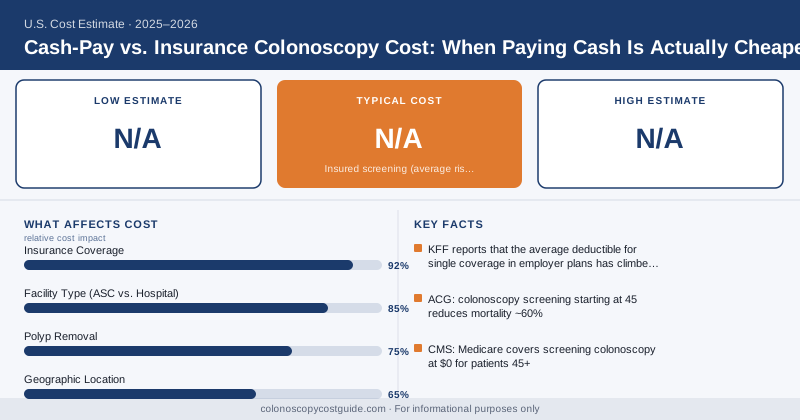
KFF reports that the average deductible for single coverage in employer plans has climbed well past $1,700 in recent years, with many high-deductible plans far above that. The higher your deductible, the more attractive a cash rate becomes for a single diagnostic procedure — but the more a year of heavy care tilts back toward using insurance.
How to Make the Call
- Confirm the billing code. If it’s a $0 preventive screening, use insurance. Done.
- Get the cash quote. Call the facility’s self-pay line and ask for an all-in rate covering facility, GI, anesthesia, and pathology — not just one piece.
- Get your insured estimate. Ask your plan what you’d owe as diagnostic given your current deductible status.
- Project your year. If you expect more care, weigh the deductible credit you’d forfeit by paying cash.
- Compare and choose. Pick the lower true cost for your situation.
Our colonoscopy cost breakdown helps you sanity-check whether a quote is fair, and why is colonoscopy so expensive explains the markups behind the billed price.
Don’t Forget to Negotiate Either Way
Cash rates aren’t fixed. Facilities often have a published self-pay price that’s negotiable, especially if you pay upfront. Even insured patients can challenge surprise charges. Our how to lower your colonoscopy bill guide shows the scripts that work.
The Bottom Line
Use insurance for a $0 preventive screening — always. But for a diagnostic colonoscopy on a high-deductible plan, get both a cash quote and an insured estimate and pick the lower one, keeping in mind that cash usually won’t build toward your deductible. The smartest patients price both routes before they schedule.
{ if eq .Lang "zh" }