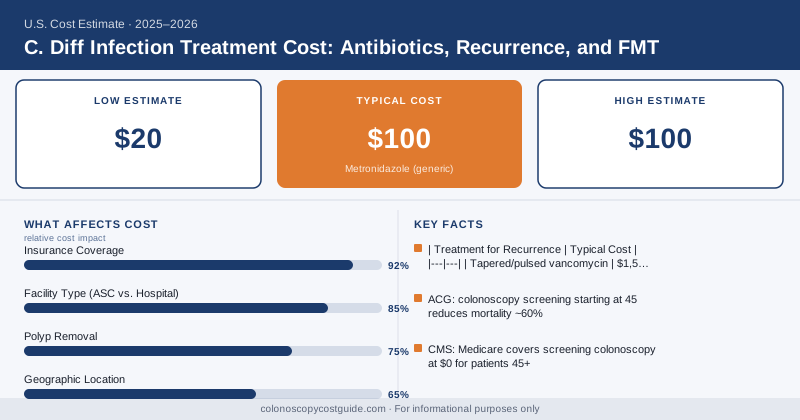
C. Diff Infection Treatment Cost: Antibiotics, Recurrence, and FMT
What does it cost to treat the same diarrhea three different ways? People with recurrent C. diff find out the hard way. The first antibiotic course might be $50. The second, after it comes back, might be $4,000. And the fecal transplant that finally fixes it adds a few thousand more. C. diff is a condition where the cost scales with how stubborn your case is.
Clostridioides difficile is a bacterial infection of the colon that causes severe, watery diarrhea, usually after antibiotics wipe out the protective gut bacteria. The CDC has estimated nearly half a million C. diff infections occur in the U.S. each year, and a big chunk of those are recurrences — roughly 1 in 6 patients gets it again within two to eight weeks. That recurrence rate is the whole reason treatment can get expensive.
First-line antibiotics
Treatment depends on how severe the infection is and whether it’s a first episode or a recurrence.
| Antibiotic | Cost per Course |
|---|---|
| Metronidazole (generic) | $20–$100 |
| Oral vancomycin (generic) | $1,000–$4,500 |
| Fidaxomicin (Dificid) | $3,500–$5,000+ |
Here’s a counterintuitive wrinkle: oral vancomycin, which is now first-line for most cases, can be shockingly expensive even as a “generic” because the oral formulation is pricey. Metronidazole is dirt cheap but no longer preferred for most cases. Fidaxomicin works well and lowers recurrence, but the price tag is steep.
When it keeps coming back
Recurrent C. diff is where costs climb. Each recurrence usually means another antibiotic course — often a longer, tapered vancomycin regimen or fidaxomicin — and after a couple of recurrences, doctors turn to fecal microbiota transplant (FMT) to restore healthy gut bacteria.
| Treatment for Recurrence | Typical Cost |
|---|---|
| Tapered/pulsed vancomycin | $1,500–$5,000 |
| Fidaxomicin course | $3,500–$5,000+ |
| Fecal microbiota transplant (FMT) | $1,000–$4,000 |
| FDA-approved microbiome product | $3,000–$10,000+ |
Key Takeaway
The hospital factor
If C. diff is severe, you may be hospitalized for IV fluids, monitoring, and sometimes IV antibiotics. A hospital stay is by far the biggest cost driver — easily $10,000 to $30,000+ for a multi-day admission. In the rare, life-threatening cases requiring colon surgery (colectomy), costs run far higher.
Diagnosis and the colonoscopy connection
C. diff is usually diagnosed with a stool test ($80–$300), not a scope. But in unclear or severe cases, doctors may do a sigmoidoscopy or colonoscopy to look for the characteristic pseudomembranes. If that’s recommended for you, our colonoscopy cost guide explains the charges, and colonoscopy cost without insurance covers the self-pay angle.
Insurance and assistance
C. diff treatment is clearly medically necessary, so insurance and Medicare cover antibiotics and FMT for documented infection. The friction points:
- Fidaxomicin usually needs prior authorization because of its cost. Manufacturer copay cards can help commercially insured patients.
- Oral vancomycin pricing varies a lot by pharmacy — shop around with discount cards, since the cash price swings widely.
- FMT coverage has improved as it’s become standard for recurrent disease, but confirm with your plan.
Bottom line
A single, mild C. diff infection is cheap to treat. The expense comes from recurrence and severity. The best cost control is preventing recurrence in the first place — finishing the right antibiotic, avoiding unnecessary antibiotics afterward, and turning to FMT sooner rather than cycling through repeated drug courses. If your case keeps coming back, ask your doctor whether fidaxomicin or FMT now beats another round of vancomycin, both for your gut and your wallet.