Black Tarry Stool (Melena) Workup Cost: What Diagnosis Costs
{ if eq .Lang "zh" }{ else }{ end }Black, sticky, tar-like stool with a distinct foul smell isn’t a food dye fluke — it’s melena, and it usually means blood from somewhere high in your GI tract. That’s why this symptom gets a faster, more urgent, and frankly more expensive workup than most. The cost can run from about $1,500 outpatient to over $10,000 if it goes through the ER.
Here’s why the price runs high and what each step buys you.
Why This Symptom Skips the Slow Lane
Most GI symptoms get a leisurely outpatient workup. Melena doesn’t, because partly-digested blood that’s turned the stool black means bleeding that may still be active. A bleeding ulcer or a torn vessel can drop your blood count fast, so doctors move quickly.
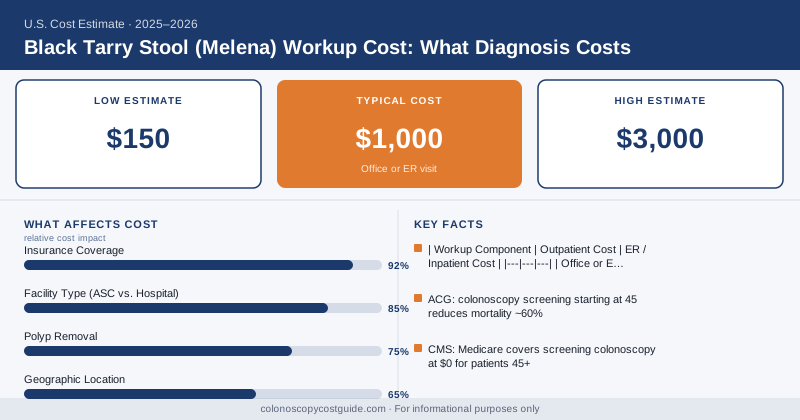
| Workup Component | Outpatient Cost | ER / Inpatient Cost |
|---|---|---|
| Office or ER visit | $150 – $500 | $1,000 – $3,000+ |
| CBC (check for blood loss) | $50 – $150 | $100 – $400 |
| Type and crossmatch (for transfusion) | n/a | $100 – $500 |
| Upper endoscopy (EGD) | $1,000 – $4,000 | $2,500 – $7,000 |
| Hospital observation / stay | n/a | $2,000 – $6,000+ / day |
The CDC reports that GI bleeding leads to hundreds of thousands of U.S. hospitalizations every year, and upper GI bleeds make up a large share of them. The NIDDK notes that peptic ulcers — often driven by H. pylori or NSAID use — are among the leading causes. That’s the scenario the urgent workup is built to catch.
The Endoscopy Is the Main Event
For black tarry stool, the upper endoscopy is both the diagnostic test and often the treatment. The doctor finds the bleeding source and can cauterize it, clip it, or inject it during the same procedure. That dual role is why the scope dominates the bill.
| Procedure | Total Billed Cost |
|---|---|
| Diagnostic upper endoscopy | $1,000 – $4,000 |
| Endoscopy with bleeding control (clip/cautery) | $2,500 – $8,000 |
| Endoscopic biopsies (H. pylori) | $200 – $800 |
| Colonoscopy (if upper source not found) | $1,200 – $5,000 |
If the EGD doesn’t find an upper source, a colonoscopy may follow to check the lower tract, since dark stool can occasionally come from a slow right-sided colon bleed. The biopsies for H. pylori add a small but worthwhile cost, since treating the bug prevents the bleed from coming back.
Key Takeaway
After the Bleed Is Controlled
Once the bleeding is stopped, the follow-up is where you can manage cost. Repeat scopes, if needed, can be scheduled outpatient. H. pylori treatment is inexpensive medication. And if a chronic acid problem is the root cause, the plan may shift toward GERD treatment to prevent recurrence.
The Cost Reality
A stable patient who can be worked up outpatient with an EGD might spend $1,500–$5,000. A patient who arrives at the ER actively bleeding, gets observed or admitted, and needs endoscopic intervention can easily exceed $10,000 before insurance.
It’s worth understanding why a scope gets so expensive — facility fees, sedation, pathology, and the urgency of the setting all stack up here. But melena is the one symptom where the right answer is speed first, savings second.
{ if eq .Lang "zh" }