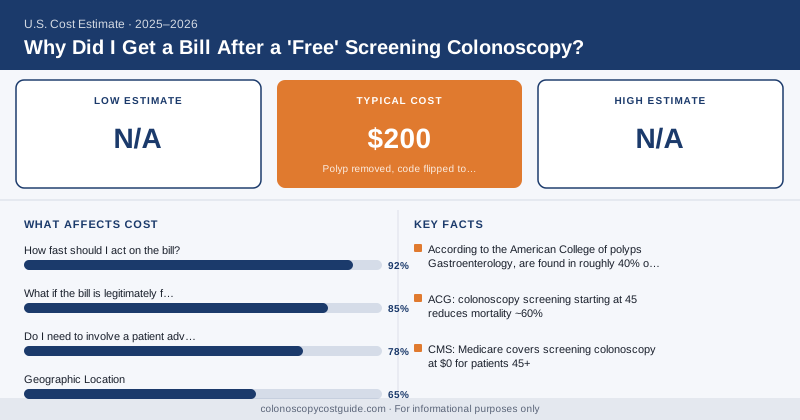
Why Did I Get a Bill After a 'Free' Screening Colonoscopy?
You scheduled a screening colonoscopy, your insurer said it was 100% covered, and three weeks later a $640 bill landed in your mailbox. You’re not imagining things, and you’re not alone — this is one of the most common billing complaints in all of preventive care.
The good news? Most of these bills are fixable. A 2022 federal clarification and the Affordable Care Act both sit firmly on your side. Here’s exactly why the bill showed up and how to make it go away.
The Four Reasons a “Free” Colonoscopy Generates a Bill
There are really only four things that turn a $0 screening into a charge. Figure out which one happened to you, and you’ll know how to fight it.
| Reason for the Bill | Typical Charge | Fixable? |
|---|---|---|
| Polyp removed, code flipped to diagnostic | $200 – $1,500 | Usually — appeal |
| Out-of-network anesthesia or pathology | $300 – $1,200 | Often — No Surprises Act |
| Deductible applied in error | $150 – $800 | Yes — call insurer |
| Coded diagnostic instead of screening (Z12.11 missing) | $300 – $2,000 | Yes — recode + appeal |
Reason 1: A Polyp Was Found and Removed
This is the single most common culprit. When your doctor finds and removes a polyp, the procedure code changes from CPT 45378 (diagnostic exam) to 45380 or 45385 (removal). According to the American College of Gastroenterology, polyps are found in roughly 40% of screening colonoscopies — so this happens constantly.
Here’s the key: federal guidance issued in 2022 directs ACA plans to treat polyp removal during a screening as part of the preventive service, keeping it at $0. Many plans still process it wrong. If your bill traces back to a polypectomy, you have strong grounds to appeal the denial.
The Exact Script to Use With Your Insurer
Call the number on your card and say: “I had a screening colonoscopy coded with diagnosis Z12.11. A polyp was removed. Under the 2022 federal guidance and the ACA, polyp removal during a screening colonoscopy should be covered at $0 cost-sharing. Please reprocess this claim as preventive.”
Get a reference number. If they refuse, request the denial in writing so you can formally appeal.
Reason 2: Out-of-Network Anesthesia or Pathology
Your facility and your gastroenterologist can both be in network while the anesthesiologist or the pathology lab is not. Each one bills separately. That out-of-network claim can generate a bill even when the colonoscopy itself was free.
The No Surprises Act (effective January 2022) bans many of these balance bills when you’re treated at an in-network facility. If an out-of-network anesthesia group billed you the difference, you may be protected — see our breakdown of the out-of-network anesthesia colonoscopy bill for the specific steps.
Reason 3: A Deductible Was Applied by Mistake
A screening colonoscopy under an ACA plan should never touch your deductible. If your Explanation of Benefits shows the cost was “applied to deductible,” that’s an error. One phone call confirming the screening status (diagnosis code Z12.11) usually reverses it.
Reason 4: It Was Coded Diagnostic Instead of Screening
If you mentioned a symptom — even casually — or if your doctor’s office used the wrong diagnosis code, the whole visit can be coded as diagnostic. Diagnostic colonoscopies are subject to your deductible and coinsurance. The difference between screening and diagnostic billing is the most expensive coding distinction in the whole process.
Frequently Asked Questions
How fast should I act on the bill? Quickly. Insurance appeals generally must be filed within 180 days of the EOB date, and you don’t want the bill heading to collections while you sort it out. Call your insurer the week the bill arrives.
What if the bill is legitimately for a diagnostic procedure? If you had the colonoscopy because of bleeding, anemia, or a positive stool test, it was diagnostic from the start and cost-sharing applies. That’s not an error — but you can still negotiate. See our guide on how to reduce colonoscopy cost for cash-pay and payment-plan options.
Do I need to involve a patient advocate? Usually not for a single misprocessed claim — a confident phone call fixes most of these. If you’ve appealed twice and the insurer still won’t budge, your state insurance commissioner accepts complaints and can apply pressure.
The bottom line: a bill after a “free” colonoscopy almost always traces to one of these four causes, and three of the four are reversible with a phone call or a short appeal. Read your EOB, name the reason, and push back.