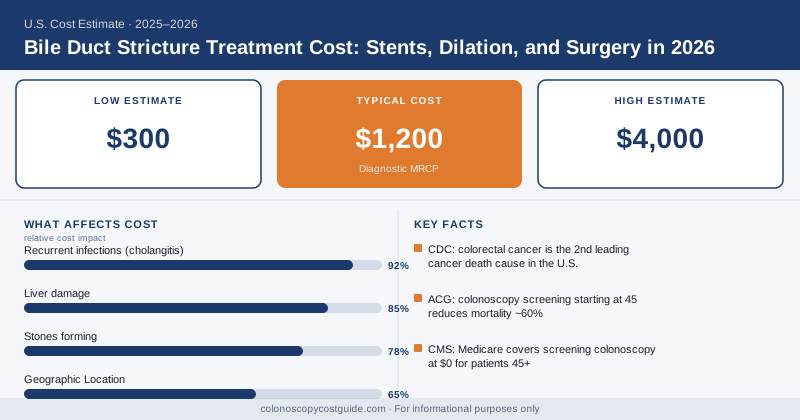
Bile Duct Stricture Treatment Cost: Stents, Dilation, and Surgery in 2026
{ if eq .Lang "zh" }{ else }{ end }A bile duct stricture is sneaky. The duct that drains bile from your liver narrows, sometimes from a prior surgery, sometimes from inflammation or a tumor, and the bile backs up. The fix usually isn’t one procedure. It’s often a series of them, which is exactly why the cost catches people off guard.
Let’s break down what treating a narrowed bile duct really costs, and why the total can be more than a single price tag implies.
First, what’s causing the stricture?
This matters for cost because benign and malignant strictures are treated very differently. Benign strictures (from gallbladder surgery, inflammation, or chronic pancreatitis) are often managed with repeated stenting. Malignant strictures from a tumor may need stenting plus cancer treatment.
| Treatment | Cost (Uninsured) | With Insurance |
|---|---|---|
| Diagnostic MRCP | $1,000 – $4,000 | $300 – $1,200 |
| ERCP with balloon dilation | $4,000 – $15,000 | $1,000 – $3,500 |
| ERCP with stent placement | $5,000 – $18,000 | $1,200 – $4,500 |
| Repeat ERCP (per session) | $3,000 – $12,000 | $800 – $3,000 |
| Surgical reconstruction | $25,000 – $45,000+ | up to OOP max |
Diagnosis: pinpointing the narrowing
Treatment starts with figuring out where and why the duct is narrowed. This involves liver function tests (which show backed-up bile), imaging like MRCP, and often an endoscopic ultrasound to examine the duct and rule out a tumor. Getting this right up front prevents wasted procedures.
The mainstay: ERCP with stenting or dilation
Most benign strictures are treated through an ERCP, where a gastroenterologist either stretches the narrowed area with a balloon or props it open with a stent. Here’s the cost reality most people miss: a single stent isn’t usually the end of it. Benign strictures often need a series of ERCPs over several months, with stents swapped out periodically to gradually widen the duct.
Key Takeaway
When surgery is needed
If repeated stenting fails, or the stricture is complex, surgeons may reconstruct the bile duct, an operation that reroutes drainage. This is the most expensive option, $25,000 to $45,000 or more, and for most insured patients it pushes you to your annual out-of-pocket maximum. It’s reserved for cases that endoscopic treatment can’t fix.
Why prompt treatment saves money
A neglected stricture isn’t just uncomfortable, it can cause real damage:
- Recurrent infections (cholangitis) that land you in the hospital
- Liver damage from chronically backed-up bile
- Stones forming above the narrowing, adding to treatment needs
Each complication adds cost. Treating the stricture before these develop is both cheaper and safer.
How to keep costs down
- Get accurate imaging first so the right treatment plan is set from the start.
- Ask how many ERCP sessions are anticipated, and budget accordingly.
- Confirm in-network providers, endoscopist, anesthesia, and facility bill separately.
- Request cash-pay rates if uninsured, facilities often discount significantly.
The bottom line
A bile duct stricture rarely costs just one procedure. ERCP-based treatment runs $1,000 to $4,500 out of pocket per session with insurance, and benign strictures often need several sessions, so the realistic total is higher. Surgery, when needed, can reach $40,000+. Understanding up front that this is usually a multi-step process, and treating it before complications set in, is the key to controlling both your health risk and your costs.
{ if eq .Lang "zh" }