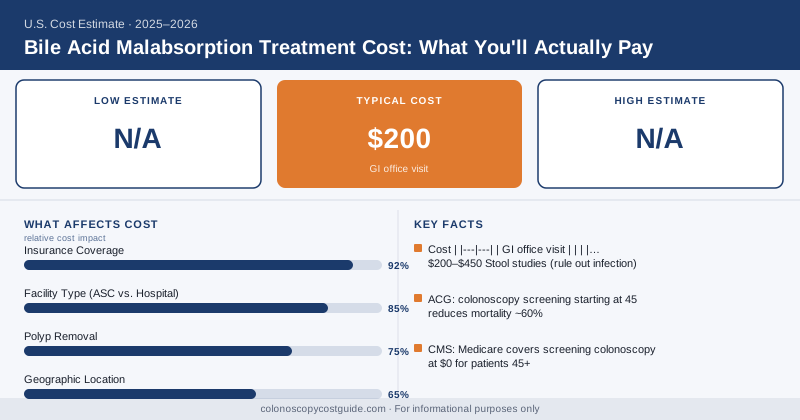
Bile Acid Malabsorption Treatment Cost: What You'll Actually Pay
{ if eq .Lang "zh" }{ else }{ end }You finally get a name for the diarrhea that’s run your life for years — bile acid malabsorption — and then comes the second shock: figuring out what it costs to treat. The good news is the core therapy is cheap. The bad news is getting diagnosed in the U.S. can take a winding, expensive road.
Bile acid malabsorption (BAM) happens when your gut doesn’t reabsorb bile acids the way it should, and those extra acids flood the colon and trigger watery, urgent diarrhea. The NIDDK notes that chronic diarrhea affects roughly 1 in 20 U.S. adults at any given time, and research published in the journal Alimentary Pharmacology & Therapeutics has estimated that up to a third of people diagnosed with diarrhea-predominant IBS actually have undiagnosed BAM. So a lot of people paying for the wrong treatment really have this.
What diagnosis costs
Here’s where the U.S. and the rest of the world split. In the UK, doctors use a SeHCAT nuclear scan. In the U.S., that test isn’t FDA-approved, so most gastroenterologists diagnose BAM with a therapeutic trial — they put you on a bile acid sequestrant and see if the diarrhea stops. That trial is dramatically cheaper than any imaging.
| Diagnostic Step | Typical U.S. Cost |
|---|---|
| GI office visit | $200–$450 |
| Stool studies (rule out infection) | $100–$400 |
| Blood work (C4, FGF19 — research labs) | $150–$600 |
| Colonoscopy to rule out other causes | $1,250–$4,800 |
| Therapeutic sequestrant trial | $40–$400/month |
Many people land here after a normal colonoscopy that found nothing. If you’re still in the workup stage, our breakdown of colonoscopy cost explains what drives that number, and if you’re uninsured, colonoscopy cost without insurance is worth a read before you schedule.
The medications
Three bile acid sequestrants do the heavy lifting. Cholestyramine (Questran) is the oldest and cheapest, but it tastes gritty and many people quit it. Colestipol sits in the middle. Colesevelam (Welchol) is the easiest to tolerate and the priciest.
| Medication | Monthly Cash Price |
|---|---|
| Cholestyramine (generic) | $40–$120 |
| Colestipol (generic) | $60–$200 |
| Colesevelam / Welchol | $300–$420 |
Key Takeaway
Why the cheap drug isn’t always the answer
Cholestyramine is a powder you mix into water, and roughly a third of people can’t stand it long term. It also binds other medications, so you have to space out your thyroid pill, statins, and birth control around it. Colesevelam comes as a tablet, plays nicer with your routine, and you stick with it — which matters, because BAM is a chronic condition.
If your prescription plan won’t cover Welchol, ask about the manufacturer copay card or use a discount program. People with commercial insurance sometimes drop the price to $0–$50, while cash-pay patients stare down that full $400.
The full first-year picture
If you go from “something’s wrong” to “diagnosed and stable,” budget realistically. A typical insured patient might spend $1,500–$3,500 in the first year once you fold in the colonoscopy, visits, and a few months of medication adjustments. After that, your annual cost can drop to just the medication — sometimes under $600 a year on a generic.
Uninsured? The first year can climb toward $5,000–$7,000, mostly because of the diagnostic colonoscopy. Cash-pay endoscopy centers and prescription discount cards are your best levers. Our guide on why colonoscopy is so expensive explains where you can negotiate.
What to ask before you pay
- Can we try a sequestrant before ordering expensive imaging?
- Is there a generic that fits my other prescriptions?
- Does my plan cover the GI visit as specialist or primary care copay?
BAM is frustrating to live with, but it’s one of the more affordable GI diagnoses to manage once you’re past the workup. Get the diagnosis nailed down, find a sequestrant you’ll actually take, and your ongoing cost stays low.
{ if eq .Lang "zh" }