Barrett's Esophagus Ablation Cost: RFA, Cryo, and EMR Prices
{ if eq .Lang "zh" }{ else }{ end }In 2010, treating high-grade Barrett’s often meant removing part of your esophagus — a major surgery with a long recovery and a six-figure price tag. Today, an endoscopist can burn away the abnormal lining through a scope in an outpatient session. The shift saved a lot of esophaguses, and a lot of money. But “a lot less than surgery” still isn’t cheap.
Barrett’s esophagus is when chronic acid reflux changes the lining of your lower esophagus into a type more prone to cancer. The American College of Gastroenterology notes that Barrett’s is found in a meaningful fraction of people with long-standing GERD, and it raises the risk of esophageal adenocarcinoma. When biopsies show dysplasia — precancerous changes — that’s when ablation enters the picture.
What ablation actually involves
The main treatment is radiofrequency ablation (RFA), where heat energy destroys the abnormal cells so healthy lining grows back. If there’s a raised or nodular area, the doctor may first do endoscopic mucosal resection (EMR) to remove it. Cryotherapy (freezing) is an alternative at some centers.
| Procedure | Cost per Session |
|---|---|
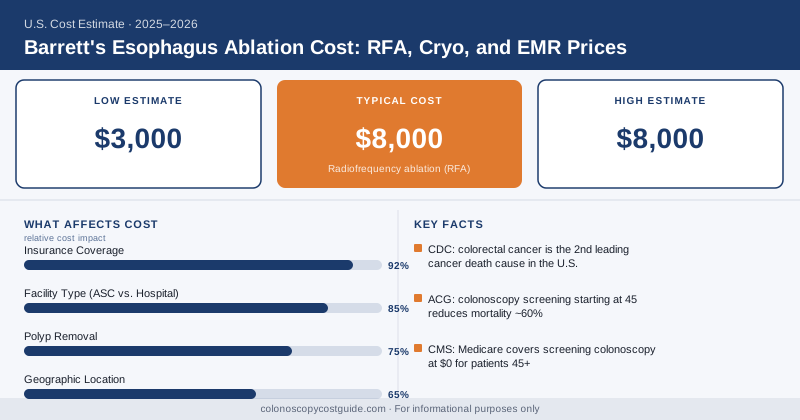
| Radiofrequency ablation (RFA) | $3,000–$8,000 |
| Endoscopic mucosal resection (EMR) | $2,500–$7,000 |
| Cryoablation | $3,500–$9,000 |
| Surveillance endoscopy between sessions | $1,500–$3,000 |
Here’s the catch that trips up budgets: ablation isn’t one and done. Most people need two to four sessions spaced a couple of months apart to fully clear the abnormal tissue, plus ongoing surveillance scopes afterward.
Key Takeaway
Why insurance usually pays
Good news on coverage: when biopsies confirm low-grade or high-grade dysplasia, ablation is considered medically necessary. Medicare and commercial plans cover it. Your out-of-pocket comes down to your plan structure — deductible, coinsurance, and whether the facility is in-network.
For non-dysplastic Barrett’s (no precancerous changes), most guidelines recommend surveillance rather than ablation, so insurers may not cover treatment in that case. That’s a key conversation to have with your gastroenterologist.
The surgery alternative — and why ablation wins on cost
Before endoscopic therapy matured, high-grade dysplasia often led to esophagectomy.
| Treatment Path | Total Cost |
|---|---|
| Full endoscopic ablation course | $10,000–$25,000 |
| Esophagectomy (surgery) | $50,000–$150,000+ |
The cost difference is stark, and so is the recovery — ablation is outpatient, while esophagectomy means a hospital stay and weeks of recovery. That’s why ablation is now the standard for most dysplasia.
Don’t forget the ongoing costs
Even after successful ablation, you’re not done. You’ll need surveillance endoscopies to make sure nothing recurs, plus lifelong acid suppression to prevent the reflux that caused Barrett’s in the first place. A daily PPI is cheap (a few dollars a month), but the periodic scopes add up over the years. Our guide on GERD treatment cost covers the long-term reflux management side.
If you’re earlier in the process and just learning what scopes run, upper endoscopy (EGD) cost breaks down a single diagnostic scope, and endoscopy cost without insurance helps if you’re paying cash. Many Barrett’s patients also have colon screening on the calendar, so our colonoscopy cost page is worth a look too.
Bottom line
Ablation transformed Barrett’s care from major surgery into an outpatient procedure, and it’s far cheaper as a result. Budget for a multi-session course rather than a single visit, confirm your dysplasia diagnosis warrants treatment, and push your care to an in-network surgery center to control the facility fee. With insurance, this serious condition is treatable without a catastrophic bill.
{ if eq .Lang "zh" }