Argon Plasma Coagulation (APC) Cost: GI Bleeding Treatment Pricing in 2026
{ if eq .Lang "zh" }{ else }{ end }Most patients have never heard of argon plasma coagulation until they’re told they need it — usually because something in their GI tract won’t stop bleeding. The good news is it’s not a separate surgery. APC is a tool used right through the scope, and it adds only a few hundred to a couple thousand dollars to a procedure you’re already having.
Argon plasma coagulation uses ionized argon gas to deliver heat to tissue without ever touching it, sealing off bleeding vessels and destroying abnormal tissue. It’s done during an endoscopy or colonoscopy. Total uninsured cost lands around $1,800 to $6,000, mostly because of the base scope. Here’s how the numbers work.
What Argon Plasma Coagulation Costs
APC is an add-on, not a standalone procedure, so the bill is the underlying scope plus the APC technique and equipment.
| Cost Component | Typical Range (Uninsured) |
|---|---|
| Base scope + facility fee | $1,200 – $4,000 |
| APC technique / equipment premium | $300 – $1,000 |
| Anesthesia / sedation | $400 – $1,200 |
| Repeat session (if needed) | $1,500 – $4,000 each |
| Total (single session) | $1,800 – $6,000 |
The base portion mirrors a diagnostic upper endoscopy or colonoscopy; the APC premium covers the argon gas, the disposable probe, and the electrosurgical generator.
Why APC Adds to the Bill
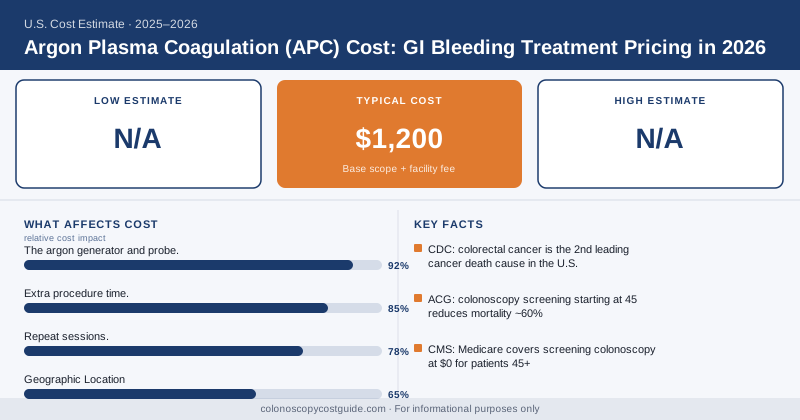
- The argon generator and probe. Specialized equipment and a single-use catheter add supply costs to the facility fee.
- Extra procedure time. Treating a bleeding field or a patch of abnormal tissue takes additional scope minutes.
- Repeat sessions. Some conditions need several treatments, and each session is billed in full — this is where costs can stack up over time.
For the broader explanation of why scope-based procedures carry the prices they do, see why is colonoscopy so expensive.
What APC Treats
APC is a workhorse for GI bleeding and abnormal tissue. Per the American Society for Gastrointestinal Endoscopy (ASGE), common uses include:
- GAVE (gastric antral vascular ectasia, “watermelon stomach”) — clusters of fragile vessels that ooze chronically
- Radiation proctitis — bleeding from the rectum after pelvic radiation
- Angioectasias / AVMs — abnormal vessels anywhere in the GI tract
- Barrett’s esophagus ablation and residual polyp tissue cleanup
The CDC notes that GI bleeding is a frequent cause of hospital admission in U.S. adults, and APC is one of the standard endoscopic tools for stopping it without surgery.
Key Takeaway
Insurance Coverage
APC is therapeutic, not elective, so coverage is reliable across commercial insurance, Medicare, and Medicaid. The procedure code reflects the treatment, and payers don’t typically contest medically necessary bleeding control.
- Met deductible: coinsurance on the facility and physician charges.
- Unmet deductible: the contracted rate counts toward your deductible.
The thing to budget for isn’t a single session — it’s the possibility of several. If your doctor anticipates a course of treatments, that affects how quickly you’ll hit your deductible and out-of-pocket maximum for the year.
How APC Compares to Other Treatments
APC is one of several endoscopic bleeding-control methods. For larger lesions or polyps, your doctor might use endoscopic mucosal resection instead of or alongside coagulation. Any abnormal tissue identified is often sampled like a standard endoscopy biopsy before treatment. When bleeding involves the bile or pancreatic ducts, ERCP becomes the relevant procedure. APC’s appeal is that it’s quick, contact-free, and done during a scope you may already need.
Bottom Line
Argon plasma coagulation costs $1,800–$6,000 uninsured per session, and the APC component itself is a modest $300–$1,000 add-on to the base scope. It’s a non-surgical way to stop GI bleeding and ablate abnormal tissue, and insurance reliably covers it as medically necessary. The real budgeting question is how many sessions you’ll need — for chronic bleeding conditions, plan for several. Ask that question early, confirm your anesthesia provider is in-network, and you’ll avoid the surprise of stacked bills.
{ if eq .Lang "zh" }