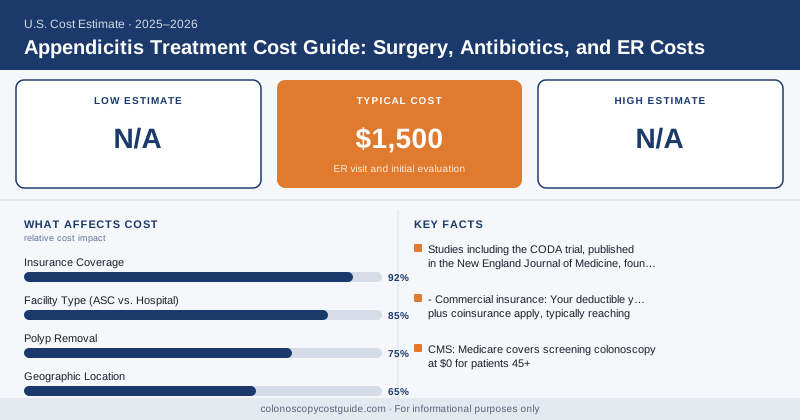
Appendicitis Treatment Cost Guide: Surgery, Antibiotics, and ER Costs
{ if eq .Lang "zh" }{ else }{ end }Marcus woke up at 2 a.m. with pain that started near his belly button and moved to his lower right side within hours. By the time he got to the ER, it was appendicitis — and by the next morning, his appendix was out. The whole episode, from ambulance to discharge, generated a bill north of $28,000. Here’s what goes into that number and what you’ll actually likely pay.
According to the National Institute of Diabetes and Digestive and Kidney Diseases, appendicitis is one of the most common reasons for emergency abdominal surgery in the U.S., with a lifetime risk of about 1 in 20 people.
Appendicitis Treatment Cost Breakdown
| Component | Typical Cost | Notes |
|---|---|---|
| ER visit and initial evaluation | $1,500 – $4,000 | Includes physician exam, labs |
| CT scan or ultrasound (diagnosis) | $1,500 – $4,500 | Confirms diagnosis and rules out complications |
| Laparoscopic appendectomy (surgery + facility) | $10,000 – $25,000 | Most common approach today |
| Open appendectomy (complicated cases) | $15,000 – $35,000 | For ruptured or complicated appendicitis |
| Hospital stay (1–3 days typical) | $2,000 – $8,000/day | Longer for complications |
| Antibiotic-only treatment (uncomplicated cases) | $5,000 – $12,000 | Alternative to surgery in select cases |
Why Costs Vary So Widely
The single biggest cost driver is whether your appendix has ruptured by the time you’re treated. An uncomplicated case treated with a same-day laparoscopic appendectomy generally falls at the lower end of the range and involves a 1-day hospital stay. A ruptured appendix with resulting infection (peritonitis or abscess) requires a longer hospital stay, IV antibiotics for days, and sometimes a second procedure to drain an abscess — pushing costs toward $35,000–$45,000 or more.
Surgery vs. Antibiotics-Only
For select cases of uncomplicated appendicitis without a hard, calcified deposit called an appendicolith, some patients are now offered antibiotics-only treatment instead of immediate surgery. Studies including the CODA trial, published in the New England Journal of Medicine, found antibiotics successfully treated the initial episode in roughly 70% of patients, though about 25–30% required appendectomy within a year due to recurrence or ongoing symptoms.
Antibiotics-Only Isn't Always Cheaper Long-Term
Insurance Coverage
Appendicitis is treated as a medical emergency, and virtually all insurance plans cover both the ER visit and any resulting surgery. Because of federal EMTALA law, emergency departments must stabilize and treat suspected appendicitis regardless of insurance status or ability to pay — though you will still receive a bill.
- Commercial insurance: Your deductible plus coinsurance apply, typically reaching your annual out-of-pocket maximum ($7,000–$9,200 for 2025 individual plans) given the size of the bill
- Medicare: Part A covers the hospital stay; Part B covers the surgeon and anesthesia
- Medicaid: Covered with minimal cost-sharing
- Uninsured patients: Hospitals are required to offer financial assistance programs; ask for the hospital’s charity care or financial assistance policy before or immediately after treatment
If You’re Uninsured
Most hospitals have a financial assistance policy required under IRS rules for nonprofit hospitals, offering discounted or free care based on income. Contact the hospital’s billing or financial counseling department as soon as possible after treatment — assistance is far easier to arrange proactively than after a bill goes to collections.
The Bottom Line
Appendicitis treatment costs $15,000–$45,000 depending on complexity, but insurance typically caps your actual out-of-pocket cost well below that. Whether you’re a candidate for antibiotics-only treatment or need immediate surgery, don’t let cost concerns delay emergency care — this is one condition where fast treatment genuinely saves both money and lives. For a closer look at the surgical cost itself, see our appendectomy cost guide.
{ if eq .Lang "zh" }