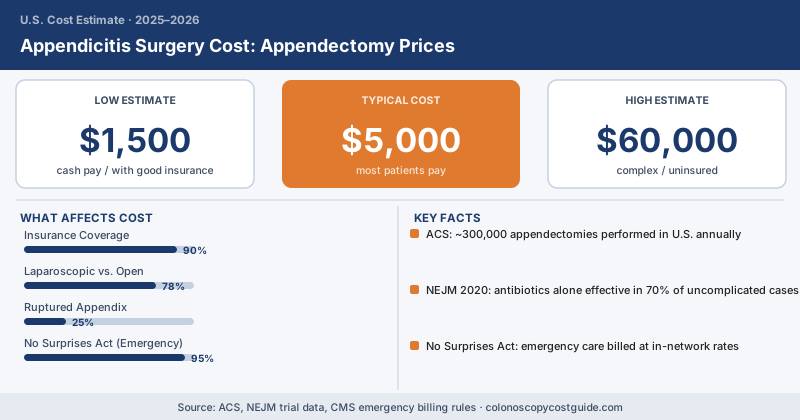
Appendicitis Surgery Cost: What an Appendectomy Actually Costs in 2025–2026
What started as right-sided stomach pain at 2 AM turned into an ER visit, a CT scan, and a phone call from a surgeon saying “We need to operate tonight.” If that sounds familiar, you’re one of approximately 300,000 Americans who undergo appendectomy each year, according to the American College of Surgeons.
You didn’t plan for it. Now comes the bill.
The good news: appendectomy is one of the most common surgeries in the US, and hospital prices — while high — are predictable. For insured patients, your real exposure has a ceiling. Here’s exactly what the costs look like.
The Emergency Department: Your First Bill
Appendicitis doesn’t come with a scheduled appointment. It shows up in the ER, and the ER evaluation alone generates its own substantial bill before surgery is even discussed.
| ER Appendicitis Evaluation | Typical Billed Cost |
|---|---|
| Emergency department facility fee (level 4–5) | $1,500 – $4,000 |
| ER physician fee | $400 – $900 |
| CT scan of abdomen and pelvis | $1,500 – $4,500 |
| IV placement and fluids | $300 – $800 |
| Blood work (CBC, metabolic panel, urinalysis) | $300 – $800 |
| IV antibiotics (pre-operative) | $100 – $400 |
| Total ER evaluation | $4,100 – $11,400 |
The CT scan is the largest ER cost driver. It’s also non-negotiable in most cases — ultrasound can sometimes diagnose appendicitis in thin adults and children, but CT remains the gold standard for definitive diagnosis in adults. The CT result is what authorizes the OR team to get set up.
The Surgery: Laparoscopic vs. Open Appendectomy
The vast majority of appendectomies in the US — about 95% — are now performed laparoscopically. Open surgery is reserved for ruptured appendices with significant contamination, obese patients where laparoscopy is technically difficult, or situations where the laparoscopic approach is converted midway.
| Surgery Component | Typical Billed Cost |
|---|---|
| Hospital facility fee (OR time) | $10,000 – $30,000 |
| Surgeon fee (laparoscopic appendectomy) | $2,500 – $6,000 |
| Anesthesiologist fee | $1,500 – $4,000 |
| Pathology (appendix specimen) | $200 – $600 |
| Hospital room (1–2 nights) | $2,000 – $6,000 |
| Total: uncomplicated laparoscopic | $16,200 – $46,600 |
| Total: uncomplicated open | $20,000 – $60,000 |
Recovery from laparoscopic appendectomy is typically 1–2 nights in the hospital and return to normal activity in 2–4 weeks. Open surgery is 3–5 nights and 4–6 weeks of recovery.
When the Appendix Has Already Ruptured
A ruptured (perforated) appendix changes everything — the cost, the complexity, and the recovery.
According to the American College of Surgeons, approximately 20–30% of appendicitis cases involve perforation by the time surgery is performed. The difference in cost between uncomplicated and perforated appendicitis is not incremental — it’s categorical.
| Ruptured Appendix Treatment | Estimated Cost |
|---|---|
| Extended OR time (irrigation, drainage) | Additional $5,000 – $15,000 |
| Hospitalization (5–10 days) | $15,000 – $40,000 |
| ICU admission (if sepsis) | $8,000 – $30,000 |
| Abdominal drain placement and management | $2,000 – $8,000 |
| IV antibiotics (extended course, 5–7 days inpatient) | $1,000 – $5,000 |
| Readmission for abscess (15% of cases) | $8,000 – $25,000 |
| Total (perforated appendicitis) | $35,000 – $120,000+ |
This is why delaying evaluation of significant abdominal pain is financially — not just medically — dangerous. The cost of perforated appendicitis is 2–5x higher than the cost of catching it before rupture, quite apart from the increased risk to your health.
The Non-Surgical Option and Its Cost Tradeoffs
What You’ll Pay With Insurance
Commercial insurance (employer-sponsored):
- Pay deductible first: $1,000–$5,000
- Then 20–30% coinsurance until hitting OOP max
- ACA out-of-pocket maximum: $9,450 individual, $18,900 family (2025)
- Most insured appendicitis patients hit their OOP max and pay $3,000–$9,450 total
Medicare:
- Part A deductible: $1,676 per benefit period (2025)
- After 60 hospital days: coinsurance applies
- Part B covers surgeon and anesthesiologist (subject to 20% coinsurance after deductible)
- Without Medigap: uncapped exposure for extended stays
Medicaid:
- Typically no cost-sharing or minimal ($1–$8 copays)
- Emergency surgery is always covered
No insurance: Full chargemaster billing, but hospitals must:
- Screen you for charity care eligibility
- Offer payment plans
- Apply for Medicaid retroactively if income-eligible Most large nonprofit hospitals offer charity care that reduces or eliminates bills for patients below 200–400% of the federal poverty level.
Emergency Billing and the No Surprises Act
Appendicitis is an emergency. Under the federal No Surprises Act (effective January 2022):
- You cannot be billed out-of-network rates for emergency services
- Your cost-sharing for emergency care is calculated as if you were treated in-network, even at an out-of-network ER or hospital
- If you receive an unexpected out-of-network bill for emergency appendicitis care, you can dispute it through your insurer’s formal dispute process
This protection means you won’t face catastrophic surprise bills just because your ambulance took you to an out-of-network hospital at 2 AM.