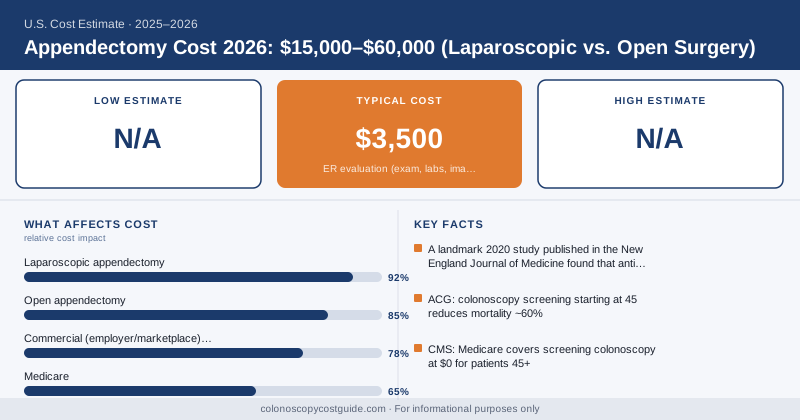
Appendectomy Cost 2026: $15,000–$60,000 (Laparoscopic vs. Open Surgery)
{ if eq .Lang "zh" }{ else }{ end }About 300,000 Americans have an appendectomy every year. It’s the most common abdominal emergency surgery in the country — and most patients have no idea what it costs until the bill arrives weeks later.
The short answer: $15,000–$60,000 in total hospital charges, depending on whether you need laparoscopic or open surgery, how long you’re admitted, and whether your appendix ruptured. Insurance changes everything — with coverage, your real out-of-pocket exposure is usually $1,500–$5,000. Without it, you’re negotiating with the hospital.
Here’s the full cost breakdown so you know what to expect.
Appendectomy Cost at a Glance
| Service | Typical Charge |
|---|---|
| ER evaluation (exam, labs, imaging) | $3,500–$8,000 |
| CT scan of abdomen/pelvis | $1,500–$4,500 |
| Laparoscopic appendectomy (uncomplicated) | $15,000–$40,000 |
| Open appendectomy (uncomplicated) | $20,000–$60,000 |
| Ruptured appendix surgery | $50,000–$200,000+ |
| Hospital stay (per day, med/surg floor) | $3,000–$6,000 |
| Anesthesia | $2,000–$5,000 |
| Surgeon’s fee | $3,000–$7,000 |
| Pathology (appendix specimen) | $300–$900 |
These are gross charges — what the hospital bills, not what anyone actually pays. Insured patients pay a negotiated rate that’s far lower, then only their cost-sharing portion (deductible + coinsurance). More on that below.
Laparoscopic vs. Open Appendectomy: What’s the Difference in Cost?
Surgeons today perform the vast majority of appendectomies laparoscopically — three small incisions, a camera, and specialized instruments. It’s less invasive, has a shorter recovery, and generally costs less than traditional open surgery.
Laparoscopic appendectomy costs $15,000–$40,000 in total charges. Hospital stay is typically 1–2 days. Most patients return to normal activity within 1–2 weeks. This is the standard approach for uncomplicated cases.
Open appendectomy costs $20,000–$60,000. You’re looking at a single larger incision in the lower right abdomen. Open surgery is used when a ruptured appendix has caused widespread infection (peritonitis), when laparoscopic conversion is needed mid-surgery, or in specific anatomy situations. Recovery takes 4–6 weeks.
The hospital stay is the biggest cost driver. At $3,000–$6,000 per day on a standard medical/surgical floor, an extra two to three days adds $6,000–$18,000 to the total bill before you factor in surgeon or anesthesia fees.
Why Your Final Bill Has Multiple Line Items
When the Appendix Ruptures: Costs Jump Dramatically
A perforated (ruptured) appendix is a different medical situation entirely — and the bill reflects it. When the appendix bursts before surgery, infected material spills into the abdominal cavity. Surgery becomes longer and more complex: the surgeon must irrigate the abdomen, remove the appendix, and sometimes place a drain. Some patients need additional procedures if an abscess forms.
Total charges for ruptured appendix surgery typically run $50,000–$200,000, driven by:
- Longer OR time (3–4 hours vs. 45–60 minutes for uncomplicated)
- Extended hospital stay (5–7 days minimum, sometimes 10+ days)
- ICU admission in severe cases ($4,000–$10,000/day)
- Interventional radiology for abscess drainage if needed
- IV antibiotics for days post-op
- Possible follow-up procedures if infection persists
This is why prompt treatment matters. Waiting doesn’t just risk your health — it multiplies the bill. For more on the full surgical cost breakdown, see our guide to appendicitis surgery cost.
What Does Insurance Actually Cover?
Appendectomy is covered by all major insurance types as an emergency procedure. Here’s how each breaks down:
Commercial (employer/marketplace) insurance: You pay your deductible first (typically $1,500–$4,000 for an individual plan), then coinsurance (usually 20%) up to your out-of-pocket maximum (typically $6,000–$9,100 for 2026 ACA-compliant plans). Once you hit your OOP max, the insurer covers 100%. Most appendectomy patients hit their out-of-pocket maximum with this surgery alone — meaning everything else that calendar year is covered at 100%.
Medicare: Part A covers the inpatient hospital stay; Part B covers surgeon and anesthesia fees. You pay the Part A deductible ($1,676 in 2026 for days 1–60), and Part B coinsurance for physician services. Medicare Supplement (Medigap) plans cover most of those gaps. Medicare Advantage plans vary — check your Summary of Benefits.
Medicaid: Appendectomy is a covered benefit in all states. Cost-sharing is minimal — typically $0–$8 per service. Some states have zero cost-sharing for emergency surgery.
Appendectomy Cost Without Insurance
Uninsured patients face the hospital’s full chargemaster rate — which can be $20,000–$80,000 for an uncomplicated laparoscopic case. That’s the sticker price almost nobody actually pays.
Here’s what to do if you’re uninsured:
1. Apply for hospital financial assistance immediately. Federal law (the ACA) requires nonprofit hospitals to have charity care programs. Many for-profit systems do too. Patients earning under 200–250% of the federal poverty level ($31,000–$38,750 for an individual in 2026) often qualify for free care or steep discounts — 50–90% reductions are common.
2. Request an itemized bill. Billing errors are common on complex hospital bills. You have the right to a line-item statement. Review it carefully and dispute any charges for services you didn’t receive.
3. Negotiate. Hospitals routinely accept 20–40% of the billed amount from uninsured patients who ask. A medical billing advocate can negotiate on your behalf for a percentage of the savings.
4. Check retroactive Medicaid eligibility. If your appendectomy put you in financial distress, you may qualify for Medicaid coverage. In expansion states, eligibility is based on income alone — and Medicaid can sometimes be applied retroactively.
Antibiotic-Only Treatment: The $500–$2,000 Alternative
Not every case of appendicitis requires surgery. A landmark 2020 study published in the New England Journal of Medicine found that antibiotics alone successfully treated uncomplicated appendicitis in about 70% of patients at 90 days — meaning 7 in 10 patients who chose antibiotics didn’t need surgery within three months.
The cost difference is stark: antibiotic treatment runs $500–$2,000 (ER visit, IV antibiotics, and follow-up) compared to $15,000–$40,000 for surgery. However, roughly 30% of patients treated with antibiotics eventually need surgery anyway — and if you’re among them, you’ll end up paying for both.
Antibiotic treatment isn’t appropriate for ruptured appendicitis, cases with an appendicolith (calcified deposit), or patients who prefer surgery for certainty. Ask your surgeon whether you’re a candidate if your imaging shows uncomplicated disease.
For related GI emergencies, our guides on small bowel obstruction and GI bleeding cover costs for other abdominal conditions you might encounter in the ER.
Questions Patients Ask About Appendectomy Cost
Is an appendectomy always done as emergency surgery? Usually, yes. Appendicitis progresses quickly, and most surgeons operate within 12–24 hours of diagnosis. Some cases of recurrent or “grumbling” appendicitis are managed electively, which can lower costs slightly since scheduled surgery allows more prep time for insurance authorization.
Why is my bill so much higher than the ranges here? Urban academic medical centers and specialty hospitals charge more than community hospitals. Geography matters too — costs in California, New York, and Massachusetts run higher than the national average. HCUP (the Healthcare Cost and Utilization Project) data from the Agency for Healthcare Research and Quality shows significant variation even within the same metro area.
Can I get a cost estimate upfront? Yes. Under federal price transparency rules effective 2021 (updated 2024), hospitals must publish a machine-readable price file including negotiated rates for common procedures. Ask for an estimate before elective follow-up procedures — emergency surgery itself can’t be pre-authorized, but post-op imaging, pathology, and outpatient visits can.
What if I get a bill from an out-of-network surgeon? Dispute it under the No Surprises Act. Emergency surgery is explicitly covered, and you should only owe your in-network cost-sharing amount. File a complaint with your insurer or your state insurance commissioner if the provider refuses.
{ if eq .Lang "zh" }