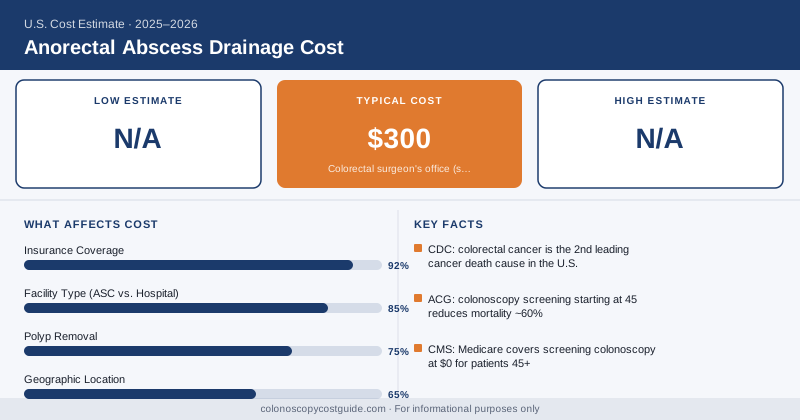
Anorectal Abscess Drainage Cost
The $1,800 ER bill for a 20-minute incision surprises most patients — but for a perianal abscess, that’s actually the low end if you end up in an emergency department. Go to a colorectal surgeon’s office instead, and the same procedure might run $300–$800. Get admitted with sepsis, and you’re looking at $5,000–$15,000 per hospital day.
Where you get drained, and how complicated your abscess is, drives nearly all of the cost variation. Here’s what you need to know.
What Is an Anorectal Abscess?
An anorectal abscess is a pocket of pus that forms near the anus or rectum, usually from an infected anal gland. They’re painful — often described as the worst pain a person has ever felt — and they don’t resolve on their own. Drainage is always required. The ACG (American College of Gastroenterology) notes that anorectal abscesses are one of the most common colorectal emergencies, accounting for tens of thousands of ER visits annually in the United States.
There are four types by location: perianal (most common, most superficial), ischiorectal, intersphincteric, and supralevator. Deeper abscesses are more complex, more expensive to treat, and carry a higher complication risk.
Drainage Cost by Setting
| Setting | Typical Cash Cost | Notes |
|---|---|---|
| Colorectal surgeon’s office (simple perianal) | $300 – $800 | Local anesthetic; fastest and cheapest option |
| Urgent care center | $400 – $900 | Appropriate only for very superficial abscesses |
| Emergency room (ER) incision & drainage | $1,500 – $4,500 | Facility fees dominate the bill |
| Operating room (complex or deep abscess) | $3,000 – $8,000 | General anesthesia; ischiorectal/supralevator cases |
| Inpatient hospitalization (sepsis) | $5,000 – $15,000 per day | Rare but possible if systemic infection develops |
Why the ER Costs So Much More
It’s not that the procedure itself is more complicated in the ER. It’s the facility fee. Emergency departments charge a separate facility fee — often $800–$2,500 — on top of the physician’s professional fee. The actual incision and drainage takes the same 15–25 minutes regardless of where it happens.
If you have a straightforward perianal abscess and can tolerate the wait, calling a colorectal surgeon’s office first is almost always cheaper. Many practices can see you same-day for this type of urgent case.
When the Operating Room Is Necessary
Some abscesses genuinely require the OR:
- Deep space abscesses (ischiorectal, intersphincteric, supralevator) can’t be safely drained under local anesthesia in an office setting
- Horseshoe abscesses that wrap around both sides of the rectum
- Immunocompromised patients (HIV, diabetes, steroid use) where infection may spread rapidly
- Recurrent abscess with concern for an underlying fistula tract
OR cases typically require general or spinal anesthesia, which adds $500–$1,500 to the bill on its own.
Does Insurance Cover It?
Yes. Anorectal abscess drainage is medically necessary and covered by commercial insurance, Medicare, and Medicaid. The procedure is not elective in any sense — untreated abscesses can progress to necrotizing fasciitis, a life-threatening emergency.
With insurance, your out-of-pocket cost depends on:
- Your deductible status: If you haven’t hit your deductible, you’ll pay the contracted rate (usually 40–70% of the cash price)
- Setting: Office visit codes are reimbursed at lower rates than ER or hospital outpatient codes — so your cost share is lower too
- Anesthesia: If general anesthesia is used, that’s billed separately; confirm your anesthesiologist is in-network
Most insured patients pay $100–$600 for an uncomplicated office or ER drainage after deductible and coinsurance.
The Recurrence Problem: Abscesses and Fistulas
Here’s what many patients aren’t told upfront: roughly 30–50% of anorectal abscesses recur or lead to a chronic anal fistula — an abnormal tunnel between the anal canal and the skin. When that happens, a second, more complex procedure (fistulotomy or LIFT procedure) becomes necessary, adding another $3,000–$10,000 to your total treatment cost.
If your abscess keeps coming back, ask your colorectal surgeon to evaluate for an underlying fistula tract. Early identification can reduce the total number of procedures you need.
What Drives the Bill Higher
| Factor | Cost Impact |
|---|---|
| Deep abscess requiring OR | Adds $2,000 – $5,000 |
| General anesthesia | Adds $500 – $1,500 |
| Overnight hospital stay | Adds $5,000 – $15,000 |
| Post-op wound care visits | $150 – $400 each |
| Antibiotics (post-drainage) | $10 – $80 generic |
| Recurrence requiring repeat drainage | Full procedure cost again |
Tips to Manage Costs
- Don’t wait. A small, superficial abscess drained in a surgeon’s office costs a fraction of what a deep abscess requiring OR treatment runs. Delays almost always increase complexity and cost.
- Call a colorectal surgeon before going to the ER. If it’s business hours and you’re otherwise stable, a same-day office appointment can save $1,000–$3,000 in facility fees.
- Ask about the fistula risk upfront. Understanding your personal recurrence odds lets you budget for possible follow-up care rather than being caught off guard.
- Use HSA/FSA funds. All drainage procedures, follow-up visits, and prescription antibiotics are eligible expenses.
Anorectal abscesses are painful, urgent, and expensive if mismanaged — but they’re also very treatable. Getting to the right provider in the right setting makes a real difference in both your recovery and your bill.