Iron-Deficiency Anemia GI Workup Cost: What the Tests Cost
{ if eq .Lang "zh" }{ else }{ end }A routine blood test comes back showing low iron, and suddenly you’re scheduled for not one scope but two. That surprises people — but iron-deficiency anemia in an adult is, until proven otherwise, a sign of slow blood loss from somewhere in the GI tract. Finding the source is why this workup is one of the pricier symptom evaluations, often $2,500 to $8,000.
Here’s why two scopes, and what the whole thing costs.
First, Confirm It’s Really Iron Deficiency
Not all anemia is from bleeding. Before any scopes, the labs confirm the type and severity, because that determines whether a GI search is even warranted.
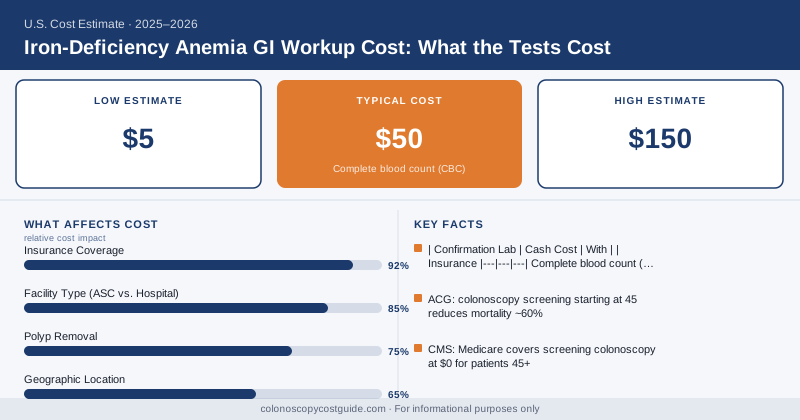
| Confirmation Lab | Cash Cost | With Insurance |
|---|---|---|
| Complete blood count (CBC) | $50 – $150 | $5 – $40 |
| Ferritin / iron studies | $50 – $250 | $5 – $60 |
| Fecal immunochemical test (FIT) | $20 – $100 | $0 – $30 |
| Celiac antibody test | $50 – $200 | $5 – $40 |
The CDC notes that iron-deficiency anemia is the most common type of anemia in the United States, and in adult men and postmenopausal women it’s treated as a GI bleeding clue until a workup says otherwise. A positive FIT or stool test raises the suspicion further.
Why You Get Both Scopes
The hidden bleed could be a stomach ulcer, a colon polyp, an angioectasia, or celiac disease. Since the source can sit anywhere from the esophagus to the rectum, the standard approach is a bidirectional endoscopy — an upper endoscopy and a colonoscopy, often back-to-back under one sedation.
| Procedure | Total Billed Cost |
|---|---|
| Upper endoscopy (EGD) | $1,000 – $4,000 |
| Diagnostic colonoscopy | $1,200 – $5,000 |
| Both scopes, same session | $2,500 – $8,000 |
| Endoscopic biopsies | $200 – $800 |
Doing both at once is actually the cost-efficient choice. You pay one facility fee, one sedation, one prep day off work — instead of two separate procedures. The biopsies taken (for celiac, H. pylori, or suspicious tissue) add a modest pathology charge.
Key Takeaway
When the Scopes Come Back Clean
Sometimes both scopes are normal and the anemia persists. The next step is examining the small intestine, the stretch between the stomach and colon that standard scopes can’t fully reach. That’s done with a capsule endoscopy — a pill-sized camera you swallow — which runs roughly $1,000–$5,000 and adds to the total.
What It Adds Up To
Lab confirmation runs $100–$400. The bidirectional scopes are the bulk of the cost at $2,500–$8,000, driven mostly by facility and sedation fees. Add a capsule study if the scopes are clean.
The biggest savings lever is setting. A hospital outpatient department bills far more than a freestanding endoscopy center for identical scopes — it’s a major reason colonoscopies get so expensive. If you’re paying cash, get written estimates from a couple of surgery centers before scheduling, and ask specifically about a bundled bidirectional rate.
{ if eq .Lang "zh" }