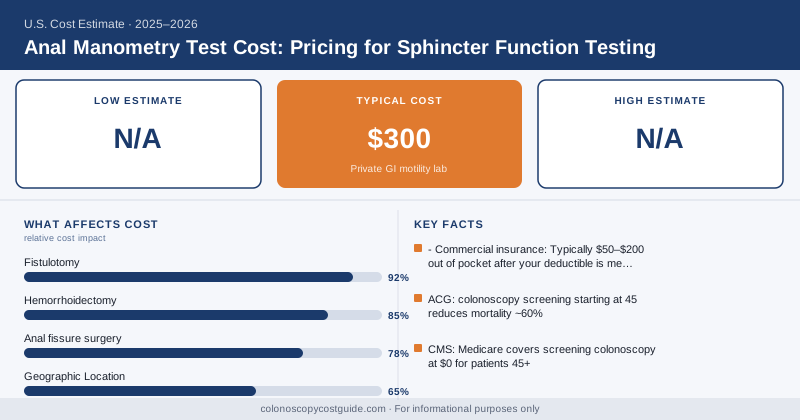
Anal Manometry Test Cost: Pricing for Sphincter Function Testing
{ if eq .Lang "zh" }{ else }{ end }Before cutting anywhere near your anal sphincter, a good surgeon wants a number, not a guess. That’s what anal manometry provides: an objective measurement of how well your sphincter muscles squeeze and relax, used both to diagnose problems and to plan surgery safely.
Anal Manometry Cost Breakdown
| Setting | Typical Cost | Notes |
|---|---|---|
| Private GI motility lab | $300 – $700 | Standard catheter-based testing |
| Hospital outpatient department | $800 – $2,000 | Same test, higher facility fee |
| High-resolution (3D) manometry | $600 – $2,000 | More detailed pressure mapping |
| Combined with balloon expulsion test | +$50 – $200 | Common add-on for constipation workup |
Why Surgeons Order It Before Procedures
Anal manometry is frequently ordered as a pre-surgical baseline before operations that could affect sphincter function, including:
- Fistulotomy or complex fistula repair, where cutting through sphincter muscle risks continence
- Hemorrhoidectomy, particularly for patients with any history of incontinence symptoms
- Anal fissure surgery (lateral internal sphincterotomy), which intentionally cuts a portion of the internal sphincter
Knowing your baseline sphincter pressure helps the surgeon choose a technique that minimizes the risk of post-surgical incontinence — a much more serious long-term problem than the original condition in many cases.
A Baseline Test Can Change Your Surgical Plan
What the Test Measures
Using a thin catheter with pressure sensors, anal manometry records:
- Resting pressure — baseline tone of the internal anal sphincter, largely involuntary
- Squeeze pressure — voluntary contraction strength of the external sphincter
- Rectal sensation thresholds — how well you perceive rectal filling
- Coordination during simulated defecation — whether muscles relax appropriately, relevant for diagnosing dyssynergia
The test takes about 30–45 minutes and requires no sedation, though it can cause brief pressure sensations that most patients tolerate without difficulty.
Insurance Coverage
Anal manometry is billed under CPT code 91122 and is covered by Medicare and most commercial insurance plans when ordered for a documented medical indication — pre-surgical planning, chronic constipation workup, or fecal incontinence evaluation.
- Commercial insurance: Typically $50–$200 out of pocket after your deductible is met
- Medicare Part B: Standard 80/20 cost-sharing after the annual deductible
- Medicaid: Covered in most states with minimal cost-sharing
Insurers rarely require prior authorization for standard manometry, though the high-resolution 3D version may require additional documentation of medical necessity.
Standard vs. High-Resolution Testing
Standard manometry uses a catheter with a handful of pressure sensors and answers most clinical questions adequately. High-resolution (3D) manometry, available mainly at academic GI motility centers, produces detailed topographic pressure maps and costs 50–100% more. For routine pre-surgical baseline testing, standard manometry is generally sufficient — ask your surgeon whether the upgrade is clinically necessary for your specific situation before assuming you need it.
The Bottom Line
Anal manometry costs $300–$2,000 and plays an important role in planning safer surgery for hemorrhoids, fistulas, and fissures, as well as diagnosing constipation and incontinence disorders. If your surgeon has ordered this test before a procedure, it’s a sign of careful planning — the small upfront cost helps avoid a far more serious and expensive complication later.
{ if eq .Lang "zh" }