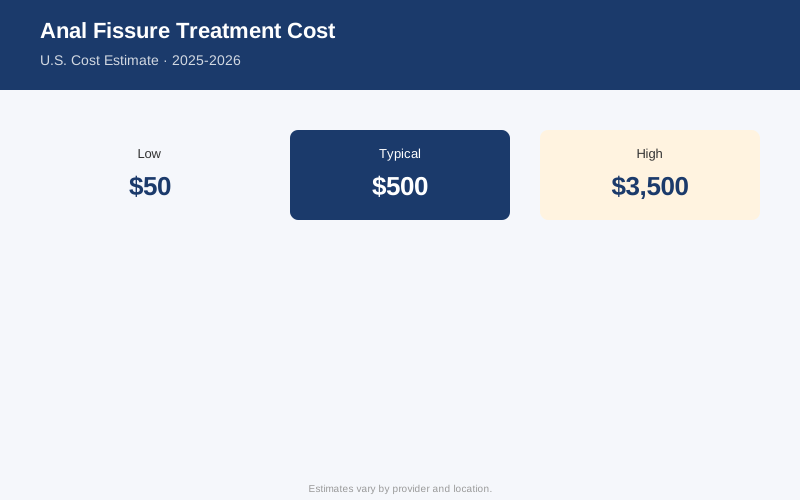
Anal Fissure Treatment Cost: From Creams to Surgery
A torn piece of tissue smaller than your thumbnail can produce some of the most intense rectal pain imaginable — and it’s extremely common. Anal fissures affect roughly 1 in 10 people at some point in their lives, according to the American Society of Colon and Rectal Surgeons (ASCRS). The good news: most heal without surgery. The cost range is wide, though — from $50 for a topical cream to over $4,000 for an outpatient procedure.
Here’s what treatment actually costs at each stage.
What Is an Anal Fissure?
An anal fissure is a small tear in the lining of the anal canal, usually caused by passing hard stool, chronic diarrhea, or straining. Acute fissures (under 6 weeks old) often heal on their own with conservative care. Chronic fissures (lasting longer than 6 weeks, or recurring) typically need more aggressive treatment.
Treatment Options and Their Costs
| Treatment | Typical Cash Cost | Notes |
|---|---|---|
| Office visit (PCP or colorectal surgeon) | $150 – $400 | Initial diagnosis and exam |
| Topical nitroglycerin ointment (Rx) | $30 – $120/tube | First-line treatment; causes headaches in some patients |
| Topical nifedipine or diltiazem (compounded) | $60 – $200/tube | Compounded at specialty pharmacy |
| Topical anesthetic (lidocaine) OTC | $10 – $25 | Symptom relief only, not curative |
| Sitz bath supplies | $15 – $40 | At-home relief, recommended daily |
| Botox injection (in-office) | $500 – $1,800 | For chronic fissures; works ~70% of the time |
| Lateral internal sphincterotomy (surgery) | $2,500 – $5,500 | Outpatient; most effective treatment, >90% cure rate |
The Step-by-Step Treatment Ladder
Most colorectal surgeons follow a tiered approach. You don’t start with surgery — you start cheap and step up only if needed.
Step 1 — Conservative measures ($15–$50): Increase dietary fiber, drink more water, sitz baths 2–3 times daily. This alone heals roughly 50% of acute fissures within 4–8 weeks. No doctor visit required.
Step 2 — Topical prescription creams ($30–$200): Nitroglycerin 0.2% ointment is the classic first-line Rx. It relaxes the internal sphincter and improves blood flow to the fissure. Generic versions run $30–$60 at most pharmacies. Compounded calcium channel blockers (nifedipine or diltiazem) are an alternative with fewer headache side effects — typically $60–$200 from a compounding pharmacy.
Step 3 — Botox injection ($500–$1,800): If topical therapy fails after 8 weeks, Botox injection into the internal sphincter is the next step. Done in-office or in a procedure suite, it temporarily paralyzes the sphincter muscle and promotes healing. Cure rates are around 60–80%, per ASCRS data. With insurance, you’ll typically pay your specialist copay plus anesthesia fees if sedation is used.
Step 4 — Lateral internal sphincterotomy (LIS) ($2,500–$5,500 cash): The most effective treatment for chronic fissures, with a cure rate exceeding 90%. It’s outpatient — typically 30–45 minutes under local or general anesthesia. The surgeon makes a small cut in the internal anal sphincter to relieve pressure. Recovery is 1–2 weeks.
Does Insurance Cover Anal Fissure Treatment?
Yes — all four steps are covered under commercial insurance, Medicare, and Medicaid when medically indicated. What you’ll actually pay depends on your plan:
- Topical prescriptions: Go through your pharmacy benefit. Expect $5–$40 with a GoodRx coupon if your plan’s formulary tier is high.
- Botox injection: Coded as a therapeutic procedure. With insurance, expect specialist copay ($30–$75) plus 10–30% coinsurance on the procedure facility fee.
- Surgery (LIS): As an outpatient procedure, you’ll typically pay toward your deductible plus coinsurance. Post-deductible out-of-pocket is usually $200–$800 on a typical commercial plan.
When to See a Colorectal Surgeon (Not Just a PCP)
A primary care doctor can diagnose a fissure and prescribe topical therapy. But if your fissure hasn’t healed after 6–8 weeks of first-line treatment, see a colorectal or GI specialist. Reasons to escalate quickly:
- Pain is severe and disrupting sleep or daily function
- You have rectal bleeding beyond minor spotting
- You’re immunocompromised or have Crohn’s disease (fissures behave differently)
- You’ve tried two rounds of topical therapy without improvement
Early referral avoids months of unnecessary suffering and can prevent a simple fissure from becoming a complex chronic wound.
Cash Pay vs. Insurance: Real-World Scenarios
| Scenario | Estimated Total Cost |
|---|---|
| Acute fissure, heals with OTC fiber + sitz baths | $20 – $60 |
| Acute fissure, one PCP visit + Rx nitroglycerin | $180 – $520 |
| Chronic fissure, Botox injection at colorectal office | $700 – $2,200 cash; $100 – $500 insured |
| Chronic fissure, lateral sphincterotomy surgery | $2,500 – $5,500 cash; $300 – $1,500 insured |
Tips to Keep Costs Down
- Start conservative. Try fiber, fluids, and sitz baths for 2–4 weeks before booking a specialist. Roughly half of acute fissures resolve without prescription treatment.
- Ask about generic nitroglycerin ointment. The brand-name version can cost $100+; compounded or generic runs $20–$60. GoodRx pricing varies dramatically by pharmacy — check before you fill.
- Use your HSA or FSA. All fissure treatments — including OTC supplies — are HSA/FSA eligible.
- Compare facility fees for Botox. Botox in a hospital outpatient department costs significantly more than the same injection in a physician’s office. Ask your colorectal surgeon if it can be done in-office.
- If surgery is needed, ask about ASC pricing. An ambulatory surgery center for LIS is often 40–60% cheaper than a hospital outpatient department for the same procedure.
The vast majority of anal fissures are highly treatable — often without any surgical intervention at all. The key is not waiting too long before stepping up treatment.