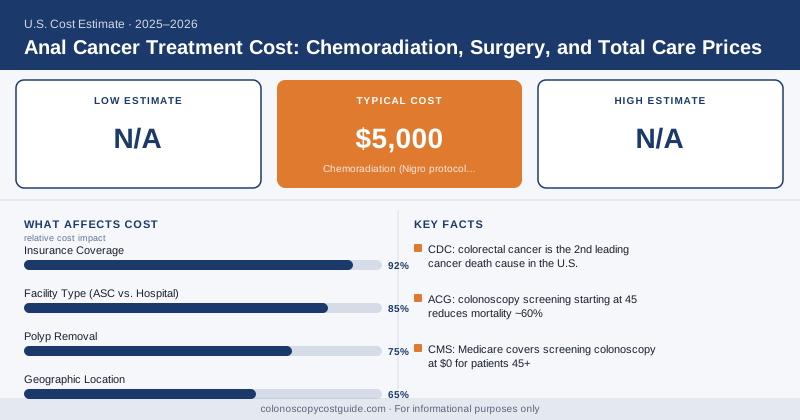
Anal Cancer Treatment Cost: Chemoradiation, Surgery, and Total Care Prices
{ if eq .Lang "zh" }{ else }{ end }Most people are surprised to learn anal cancer usually isn’t treated with surgery first. The standard of care is a combination of chemotherapy and radiation — and that changes the entire cost conversation compared to colon or rectal cancer.
Anal cancer is relatively uncommon. The American Cancer Society estimated roughly 10,500 new cases in the U.S. in 2024, and the numbers have been slowly rising for years. If you or someone you love is facing this diagnosis, here’s what the treatment actually costs.
The Standard Protocol and Its Cost
The Nigro protocol — concurrent chemoradiation — is the first-line treatment for most anal cancers. It combines several weeks of radiation with chemotherapy drugs (typically mitomycin and 5-FU). The goal is to cure the cancer while sparing you from a permanent colostomy.
| Treatment Component | Typical Total Charge | Average Patient OOP (Insured) |
|---|---|---|
| Chemoradiation (Nigro protocol, full course) | $60,000 – $120,000 | $5,000 – $16,000 |
| Radiation therapy alone (5–6 weeks) | $25,000 – $60,000 | $3,000 – $12,000 |
| Chemotherapy drugs (mitomycin + 5-FU) | $10,000 – $30,000 | $2,000 – $8,000 |
| Salvage surgery (APR, if needed) | $50,000 – $130,000 | $6,000 – $18,000 |
| Total course of care | $50,000 – $200,000+ | $7,000 – $20,000 |
These are list charges before insurance negotiates them down. Because chemoradiation runs over several weeks and usually crosses your full deductible, most insured patients end up paying their annual out-of-pocket maximum.
Why Chemoradiation First Saves Money and Quality of Life
Key Takeaway
The radiation portion overlaps heavily with what you’d see in our colorectal cancer radiation cost guide, and the drug side mirrors the structure covered in colon cancer chemotherapy cost.
What Drives Your Total
Stage at diagnosis. Early, small tumors may need a shorter radiation course. Larger tumors or those involving lymph nodes need more radiation fields and sometimes additional chemo cycles.
Whether you need salvage surgery. Roughly 10–30% of patients need surgery after chemoradiation. An APR adds a major surgical bill plus a permanent colostomy.
Side-effect management. Radiation to the pelvic region can cause skin reactions, fatigue, and bowel issues that require supportive care visits, medications, and occasionally hospitalization.
Immunotherapy for advanced disease. Metastatic or recurrent anal cancer increasingly uses immunotherapy, which is expensive. See our colorectal cancer immunotherapy cost guide for how those drugs are priced.
Insurance Coverage
Anal cancer treatment is covered by every major insurance type:
- Commercial plans: You pay deductible and coinsurance up to your annual OOP max ($7,000–$16,000 in-network for most 2025 plans). Multi-week chemoradiation almost always reaches that cap.
- Medicare: Part B covers outpatient radiation and chemo; Part A covers any hospitalization. Medigap can eliminate most cost-sharing.
- Medicaid: Covers treatment with little to no out-of-pocket cost.
The Bottom Line
Anal cancer treatment costs $50,000–$200,000+ over a full course, but the good news is twofold: the standard chemoradiation approach cures most patients without surgery, and your insurance out-of-pocket maximum caps what you’ll personally pay for the year.
If your cancer was found during a routine exam, you might revisit how the original colonoscopy cost compares to the treatment that followed. Early detection consistently means simpler, less expensive care.
{ if eq .Lang "zh" }